 English
 Español

Zhongsheng
Zhongsheng
Zhongsheng
Zhongsheng
Zhongsheng
Zhongsheng
Zhongsheng
Zhongsheng
Zhongsheng
Zhongsheng
Zhongsheng
Zhongsheng
Zhongsheng
Zhongsheng
Zhongsheng
Introduction
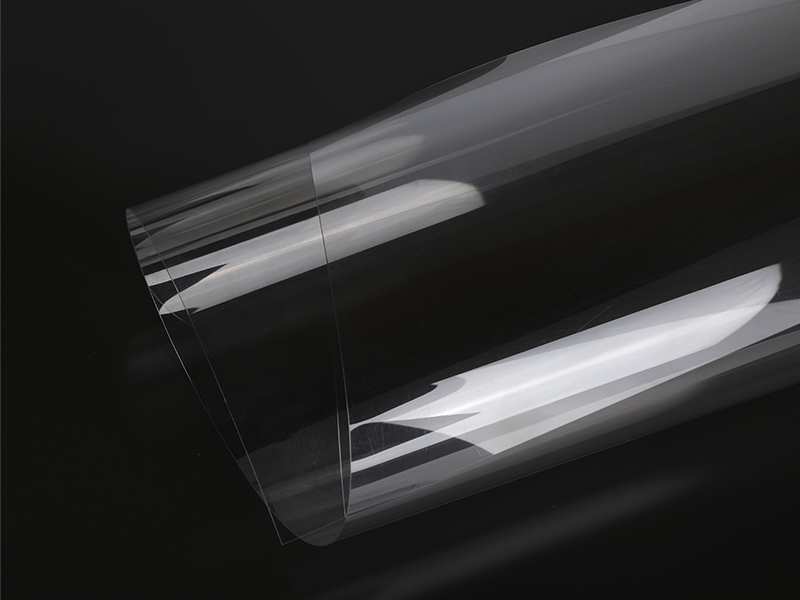
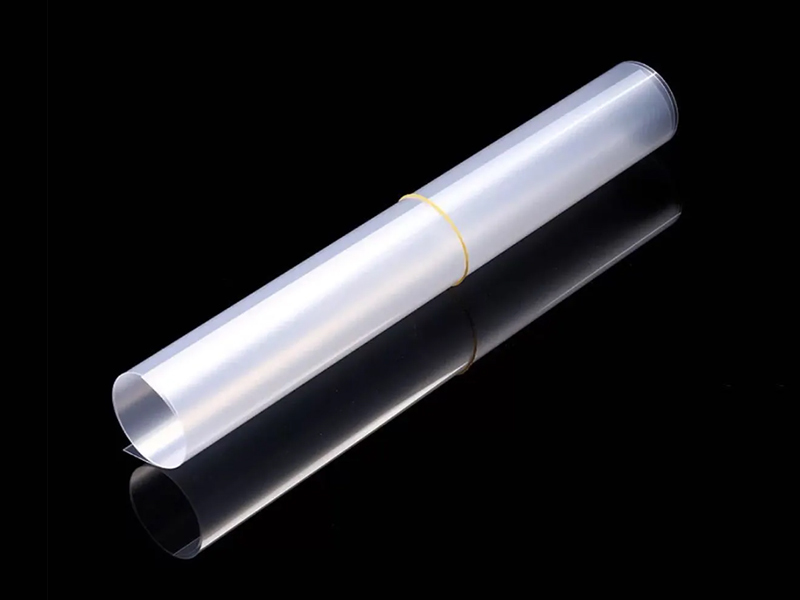
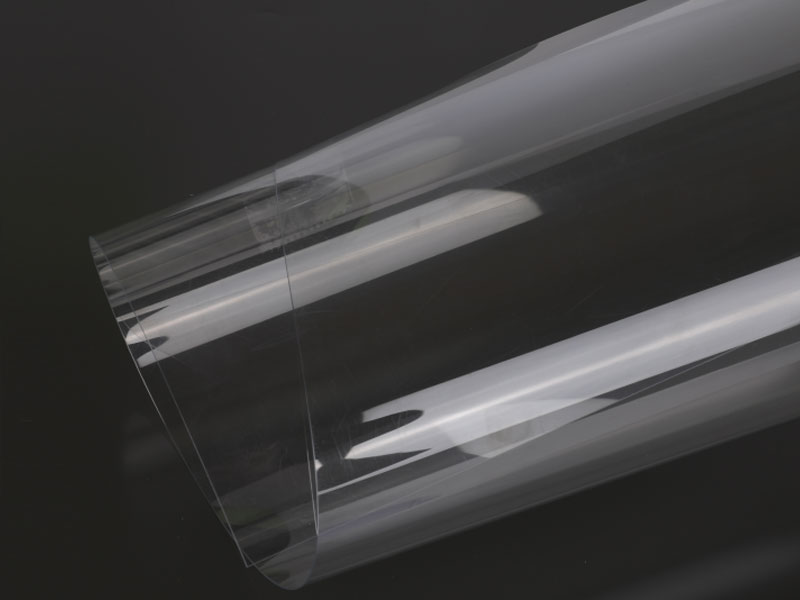
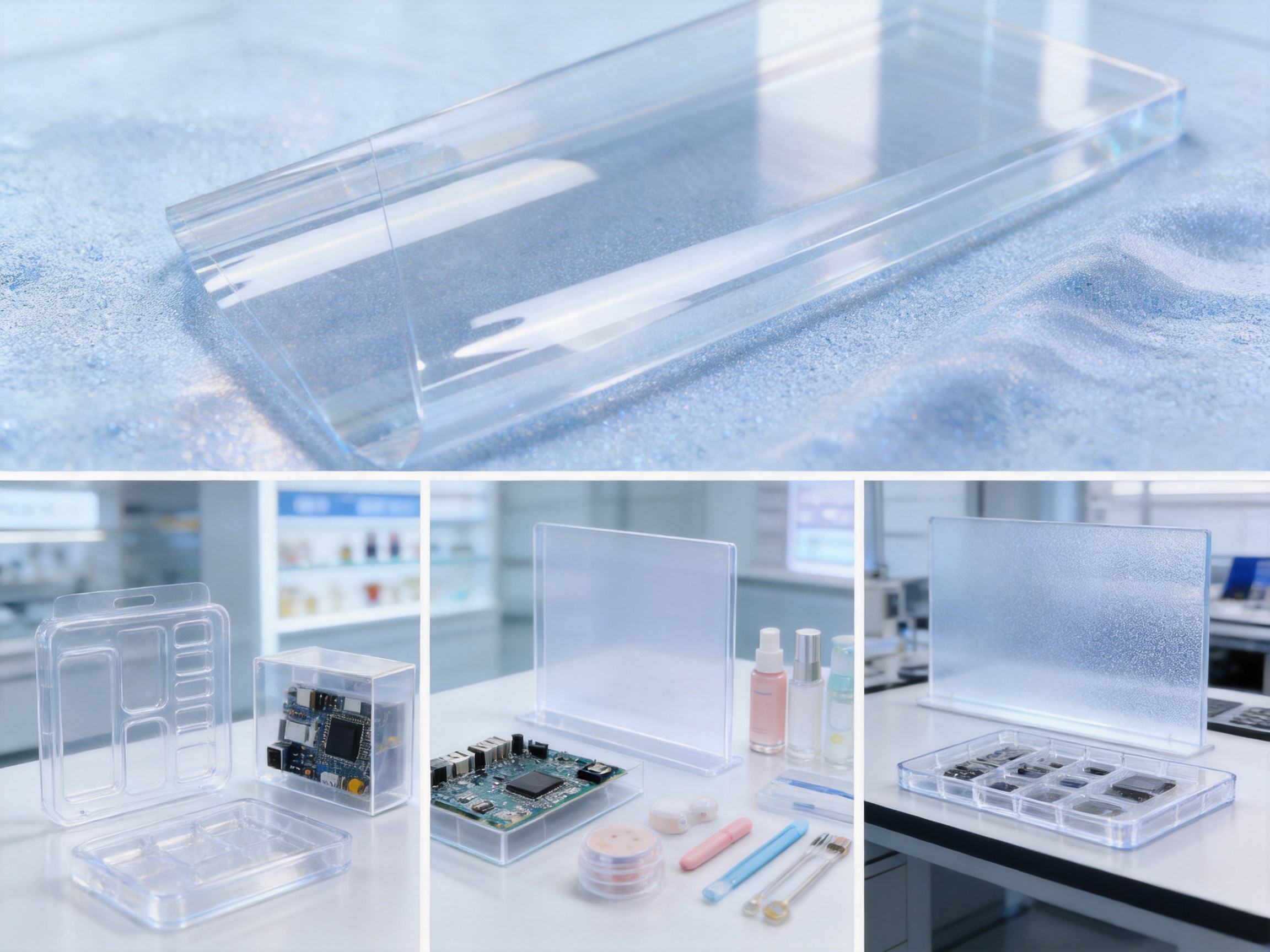
Anti-Static Clear Rigid PET Sheet/Film is a high-performance transparent material developed for applications that require clarity, dimensional stability, impact resistance, and protection against static electricity. It combines the practical advantages of rigid polyethylene terephthalate with an anti-static function designed to reduce dust attraction, surface charge accumulation, and electrostatic discharge risks.
Clear PET sheet and film are already widely used in packaging, printing, display protection, forming, and industrial products. However, conventional transparent plastic materials can present challenges in environments where static electricity is undesirable. Static charges may attract dust, interfere with electronic components, damage sensitive products, or create difficulties during converting, handling, and automated packaging operations. Anti-Static Clear Rigid PET Sheet/Film addresses these issues while preserving the smooth, highly transparent appearance expected from premium clear packaging and display materials.
The product is manufactured by ZheJiang ZhongSheng New Materials Co., Ltd., a China-based manufacturer specializing in transparent plastic sheets and film rolls. With a manufacturing area of approximately 40,000 square meters, 33 production lines, more than 100 sets of machinery and equipment, dedicated laboratories, and an experienced research and development team, the company has established a substantial production platform for PET-based materials.
This article examines the structure, performance, manufacturing strengths, processing compatibility, application range, and purchasing considerations associated with Anti-Static Clear Rigid PET Sheet/Film. It also explains why the material can offer advantages over ordinary clear sheets and less specialized alternatives in sensitive packaging, electronics, medical, display, and industrial applications.
Anti-Static Clear Rigid PET Sheet/Film
What Is Anti-Static Clear Rigid PET Sheet/Film?
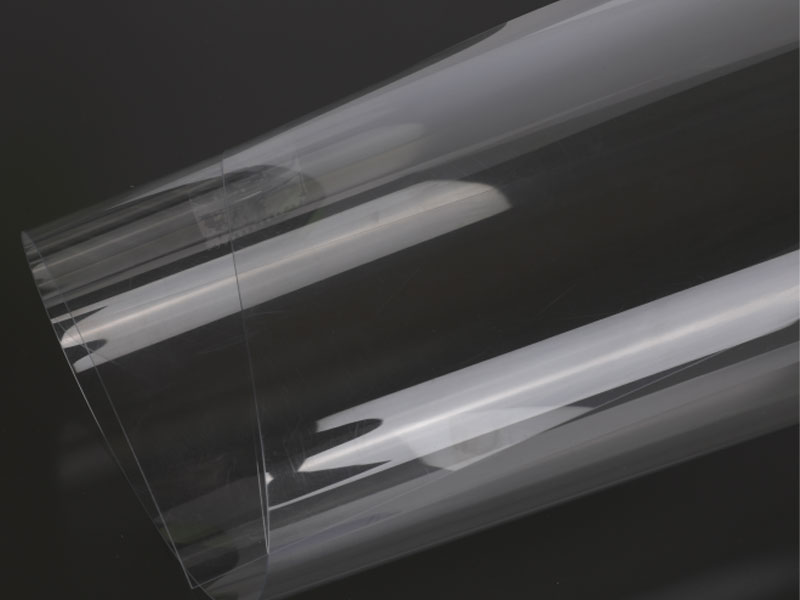
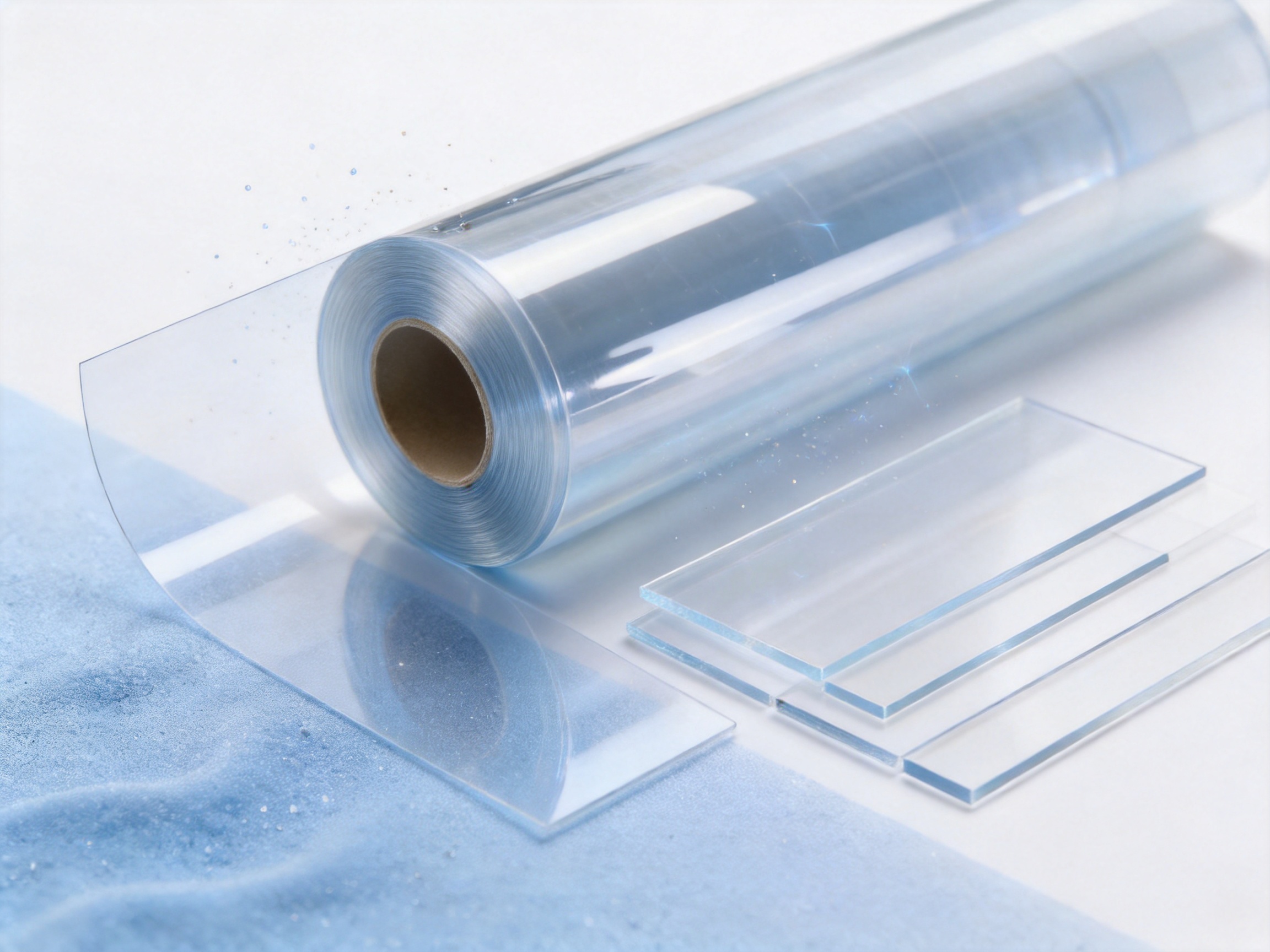
Anti-Static Clear Rigid PET Sheet/Film is a transparent sheet or film made from polyethylene terephthalate and engineered with static-dissipative properties. Depending on the required thickness and end use, it may be supplied as a rigid sheet, a semi-rigid sheet, or a thinner film suitable for laminating, printing, forming, or protective applications.
The base PET material provides a combination of transparency, strength, toughness, chemical resistance, and dimensional stability. The anti-static function is incorporated into the material system so that the surface is less likely to retain an excessive electrical charge. This helps reduce the attraction of airborne dust and lowers the possibility of uncontrolled electrostatic discharge during storage, handling, forming, and use.
The product is designed to retain the visual qualities associated with clear PET. Its surface is smooth, its appearance is transparent, and its impact resistance supports use in packaging and protective structures. These characteristics make it suitable for products that must be seen clearly while also requiring a cleaner and more controlled surface environment.
Unlike opaque protective boards or coated materials that may obscure the product inside a package, clear anti-static PET allows buyers, inspectors, and operators to view the contents. This is particularly useful for electronics, precision components, medical packaging, display panels, stationery, cosmetics, and retail packaging.
Core Material Characteristics
The material combines several properties that are important in modern converting and packaging operations:
High transparency supports clear product presentation, visual inspection, and display applications. A transparent package can improve shelf visibility while allowing customers to examine the product without opening the package.
A smooth surface supports high-quality printing, lamination, die cutting, folding, and forming. It also gives finished products a clean and professional appearance.
Good impact resistance helps the sheet withstand ordinary handling, transportation, and use. This is valuable for packaging structures that must resist cracking or breaking under moderate mechanical stress.
Static dissipation reduces dust attraction and helps control electrostatic buildup. This is especially important in clean packaging environments and when the sheet is used around sensitive electronic components.
Stable dimensions support predictable processing. During printing, cutting, folding, vacuum forming, and blister production, dimensional consistency helps manufacturers maintain accurate registration and uniform finished products.
Barrier performance can help protect packaged products from moisture, gases, oil, and odors, depending on the specific construction, thickness, and application design. This makes clear PET suitable for a broad range of packaging requirements.
Key Specifications
Anti-Static Clear Rigid PET Sheet/Film is available across a broad thickness range to support different product designs and processing methods. The stated thickness range is 0.15 to 5.0 millimeters, while the available width range is approximately 170 to 1,350 millimeters.
| Item | Specification or Description |
| Material | Polyethylene terephthalate, commonly identified as PET |
| Product form | Clear rigid sheet or film |
| Functional type | Anti-static transparent sheet or film |
| Thickness | Approximately 0.15 to 5.0 millimeters |
| Width | Approximately 170 to 1,350 millimeters |
| Appearance | Transparent, smooth, and suitable for visible-product packaging |
| Processing compatibility | Vacuum forming, blister packaging, printing, folding, cutting, and related converting processes |
| Typical applications | Electronics packaging, trays, bubble shells, toys, food packaging, cosmetics, stationery, displays, windows, cards, and medical packaging |
Actual performance can vary according to thickness, production formulation, anti-static treatment, forming conditions, storage environment, and the requirements of the finished product. Buyers should confirm detailed electrical, optical, mechanical, and food-contact requirements before placing a production order.
Advantages Over Ordinary Clear PET Sheet
Reduced Dust Attraction
Ordinary plastic materials can accumulate static charges when they are unwound, rubbed, cut, folded, or removed from packaging. Once charged, the surface may attract dust and airborne particles. In packaging and display production, this can lead to visible contamination, reduced appearance quality, and additional cleaning requirements.
The anti-static function of this PET sheet helps reduce the retention of static charge. As a result, the surface is less likely to attract dust during handling and conversion. This is particularly beneficial for transparent packaging, because dust trapped inside or on the surface of a clear package is highly visible.
Improved Protection for Sensitive Products
Electronic components, precision instruments, sensors, circuit assemblies, and other sensitive products may be affected by uncontrolled electrostatic discharge. A suitable anti-static package can help create a safer handling environment by reducing charge accumulation on the packaging surface.
Anti-Static Clear Rigid PET Sheet/Film provides a transparent barrier around the product while contributing to electrostatic control. The result is a useful combination of product visibility and handling protection. Compared with ordinary clear film, the anti-static grade is more appropriate for packaging environments where static control is part of the product protection strategy.
Maintained Product Visibility
Many anti-static packaging materials are selected for function but may sacrifice transparency, surface quality, or visual presentation. This product is designed to retain a clear, smooth appearance. Manufacturers can therefore use it for packages that require both electrostatic control and attractive product presentation.
Clear visibility is important in retail packaging, quality inspection, warehouse identification, and medical or electronic component packaging. The ability to see the packaged product can reduce unnecessary opening and handling, which may further support cleanliness and damage prevention.
Balanced Strength and Processability
PET is recognized for its combination of toughness and dimensional stability. It can be used in thin film formats while maintaining useful mechanical performance. In thicker formats, it can provide a more substantial structure for trays, protective panels, covers, and formed packaging.
The material is suitable for common converting methods such as cutting, folding, printing, and vacuum forming. This flexibility allows manufacturers to use one material family across several product designs rather than changing to completely different substrates for every application.
More Professional Surface Appearance
The smooth surface of clear PET supports clean printing and consistent visual quality. A well-controlled surface can improve the appearance of graphics, warning information, barcodes, product identification, and decorative patterns. For retail packaging, the smooth surface also supports a premium appearance that can be difficult to achieve with rougher or less uniform materials.
Advantages Over Alternative Transparent Plastics
Comparison with General-Purpose PVC
PVC is widely used in packaging, signage, cards, and flexible or semi-rigid products. However, PET may be preferred when high transparency, impact performance, dimensional stability, and a clean surface are especially important. Anti-Static Clear Rigid PET Sheet/Film adds a static-control function that is not automatically available in standard PVC sheet.
For products requiring a clear view of delicate components, PET can provide a balanced combination of strength and appearance. It is also suitable for applications in which the substrate must be printed, folded, or thermoformed with predictable results.
Comparison with Conventional Polystyrene
Polystyrene can be economical and easy to process, but it may be more vulnerable to cracking or brittle failure in certain packaging conditions. PET generally offers better toughness and impact resistance. This can be valuable for products exposed to transportation vibration, stacking pressure, or repeated handling.
When a package must remain clear and intact while protecting a valuable or sensitive item, the mechanical performance of PET can provide an important advantage over more brittle alternatives.
Comparison with Non-Functional Clear Film
Standard transparent film may provide visibility but does not necessarily control static charge or dust attraction. In a clean packaging environment, the absence of anti-static performance can increase the risk of contamination and handling problems.
The anti-static grade is therefore more specialized. It is not simply a transparent sheet with a visual function; it is a material designed to address an additional packaging and processing concern. This functional advantage can justify its selection in electronics, medical, precision, and clean-product applications.
Manufacturing Capabilities and Production Strengths
The performance of a PET sheet depends not only on its formulation but also on the stability of the production process. Thickness uniformity, surface quality, transparency, winding quality, dimensional behavior, and functional consistency must be controlled throughout manufacturing. A supplier with appropriate equipment, testing resources, and process experience can provide greater confidence for large-volume applications.
Large Manufacturing Platform
ZheJiang ZhongSheng New Materials Co., Ltd. operates a manufacturing area of approximately 40,000 square meters. This scale provides room for raw material management, production lines, quality inspection, research and development, warehousing, and finished-product handling.
A larger manufacturing platform can support better separation of production activities and more organized material flow. It can also help a supplier manage multiple product grades, thicknesses, widths, and functional requirements without relying on a single production route.
Multiple Production Lines
The company operates 33 production lines. Multiple lines can provide valuable capacity for both standard and customized orders. They may also allow the manufacturer to assign suitable equipment to different thickness ranges, sheet widths, surface requirements, and production volumes.
For international buyers, production capacity is an important factor. A supplier must be able to maintain stable lead times while meeting quality requirements. A broad production base reduces dependence on one machine or one production schedule and can improve planning flexibility when demand changes.
Research and Development Resources
The company maintains an R&D team and two laboratories. Research and testing resources are essential for transparent plastic products because performance depends on many interconnected variables. These include resin quality, drying conditions, melt temperature, extrusion stability, cooling, surface treatment, winding tension, and storage conditions.
For anti-static PET, development work may also involve surface resistance, charge dissipation behavior, additive compatibility, surface cleanliness, and performance stability under different humidity conditions. Laboratory resources allow a manufacturer to investigate these factors and improve product consistency.
Equipment and Process Experience
More than 100 sets of machinery and equipment support the company’s production operations. A broad equipment base can include extrusion, calendaring, forming, slitting, inspection, winding, and packaging systems. The exact equipment used for a particular order depends on product thickness, width, surface finish, and intended application.
The company has focused on the PET industry for more than 16 years. This experience contributes to practical knowledge of material behavior, processing conditions, production troubleshooting, and customer requirements. Long-term specialization can be especially valuable when customers need a sheet that performs consistently through multiple downstream processes.
Production Capacity
The stated annual production capacity reaches approximately 70,000 tons, including PET-based products and related materials such as PETA, PETG, and PET-GAG products. This capacity supports applications including thermoforming, vacuum forming, blister packaging, furniture decorative film panels, and other converted products.
High capacity does not replace quality control, but it demonstrates that the supplier has developed an industrial-scale production system. It can also support long-term supply agreements, recurring orders, and customers who require consistent material availability across multiple markets.
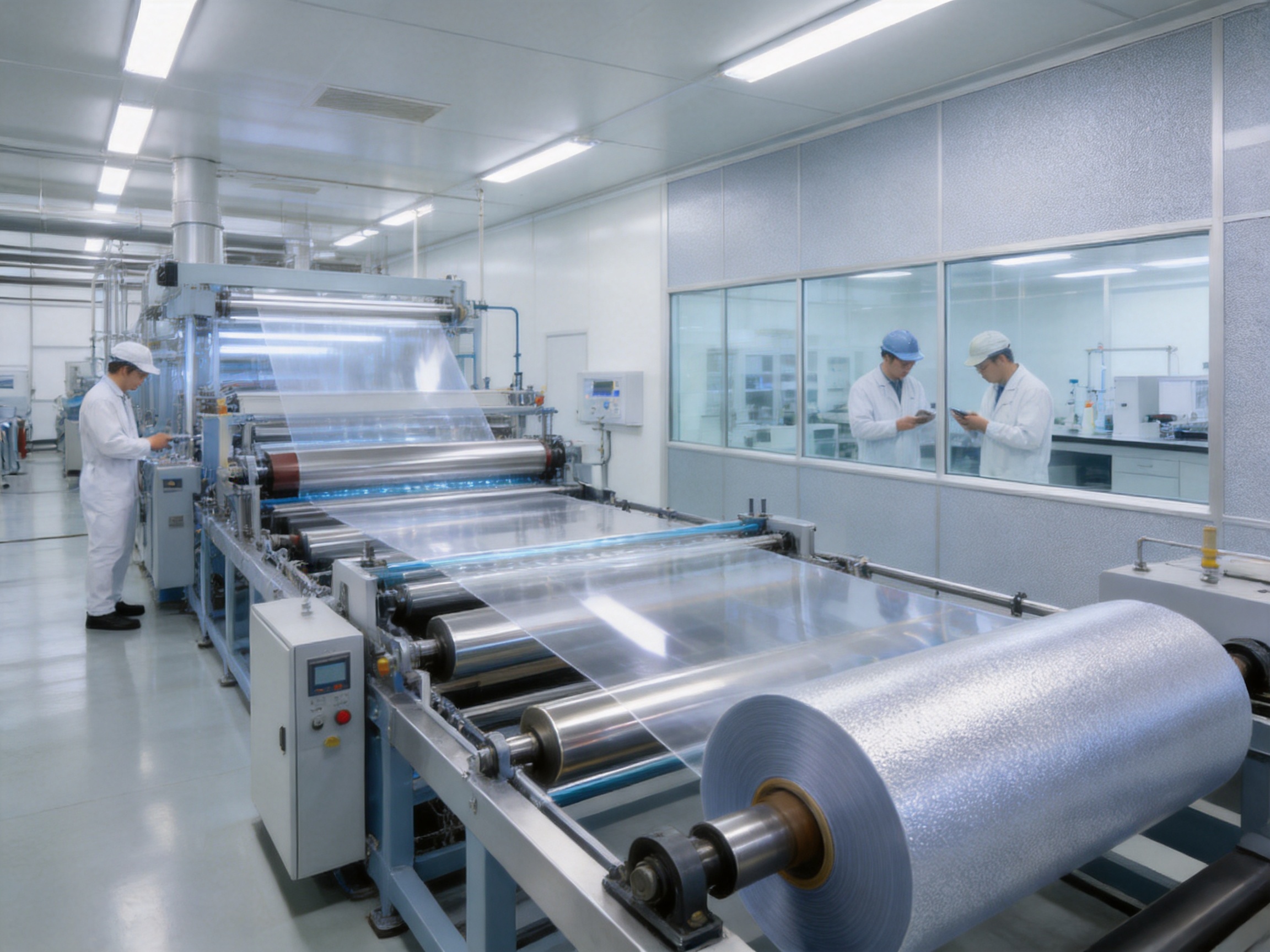
Manufacturing Process for Anti-Static Clear PET Sheet/Film
Raw Material Preparation
Production begins with the selection and preparation of PET raw materials. Resin quality influences transparency, melt stability, mechanical strength, and final appearance. Materials must be stored and handled carefully to limit contamination and moisture exposure.
PET is sensitive to moisture during processing. Excess moisture can contribute to hydrolytic degradation, which may reduce molecular weight and affect mechanical and optical properties. Proper drying and material preparation are therefore important steps in producing a stable clear sheet.
Extrusion and Melt Homogenization
Prepared PET material is introduced into an extrusion system where it is heated and transformed into a controlled melt. The extrusion process must maintain suitable temperature profiles, pressure stability, and melt uniformity. Inadequate control may lead to haze, gels, thickness variation, or surface defects.
For anti-static products, the functional component must be compatible with the PET system and distributed consistently. Uniform distribution is essential because localized differences can create uneven surface performance or visible defects. Process engineers must balance functional requirements with transparency, mechanical properties, and downstream processability.
Sheet Formation and Thickness Control
The molten material is formed into a continuous sheet or film through a suitable die and cooling arrangement. Thickness control is a critical part of this stage. A sheet intended for blister forming, folding cartons, display panels, or protective covers must meet the customer’s specified thickness tolerance and width requirements.
Automatic controls, calibrated measurement systems, and operator monitoring can help maintain a uniform profile across the width of the sheet. Uniform thickness supports predictable forming depth, consistent stiffness, accurate cutting, and stable printing results.
Cooling and Dimensional Stabilization
After formation, the sheet is cooled and stabilized. Cooling conditions affect transparency, surface appearance, internal stress, and dimensional behavior. If cooling is uneven, the material may develop distortion or variable shrinkage during later forming and printing operations.
Carefully managed cooling helps the sheet retain a smooth surface and stable dimensions. This is especially important for transparent products because optical defects, warpage, and uneven thickness are more noticeable in clear materials than in opaque products.
Surface Inspection and Finishing
After the main sheet-forming process, the material may undergo trimming, slitting, winding, or cutting according to customer requirements. Surface inspection is used to identify contamination, scratches, bubbles, crystal points, uneven areas, and other defects.
A clean and smooth surface is one of the product’s principal advantages. Inspection helps ensure that the finished sheet is suitable for printing, forming, packaging, and display applications where appearance is directly connected to commercial value.
Anti-Static Performance Control
Anti-static performance must be evaluated in relation to the intended application and test conditions. Surface resistance, charge decay, charge generation, humidity, handling method, and contact with other materials can all influence results.
Manufacturers and buyers should define the required anti-static standard before production. Different applications may require different levels of static control. Electronics packaging, for example, may have more demanding requirements than a general retail display panel. Clear technical communication helps ensure that the selected grade is appropriate for its operating environment.
Packaging and Storage
Finished rolls or sheets should be protected from dust, moisture, excessive heat, and mechanical damage during storage and transportation. Proper packaging is especially important for clear products because surface contamination can affect both appearance and downstream processing.
Customers should store the material in a clean, dry location and allow it to reach room temperature before processing when it has been transported through significantly different temperature conditions. Recommended storage and conditioning procedures should be confirmed with the supplier.
Quality and Consistency Considerations
For industrial buyers, product quality involves more than a single visual inspection. It includes consistency from roll to roll, batch to batch, and shipment to shipment. Key areas include thickness, width, transparency, haze, surface quality, tensile performance, impact behavior, dimensional stability, and anti-static performance.
Quality control should also consider the material’s behavior during the customer’s actual converting process. A sheet may appear acceptable in its original form but still require adjustments during thermoforming, printing, folding, or die cutting. Technical collaboration between the material supplier and the converter can help optimize processing conditions.
Customers may request samples for testing before confirming volume orders. Sample evaluation can include forming trials, printing trials, static-control measurements, packaging simulations, and storage tests. This approach is particularly useful when the material will protect expensive electronics, medical products, or precision components.
Product documentation should identify the material grade, thickness, width, roll or sheet dimensions, packaging method, recommended processing conditions, and any relevant compliance information. The exact documentation required depends on the market and application.
Applications
Electronics Packaging
Electronics packaging is one of the most suitable fields for anti-static transparent PET. Components can be displayed and inspected while the package helps reduce static accumulation and dust attraction. The material may be used for trays, covers, blister packs, protective inserts, boxes, and component presentation packaging.
Clear visibility allows operators to identify parts without opening the package. This can improve inventory management and reduce unnecessary product handling. The sheet’s impact resistance also supports protection during ordinary storage and transportation.
Blister Packaging
Blister packaging requires a transparent substrate that can be formed around a product while maintaining clarity and structural integrity. Anti-Static Clear Rigid PET Sheet/Film can be used for blister packs, bubble shells, and related formed packaging products.
The material’s smooth surface supports high-quality product presentation. Its static-control properties may be especially helpful when packaging small components, electronic accessories, medical items, or products that attract dust.
Vacuum-Formed Trays
Vacuum forming can convert clear PET sheet into trays with cavities designed for individual products. These trays may be used for electronics, tools, stationery, cosmetics, toys, or industrial components.
The available thickness range enables manufacturers to select a grade according to tray size, cavity depth, load requirements, and desired rigidity. Proper forming temperatures and mold conditions should be established through production trials.
Medical and Pharmaceutical Packaging
The material can be considered for transparent packaging associated with medical products and medicine packaging when the selected grade meets all relevant regulatory and performance requirements. Clear packaging enables visual inspection of contents and may support organized handling.
Anti-static properties can be valuable in controlled production areas where dust reduction and careful handling are important. However, buyers must verify suitability for direct contact, sterilization, chemical exposure, and any specific medical or pharmaceutical standard before use.
Cosmetics and Personal Care Packaging
Cosmetic packaging often depends on transparency, surface quality, and attractive presentation. Clear PET can be used for folding boxes, windows, protective covers, and formed packages. Its smooth appearance supports printed branding, product information, decorative graphics, and high-visibility displays.
Toy and Stationery Packaging
Toys, stationery, craft products, and small consumer goods are commonly packaged in clear boxes, blister packs, and window cartons. The material allows customers to see the product while providing a protective structure during retail handling.
Its impact resistance is useful for packages that may be handled frequently. The anti-static function can also help reduce dust accumulation on packages displayed in open retail environments.
Food Packaging
Clear PET is widely associated with food packaging applications. The product may be considered for trays, transparent covers, folding structures, and other packaging formats when the selected grade satisfies applicable food-contact regulations and processing conditions.
Barrier properties against moisture, gases, oil, and odors can support certain food packaging designs. Suitability depends on the product formulation, thickness, temperature exposure, storage period, and regulatory requirements. Food packaging buyers should request the appropriate compliance documentation before commercial use.
Printed Display Panels and Windows
Transparent PET sheet can be used for printed window panels, product displays, protective signs, and visual communication structures. Its smooth surface supports printing, while its rigidity allows it to function as a stable panel or insert.
Anti-static performance may help keep display surfaces cleaner by reducing dust attraction. This can be useful in retail stores, exhibitions, showrooms, and industrial display environments.
Plastic Cards and Identification Products
Selected PET sheet grades can be used in card production, identification panels, labels, and printed inserts. The material offers a clean appearance and can support high-resolution graphics. Card manufacturers should confirm compatibility with laminating, punching, printing, and personalization processes.
Decorative and Furniture-Related Products
The company also produces PETG and PET-GAG materials used in furniture decorative film panels. Although the exact structure and performance differ from anti-static clear rigid PET, the company’s experience with decorative films and transparent polymer products demonstrates a broader understanding of appearance-critical plastic materials.
This experience can support customers who require clear protective layers, decorative windows, printed surfaces, or laminated structures connected with interior products and furniture components.
Processing Guidance
Thermoforming and Vacuum Forming
Before large-scale forming, converters should evaluate heating uniformity, forming temperature, mold design, vacuum level, cooling time, and demolding conditions. Clear PET may show stress whitening, haze, distortion, or excessive thinning if the process is not properly adjusted.
The sheet thickness and forming depth should be considered together. Deep cavities can produce greater material thinning, while complex shapes may require careful control of plug assistance, heating zones, and mold temperature. Trial production helps determine suitable settings for each product design.
Printing
The smooth surface of PET supports printing, but ink adhesion depends on the selected ink system, surface energy, treatment, curing method, and final-use environment. Printers should confirm compatibility before production and evaluate adhesion after drying or curing.
Printing should be performed in a clean environment. Although the anti-static function helps reduce dust attraction, it does not eliminate the need for proper cleaning, ventilation, and contamination control.
Cutting and Die Cutting
Cutting tools should be selected according to sheet thickness and product geometry. Sharp, properly maintained dies help reduce burrs, edge deformation, and cracking. During high-volume production, tool condition should be monitored because worn tooling can affect finished dimensions and appearance.
Folding and Creasing
For folding boxes and cartons, crease design must match the material thickness and rigidity. Excessive bending stress can create whitening or cracking, particularly when the product is folded at low temperatures or with an unsuitable crease profile.
Lamination
When PET is laminated with another film, board, adhesive, or printed layer, surface preparation and adhesive compatibility are important. The finished construction should be evaluated for bond strength, optical clarity, curling, moisture resistance, and long-term stability.
Environmental and Commercial Considerations
PET is a widely used thermoplastic that can be collected and recycled in appropriate waste-management systems. Product designers can support more responsible material use by optimizing thickness, minimizing unnecessary components, reducing production scrap, and designing packages that are easier to separate and recover.
Recycling suitability depends on the complete package structure. Inks, adhesives, coatings, laminates, labels, closures, and other materials may affect recyclability. Customers should review the entire product design rather than evaluating the clear PET sheet in isolation.
From a commercial perspective, the material can provide value by combining several functions in one substrate. Transparency, rigidity, impact resistance, printability, forming compatibility, and static control may reduce the need for separate protective layers or additional packaging components.
The most suitable product grade depends on the balance between performance and cost. A thicker sheet may provide greater rigidity but can increase material consumption. A thinner sheet may reduce weight but require more careful forming or package design. Technical assessment helps buyers select the most efficient specification.
Why Choose an Experienced Specialized Supplier?
Transparent plastic materials are sensitive to production conditions and downstream processing requirements. An experienced supplier can help customers identify suitable thicknesses, widths, surface types, functional grades, and packaging formats.
ZheJiang ZhongSheng New Materials Co., Ltd. has specialized in PET-related products for more than 16 years. Its stated production resources include a large manufacturing site, multiple production lines, laboratories, an R&D team, and a broad range of machinery. These capabilities create a foundation for supplying both standard and application-oriented materials.
The company reports more than 60 invention and utility patents. Patents do not automatically guarantee that every product is suitable for every application, but they indicate ongoing technical development and investment in material and process innovation.
The company’s annual turnover exceeds 70 million United States dollars, and its products are supplied to domestic and international markets. This commercial experience can help support export documentation, recurring supply programs, and communication with customers in different industries.
The company’s stated philosophy emphasizes development through quality and brand building through integrity. For buyers, the practical value of this philosophy should be reflected in clear specifications, responsive technical communication, stable production, suitable inspection procedures, and reliable delivery performance.
How to Select the Correct Grade
Buyers should begin by identifying the intended application. A protective electronics tray may require different characteristics from a printed display panel or a medical package. The required thickness, width, stiffness, forming depth, transparency, and anti-static performance should be defined at the beginning of the project.
The electrical requirement should be described clearly. “Anti-static” can refer to different levels of resistance and charge dissipation behavior. The customer should specify the applicable test method, target range, environmental conditions, and duration of performance where necessary.
The processing method should also be confirmed. Vacuum forming, blister forming, printing, folding, laminating, and die cutting each place different demands on the sheet. A material that performs well in one process may require adjustment in another.
Storage and transportation conditions should be considered. High humidity, low humidity, temperature changes, dust, and friction can influence static performance and surface quality. The final application environment should be communicated to the supplier.
Finally, customers should request samples and conduct representative trials. Testing the actual product design is more reliable than selecting a material based only on a general specification sheet.
Q&A
What is the main purpose of Anti-Static Clear Rigid PET Sheet/Film?
Its main purpose is to provide a transparent and impact-resistant PET sheet or film with reduced static buildup. It is intended for packaging, display, forming, and protective applications where dust control and electrostatic management are important.
What thicknesses are available?
The stated thickness range is approximately 0.15 to 5.0 millimeters. The appropriate thickness depends on the application, forming depth, required rigidity, package design, and processing method.
What widths can be supplied?
The stated width range is approximately 170 to 1,350 millimeters. Exact availability should be confirmed according to the product grade, production line, order quantity, and required delivery format.
Can the material be used for electronics packaging?
Yes. The combination of transparency, impact resistance, smooth surface, and anti-static functionality makes it suitable for many electronics packaging designs. The buyer should confirm the required electrical performance and packaging standard for the specific electronic product.
Can it be vacuum formed?
Yes. The material is listed for vacuum forming applications such as trays and bubble shells. Forming results depend on thickness, mold geometry, heating conditions, vacuum control, cooling, and the required depth of the finished part.
Is it suitable for blister packaging?
Yes. Clear PET sheet is commonly used for blister packaging, and the anti-static grade can provide additional value when the packaged product is sensitive to dust or electrostatic discharge.
Can the surface be printed?
The smooth surface is suitable for many printing applications. However, ink selection, surface energy, treatment, curing, and adhesion should be tested before commercial production.
Is the product suitable for food or medical packaging?
It may be suitable for selected food or medical packaging applications when the specific grade complies with all applicable requirements. Customers must confirm food-contact, medical, sterilization, chemical, and regulatory requirements with the supplier before use.
Does anti-static performance eliminate dust completely?
No. Anti-static performance helps reduce charge accumulation and dust attraction, but it does not eliminate dust. Clean production areas, suitable storage, protective packaging, and proper handling remain necessary.
How should the sheet be stored?
It should generally be stored in a clean, dry, protected environment away from excessive heat, moisture, dust, and mechanical damage. Customers should follow the supplier’s storage and conditioning recommendations, especially before forming or printing.
What information should be provided when requesting a quotation?
Customers should provide the required thickness, width, sheet or roll format, estimated quantity, application, forming or printing method, anti-static requirement, surface finish, packaging needs, destination, and any compliance requirements.
What makes the manufacturer suitable for international buyers?
The manufacturer has a substantial production platform, multiple production lines, laboratories, an R&D team, significant annual capacity, long-term PET industry experience, and experience supplying domestic and international markets. These factors can support stable supply and technical communication for export projects.
Conclusion
Anti-Static Clear Rigid PET Sheet/Film is designed for applications that require more than basic transparency. It combines clear appearance, smooth surface quality, impact resistance, forming compatibility, and static-control functionality in one material platform.
Compared with ordinary clear film, it can help reduce dust attraction and provide a more controlled environment for sensitive products. Compared with less specialized transparent plastics, it offers a balanced combination of appearance, toughness, dimensional stability, and processing flexibility. These advantages support its use in electronics packaging, blister packs, vacuum-formed trays, medical packaging, cosmetics, stationery, toys, food packaging, printed panels, cards, windows, and protective applications.
The manufacturing capabilities of ZheJiang ZhongSheng New Materials Co., Ltd. provide an important foundation for product consistency. Its 40,000-square-meter manufacturing area, 33 production lines, more than 100 sets of equipment, two laboratories, R&D resources, approximately 70,000-ton annual production capacity, and more than 16 years of PET industry experience support the production of transparent PET, PETG, and related materials.
For the best results, buyers should define the application carefully, confirm the anti-static requirement, evaluate forming or printing performance, review compliance needs, and conduct representative trials before full-scale production. With proper material selection and process control, Anti-Static Clear Rigid PET Sheet/Film can serve as a reliable solution for clean, visible, durable, and functionally enhanced packaging and protective products.
References
1. Technical product information for Anti-Static Clear Rigid PET Sheet/Film, including stated thickness, width, applications, and performance characteristics.
2. Company information for ZheJiang ZhongSheng New Materials Co., Ltd., including manufacturing area, production lines, laboratories, equipment, capacity, patents, and PET industry experience.
3. General principles of polyethylene terephthalate extrusion, sheet formation, thermoforming, vacuum forming, printing, and converting.
4. General guidance on electrostatic control, dust reduction, surface resistance, and packaging for sensitive electronic products.
5. General packaging engineering principles relating to transparency, impact resistance, barrier properties, dimensional stability, and material selection.
6. General recycling and sustainable design considerations for PET packaging and transparent thermoplastic products.