Industry Insights: PVC/PET Edge Bands
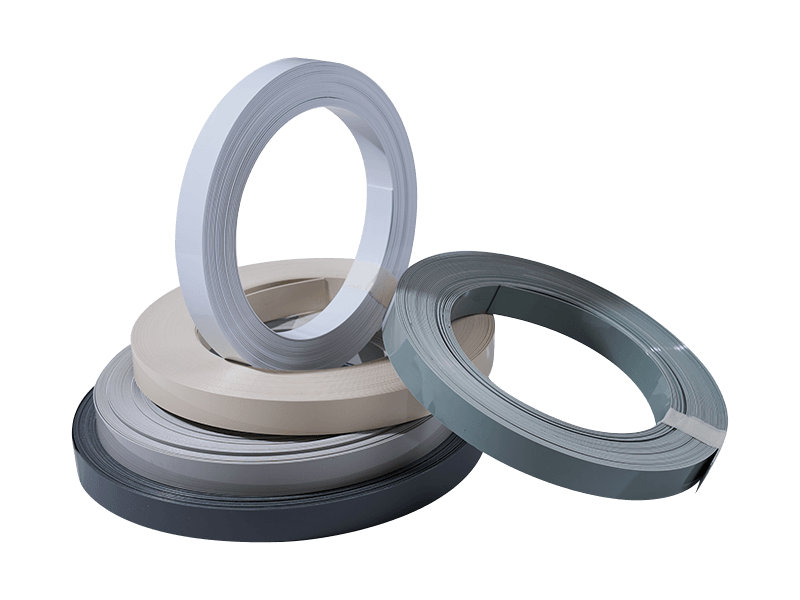
What are PVC/PET Edge Bands?
Edge banding is an auxiliary material widely used in:
- Furniture manufacturing
- Panel processing
- Interior decoration
Its main function is to cover the exposed edges of panel materials after cutting.
Beyond protection, it also enhances:
- Product appearance
- Structural durability
- Overall finishing quality
Today, PVC, PET, and Decorative Edge Bands are the most commonly used types in the market.
Industry Evolution
With the rapid development of:
- Custom furniture
- Cabinet systems
- Office furniture
- Commercial interior design
edge banding has evolved from a simple protective material into a combination of:
“Functionality + Aesthetics”
PVC Edge Banding: A Mature and Standard Choice
What is PVC Edge Banding?
PVC (Polyvinyl Chloride) edge banding is one of the most widely used materials in the furniture industry, known for its:
- Cost efficiency
- Stable processing performance
Key Features
- Good flexibility (resistant to cracking)
- Easy to cut, heat-bond, and process
- Wide variety of surface designs
- Strong abrasion and moisture resistance
- Extensive color-matching options
Surface Finishes Available
PVC edge banding can simulate:
- Wood grain
- Stone texture
- Solid colors
- High gloss
- Matte finishes
Main Applications
PVC edge banding is widely used in:
- Kitchen cabinets
- Wardrobes
- Office furniture
- MDF / particle board / plywood panels
- Commercial display furniture
Market Position
PVC remains the dominant material in:
Mass furniture manufacturing due to its strong cost control advantage.
PET Edge Banding: A New Eco-Friendly Choice
What is PET Edge Banding?
PET (Polyethylene Terephthalate) edge banding is an environmentally friendly alternative that is gaining rapid adoption, especially in premium furniture markets.
Key Advantages
- Recyclable and eco-friendly material
- High surface quality and texture realism
- Excellent resistance to yellowing
- Stable gloss retention
- Prevents surface whitening (blushing effect)
Main Applications
PET edge banding is widely used in:
- High-end cabinetry
- Custom home furniture
- Children’s furniture
- Hotels and commercial interiors
- Eco-friendly furniture systems
Market Trend
As environmental regulations tighten and consumer awareness grows, PET edge banding is rapidly expanding in:
- High-end furniture
- Export-oriented projects
- Green building material systems
Decorative Edge Banding: Enhancing Visual Consistency
What is Decorative Edge Banding?
Decorative edge banding focuses on:
- Visual harmony
- Surface design consistency
- Seamless appearance matching
Its purpose is to ensure the board edge matches the panel surface more naturally.
Common Surface Types
- Wood grain series
- Stone texture series
- Metal finish series
- Fabric texture series
- High-gloss series
- Super-matte series
- Synchronized grain series
Market Trend Shift
The industry is moving from:
Solid color edge banding
to:
“Seamless color + texture matching systems”
Application Trend
Decorative edge banding is widely used in:
- Cabinet doors
- Wardrobe systems
- Office furniture
- Modern interior spaces
Consumers now prioritize:
- Unified visual design
- High-end surface consistency
- Premium aesthetic performance
Industry Development Trends
Driven by:
- Whole-house customization
- Smart home systems
- Personalized interior design
edge banding materials are evolving toward:
1. Eco-Friendly Materials
- PET recyclable systems
- Low-emission production
- Sustainable materials
2. Advanced Edge Sealing Technology
- Laser edge banding
- Seamless bonding systems
3. Surface Innovation
- Super matte finishes
- Soft-touch textures
- Anti-fingerprint coatings
4. Color Matching Systems
- High-precision color matching
- Synchronized grain alignment
- Digitalized surface design
5. Functional Upgrades
- Anti-bacterial coatings
- Anti-scratch performance
- Improved durability systems
Conclusion
Edge banding has evolved from a simple protective strip into a critical component of modern furniture manufacturing.
Today it plays a dual role:
- Protecting board edges
- Enhancing product aesthetics and value
Material Positioning Summary
- PVC Edge Banding → Cost-effective, widely used, mass production standard
- PET Edge Banding → Eco-friendly, premium, future-oriented material
- Decorative Edge Banding → Aesthetic-driven, design-consistent solution
Final Insight
With the rise of:
- Custom furniture
- Sustainable materials
- High-end interior design
edge banding is becoming a key factor in:
product competitiveness, visual identity, and brand positioning in the global furniture industry.
 English
 Español