 English
 Español

Zhongsheng
Zhongsheng
Zhongsheng
Zhongsheng
Zhongsheng
Zhongsheng
Zhongsheng
Zhongsheng
Zhongsheng
Zhongsheng
Zhongsheng
Zhongsheng
Zhongsheng
Zhongsheng
Zhongsheng
Modern architecture increasingly demands materials that combine visual character, technical performance, installation efficiency, and long-term value. Designers, contractors, developers, and property owners are looking for alternatives to traditional timber, painted boards, and purely decorative wall coverings. The ideal solution should create a warm, natural appearance while resisting moisture, mold, insects, fading, deformation, and daily wear. It should also support flexible design, efficient processing, and reliable supply for residential, commercial, hospitality, retail, and public projects.
WPC covering louvers panels, also described as fluted panels, grille panels, slatted wall panels, or louvered decorative panels, are developed to answer these needs. Made from wood plastic composite, these panels combine wood fiber or wood powder with thermoplastic resins and performance-enhancing additives. Through controlled extrusion and surface-finishing technologies, the material delivers the appearance of wood with the dimensional stability and moisture resistance associated with engineered polymers.
These panels can be used for interior feature walls, ceilings, room dividers, reception areas, retail displays, furniture surfaces, bathroom and kitchen cladding, exterior facades, privacy screens, fences, soffits, and selected outdoor architectural applications. Their linear profile provides rhythm and depth, while the available PVC, wood veneer, fabric, and customized finishes allow designers to coordinate panels with a wide range of interior and exterior concepts.
ZheJiang ZhongSheng New Materials Co., Ltd. manufactures decorative sheets, films, WPC wall panels, louvered products, and related building materials. Founded in 2006, the company has developed a large-scale manufacturing platform supported by production lines, laboratories, research personnel, technical equipment, and experience in polymer-based materials. Its capabilities in PET, PETG, PET-GAG, PVC, and WPC-related products provide a technical foundation for producing consistent decorative and functional panel solutions.
Understanding WPC Louvered and Fluted Panels
Wood plastic composite is an engineered material made by blending wood-based content with a thermoplastic resin such as PVC, PE, or PP. Additives may be introduced to improve processing, weather resistance, color stability, flame performance, surface quality, dimensional stability, and other functional properties. The mixture is processed through extrusion, pressing, profiling, laminating, or related manufacturing operations to create a finished product with a controlled shape and surface.
In a louvered or fluted panel, the profile is designed with repeated grooves, ribs, channels, or raised slats. This structure creates a three-dimensional appearance rather than a flat wall surface. Light and shadow move across the profile throughout the day, giving a room or facade greater visual depth. The linear arrangement can make a ceiling appear longer, a wall appear taller, or a narrow area appear more organized.
The panel may be supplied with a PVC covering, wood veneer, fabric surface, or another customized finish. PVC covering is especially useful where consistent color, easy cleaning, moisture resistance, and repeatable appearance are required. Wood veneer can provide a more natural grain pattern and premium decorative effect. Fabric finishes may support acoustic concepts and soft interior styling. Customized finishes allow project owners to coordinate panel colors, textures, dimensions, and surface treatments with a particular design language.
Although the product is often selected for appearance, its value extends beyond decoration. The composite construction offers a practical balance between visual warmth and engineered performance. Compared with untreated natural wood, WPC generally requires less routine maintenance and is less vulnerable to swelling, rotting, termite damage, and moisture-related deterioration. Compared with ordinary decorative film applied to a weak substrate, a profiled WPC panel provides greater physical presence, rigidity, and architectural depth.
Material Composition and Manufacturing Principle
The performance of a WPC panel begins with the selection and preparation of raw materials. Wood fiber or wood powder contributes texture, a natural visual character, and a reduced dependence on solid timber. Thermoplastic resin acts as the binding and structural phase. Additives can support melt flow, compatibility, weather resistance, color retention, flame behavior, mold resistance, and surface quality.
The raw materials must be properly proportioned and blended to achieve stable processing. Wood content that is not adequately dried may introduce moisture and cause bubbles, voids, or surface defects. Resin and additives must be dispersed evenly so that the finished panel has consistent strength, color, and dimensional behavior. A controlled compounding process helps reduce variation between production batches.
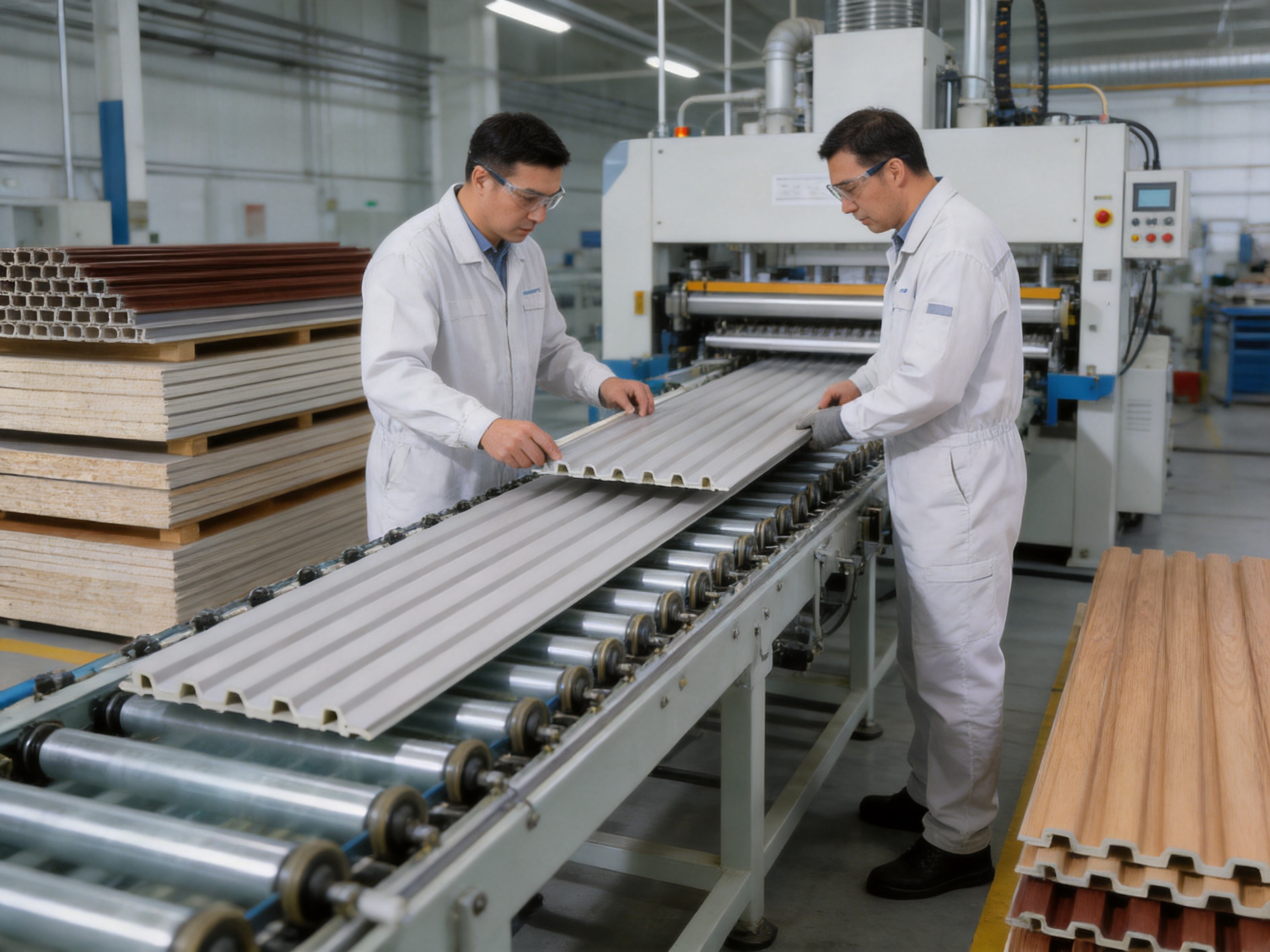
After blending, the material is processed through an extrusion system or other forming technology. Extrusion is particularly suitable for continuous profiles because it can produce long, repeatable sections with precise grooves and edges. The material passes through a shaped die, where the louvered profile is formed. Calibration and cooling then help stabilize the dimensions, preserve the geometry, and prepare the surface for subsequent finishing.
Depending on the specification, the profile may undergo sanding, surface treatment, lamination, covering, embossing, trimming, cutting, inspection, and packaging. A PVC layer can be applied to create a clean and durable decorative face. Wood veneer may be bonded to provide a natural timber appearance. Fabric or other coverings can be selected for special interior design or acoustic requirements.
Manufacturing control is important because louvered panels contain repeated details that make inconsistencies easy to see. Groove spacing, rib width, profile straightness, surface adhesion, color uniformity, end cuts, and panel length must be monitored throughout the process. A professional manufacturing system therefore combines material preparation, profile forming, finishing, inspection, and packaging rather than treating the product as a simple decorative board.
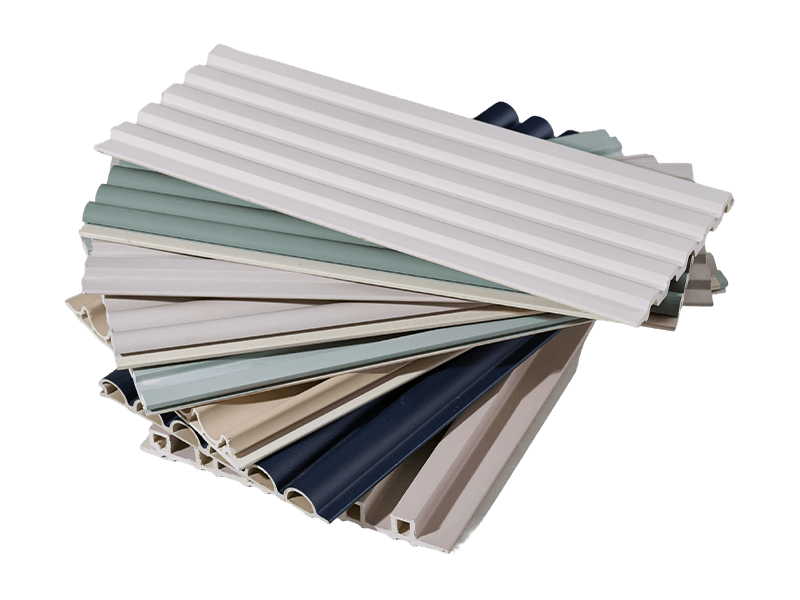
PVC Covering Louvers Panel/Fluted/Grille
Principal Product Specifications
The standard product description identifies the panel as a home decor WPC wood interior decoration louvered or fluted wall panel. The standard length can reach 2,900 millimeters, while customized lengths may be discussed according to project requirements, transportation limitations, installation methods, and production feasibility.
| Item | Available or Described Specification | Project Value |
|---|---|---|
| Product type | WPC covering louver, fluted, or grille panel | Creates a decorative three-dimensional architectural surface |
| Material | Wood plastic composite | Combines wood-like appearance with engineered stability |
| Length | Up to approximately 2,900 mm as described, or customized | Supports continuous visual lines and flexible installation planning |
| Surface options | PVC, wood veneer, fabric, or customized finishes | Allows coordination with different design concepts |
| Functional characteristics | Moisture-resistant, waterproof, mold-resistant, sound-absorbing, soundproofing-supportive, anti-static, fireproof-option capable, and noise-reduction supportive | Supports decorative and performance-oriented applications |
| Processing | Can be cut, drilled, nailed, milled, and installed in a manner similar to wood | Reduces complexity during fabrication and installation |
| Application areas | Walls, ceilings, furniture, partitions, bathroom and kitchen cladding, facades, fences, and exterior decorative systems | Suitable for residential, commercial, hospitality, and architectural projects |
Exact performance depends on the formulation, profile design, surface finish, installation method, environmental exposure, and applicable testing standards. Project buyers should confirm the required fire rating, acoustic performance, outdoor suitability, dimensions, color, and fixing system before placing an order. A qualified manufacturer can help match product construction to the intended environment.
Design Advantages of Fluted and Louvered Profiles
The defining advantage of a louvered panel is its ability to add depth without requiring a complex secondary construction. A flat decorative sheet can cover a wall, but a fluted panel introduces repeated vertical or horizontal elements that create a more distinctive architectural surface. The grooves can be narrow and refined or broad and strongly articulated, depending on the desired visual effect.
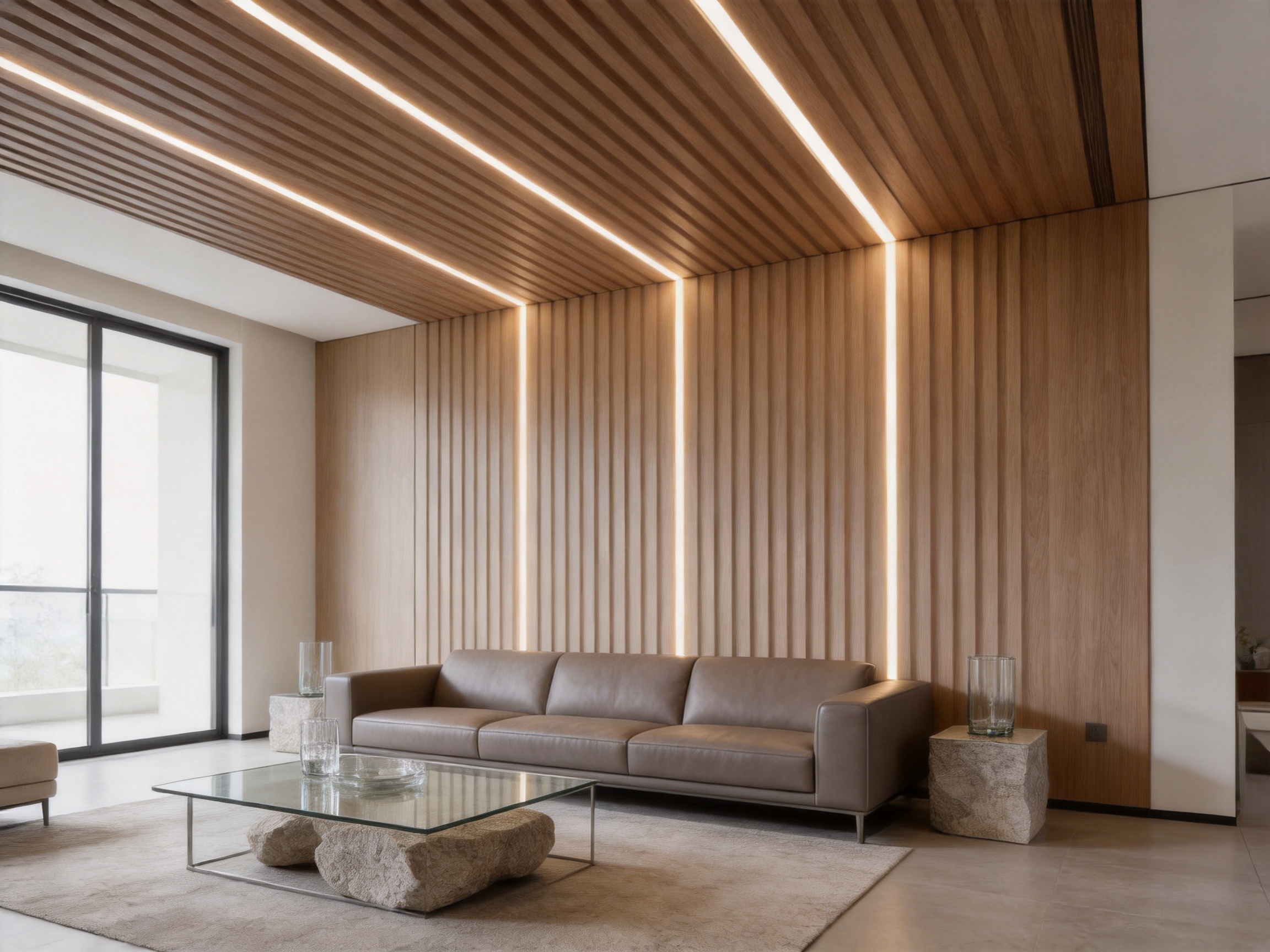
Vertical louvers can emphasize height and create a clean, contemporary appearance. They are particularly effective behind reception desks, television walls, beds, staircases, and retail displays. Horizontal applications can visually extend a wall and work well in hospitality, office, and residential interiors. Panels can also be installed as partial-height features, ceiling fields, cabinet fronts, room dividers, or framed decorative inserts.
The profile can support privacy and visual screening when used as a divider or facade element. The spacing between slats may be designed to allow partial visibility, airflow, or controlled light transmission. In exterior applications, the panels can contribute to shading concepts and screen mechanical equipment, balconies, service areas, or building edges. The exact screening performance depends on the louver size, spacing, orientation, and installation framework.
Another benefit is visual continuity. Long panels reduce the number of visible joints compared with small tiles or narrow individual battens. When the surface finish and installation alignment are carefully controlled, the result is a clean, uninterrupted appearance. This is valuable in commercial interiors where a consistent brand environment or premium finish is required.
WPC louvered panels also support design combinations. They may be paired with painted walls, stone, metal, glass, fabric, lighting, acoustic materials, or other decorative boards. Recessed lighting can emphasize the grooves, while concealed lighting can create a floating or layered effect. This flexibility allows one panel system to serve both functional and decorative roles.
Advantages Compared with Traditional Natural Wood
Natural wood remains attractive because of its grain, warmth, and authenticity. However, it can require regular painting, staining, sealing, or varnishing. It may also absorb moisture, swell, crack, warp, discolor, or become vulnerable to insects and biological decay when exposed to unsuitable conditions. These challenges can increase the lifetime maintenance cost of a project.
WPC panels are engineered to reduce many of these concerns. The thermoplastic component helps limit moisture absorption and supports dimensional stability. The composite structure is less likely to rot than untreated wood and can be formulated for mold resistance and termite resistance. The surface covering further protects the decorative face and makes cleaning straightforward.
WPC does not mean that a panel is immune to every environmental condition. Proper design, installation, drainage, ventilation, and exposure assessment remain essential. However, for many applications, the product offers a more predictable maintenance profile than untreated timber. This is particularly useful in humid interiors, kitchens, bathrooms, semi-outdoor areas, hospitality spaces, and high-traffic commercial environments.
WPC also supports resource-saving objectives. By using wood fiber or wood powder together with recycled or recyclable polymer content where appropriate, the material can reduce reliance on solid timber. The environmental benefit depends on the formulation, source of raw materials, manufacturing energy, service life, and end-of-life management. A long-lasting panel that requires less repainting or replacement can contribute to efficient resource use over the life of a building.
Advantages Compared with Conventional Decorative Boards
Many conventional decorative boards provide a flat surface and attractive finish, but they may not offer the same combination of profile depth, moisture resistance, workability, and surface durability. A WPC louvered panel is both a decorative finish and a formed architectural component. Its grooves and ribs are integrated into the product rather than created only through a printed image.
Compared with thin decorative film alone, a WPC panel provides greater rigidity and impact presence. Compared with ordinary wood-based boards, it can offer stronger resistance to moisture, mold, insects, and decay. Compared with painted gypsum or cement-based surfaces, it can be installed with less wet work and may be easier to replace or modify during renovation.
The product is also suitable for cutting, drilling, nailing, milling, and other woodworking-style operations. This gives installers greater freedom when working around outlets, lighting, doors, windows, columns, and irregular architectural details. As with all composite products, suitable blades, fasteners, spacing, and support conditions should be selected to avoid chipping or deformation.
Another competitive advantage is finish consistency. Natural materials often vary in grain and color, while painted surfaces can show differences between batches or require additional touch-up work. PVC and other engineered coverings can provide more predictable appearance across a project. At the same time, wood veneer and textured finishes can preserve a natural visual effect for projects that need a warmer, less industrial appearance.
Moisture, Mold, and Daily-Use Performance
Moisture resistance is one of the most important reasons to select WPC for wall and ceiling applications. Kitchens, bathrooms, entrances, basements, coastal properties, and humid climates can expose decorative surfaces to water vapor, splashes, condensation, and changing humidity. A properly manufactured WPC panel is designed to remain more stable in these conditions than many untreated wood products.
The composite construction helps prevent the swelling and rotting associated with prolonged moisture exposure. A suitable surface covering can provide an additional protective layer, while sealed edges and correct installation reduce the risk of water entering vulnerable joints. Panels should not be treated as a substitute for waterproofing membranes in wet-room construction. Waterproofing behind the decorative surface remains necessary wherever building regulations require it.
Mold resistance is also valuable in environments with poor ventilation or frequent humidity changes. The material can be formulated to resist mold growth, but cleanliness, airflow, and moisture control remain important. No decorative panel can compensate for persistent leaks, condensation, or an underlying damp problem. Proper building design and maintenance must work together with the material’s inherent properties.
For daily-use areas, the surface should be easy to wipe and resistant to ordinary abrasion. This makes the product suitable for corridors, retail spaces, offices, restaurants, hotel interiors, and family homes. Cleaning methods should follow the surface supplier’s recommendations, especially when using specialized coatings, fabric coverings, or textured finishes.
Acoustic and Interior Comfort Considerations
Louvered panels can contribute to acoustic design because their profile creates a structured surface rather than a completely flat plane. When installed with an appropriate backing layer, mineral wool, polyester acoustic felt, perforated substrate, or other sound-absorbing material, the system may help reduce reflections and improve room comfort. The exact acoustic result depends on the open area, cavity depth, backing material, wall construction, and frequency range.
In offices, restaurants, classrooms, hotels, studios, meeting rooms, and residential media rooms, controlling reverberation can make spaces more comfortable and intelligible. A decorative louvered surface can conceal an acoustic backing layer while maintaining a refined architectural appearance. Fabric-backed versions may be especially suitable for applications that combine visual softness and sound management.
It is important to distinguish between sound absorption, sound insulation, and soundproofing. Sound absorption reduces reflected sound within a room. Sound insulation limits sound transmission between spaces. A decorative panel alone should not be assumed to provide full soundproofing. Where privacy or transmission loss is critical, the complete wall or ceiling assembly must be designed and tested as a system.
The company’s product information identifies sound absorption, soundproofing support, and noise reduction among the functional characteristics. These descriptions should be matched to project-specific testing and installation details. Architects and contractors can request technical data when a project requires quantified acoustic performance.
Fire, Safety, and Compliance Planning
Fire performance is a critical consideration for interior wall panels, ceiling systems, public buildings, hotels, transportation facilities, and high-occupancy spaces. The product information describes fireproof capability among the functional features, but the final rating depends on the specific formulation, thickness, surface covering, profile, substrate, fixing method, and test standard.
Project specifications should identify the required reaction-to-fire classification or other applicable fire test. Buyers should request the correct technical documentation for the selected product rather than relying on a general product description. If the panel is installed over insulation, felt, timber battens, metal framing, or another backing, the entire assembly may influence the result.
Safe installation also requires attention to ventilation, electrical fixtures, heat sources, expansion gaps, fastening, and access to concealed services. Panels should be kept away from direct flame and installed according to the relevant building code. Cutting operations should be performed with suitable dust-control and personal-protection measures.
A responsible manufacturer supports safety planning by providing material information, available test data, installation guidance, and product-specific recommendations. This is particularly important when the product is intended for exterior walls, public interiors, commercial fit-outs, or projects with strict approval procedures.
Exterior Wall and Facade Applications
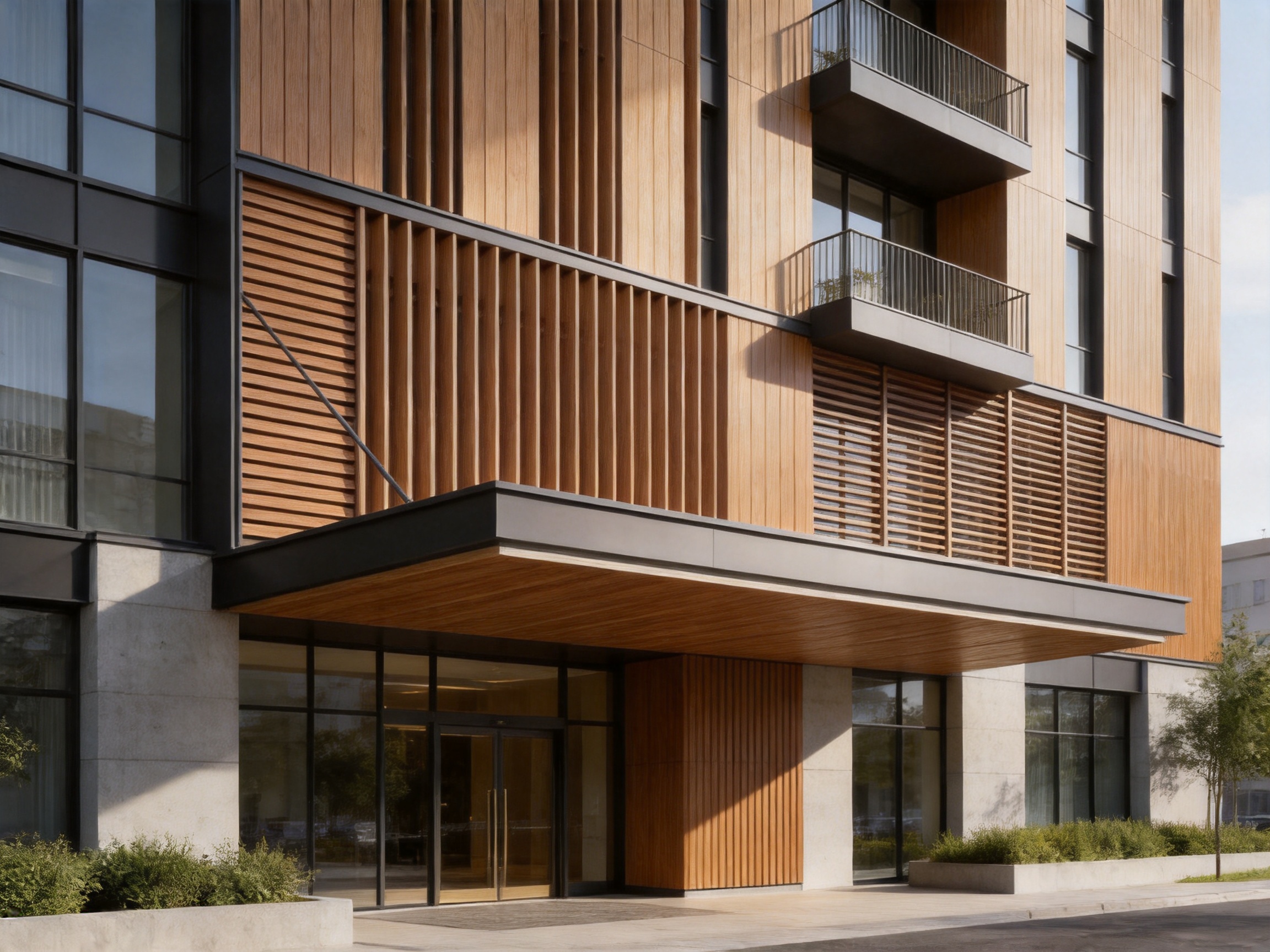
WPC slatted cladding can create a modern facade with warmth and texture. The linear pattern can be installed across selected wall zones, balcony screens, entrance canopies, soffits, fences, or privacy structures. It can soften large areas of glass, concrete, metal, or masonry while introducing a natural material reference.
Exterior applications require careful evaluation of ultraviolet exposure, wind loads, temperature changes, rainwater, drainage, ventilation, expansion, and substructure design. A product intended for indoor decoration should not automatically be used outdoors. Buyers should confirm whether the selected surface finish and formulation are suitable for the intended exposure.
When correctly specified, exterior WPC cladding can offer a lower-maintenance alternative to painted timber. Its resistance to moisture, termites, mold, and decay can support a longer service interval. The panel can also be used as a screen to provide privacy or shade, although the structural frame must be designed to withstand local wind and weather conditions.
Facade designers may combine different panel orientations, colors, widths, or spacing arrangements to create a layered elevation. A darker louvered zone can define an entrance, while a lighter wood appearance can be used on upper floors or sheltered areas. The result is a flexible architectural language that does not rely on a single uniform surface.
Interior Applications Across Multiple Sectors
In residential interiors, WPC louvered panels are commonly considered for living-room feature walls, bedrooms, dining areas, home offices, stair halls, ceiling accents, television backgrounds, and room dividers. The natural appearance can add warmth without the maintenance demands associated with untreated timber.
In hotels and serviced apartments, the panels can be used in reception areas, corridors, guest rooms, restaurants, lounges, headboards, and elevator lobbies. Consistent dimensions and repeatable finishes help maintain a coherent design throughout a large property. The material’s cleanability and resistance to everyday wear are valuable in spaces that receive frequent use.
Retail stores can use the product for display walls, cash-desk backgrounds, product niches, fitting-room dividers, and brand environments. Fluted surfaces create a strong backdrop for lighting and merchandise while helping separate functional zones. Customized colors or coverings can align with a retailer’s visual identity.
Offices may use louvered panels to organize open-plan spaces, define collaboration zones, decorate meeting rooms, or improve acoustic comfort. A slatted screen can provide partial privacy while preserving light and visual connection. When paired with acoustic backing, it can support a more controlled sound environment.
Restaurants, cafes, and entertainment venues often require surfaces that are attractive, durable, and easy to maintain. WPC panels can be applied to feature walls, bar fronts, ceiling elements, partitions, and decorative columns. In these environments, the selected finish should be checked for cleaning compatibility, fire requirements, and resistance to impact.
Bathrooms and kitchens can benefit from moisture-resistant cladding around suitable areas. However, the product should be used together with correct waterproofing, ventilation, edge sealing, and appropriate detailing. Direct continuous water exposure, submerged conditions, or areas requiring sanitary wall systems may require different materials or additional protection.
Customization Capabilities
Customization is important because architectural projects rarely share identical dimensions or performance requirements. The panels can be considered for customized lengths, surface finishes, colors, textures, profile arrangements, and packaging. The available surface choices include PVC, wood veneer, fabric, and customized solutions, allowing the product to serve both cost-conscious and premium design concepts.
Customized PVC coverings can provide specific colors, wood-grain effects, textures, and degrees of visual uniformity. Wood veneer can emphasize natural variation and premium character. Fabric coverings can introduce color, softness, and acoustic functionality. A project may also combine more than one surface treatment to create contrast between walls, ceilings, partitions, and furniture elements.
Profile customization may involve groove width, slat width, spacing, panel depth, edge treatment, or installation direction. These details affect both visual expression and technical behavior. A narrow groove pattern may look delicate and refined, while a deeper profile may create stronger shadow lines and a more dramatic appearance.
Before mass production, a sample or approved reference board is recommended. The sample should be evaluated under the project’s lighting conditions and next to adjacent materials. This process helps confirm color, gloss, texture, grain direction, groove scale, and installation expectations before the full order is manufactured.
Manufacturing Strengths and Industrial Capacity
ZheJiang ZhongSheng New Materials Co., Ltd. was established in 2006 and has developed a manufacturing area of approximately 40,000 square meters. The company’s reported production platform includes one research and development team, two laboratories, 33 production lines, and more than 100 sets of machinery and equipment. This industrial scale supports the production of polymer-based sheets, films, panels, and related decorative materials.
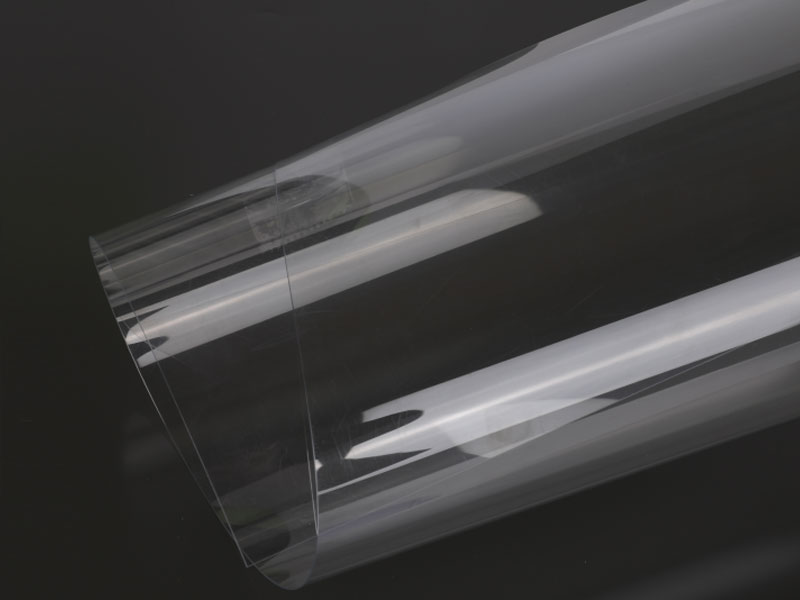
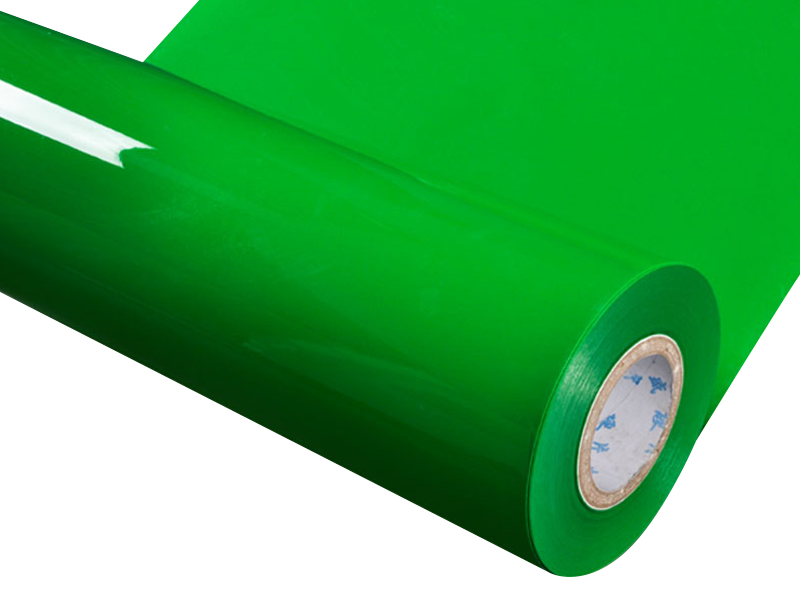
The company reports an annual production capacity of approximately 70,000 tons. Its product portfolio includes PETA, PETG, and PET-GAG materials used in thermoforming, vacuum forming, blister packaging, furniture decorative film panels, and other applications. This experience in transparent plastic sheets and film rolls is relevant to the development of stable surface coverings and polymer-based decorative products.
More than 16 years of focus on the PET industry, together with more than 60 invention and utility patents, indicates an established technical and development foundation. Although different materials require different processing parameters, experience with polymer formulation, extrusion, film production, surface quality, and dimensional control can support the manufacture of WPC and decorative panel products.
The company’s reported registered capital is approximately 11.21 million US dollars, and its annual turnover exceeds 70 million US dollars. These figures reflect an organization with the resources to support raw-material purchasing, equipment operation, quality management, product development, customer service, and international order fulfillment.
Manufacturing capacity alone does not guarantee product quality, but it can provide important advantages when combined with process discipline. Multiple production lines can support different profiles and finishes. Laboratories can assist with material testing and development. Research personnel can work on formulation, surface appearance, and application requirements. A broad equipment base can improve flexibility when customers need customized dimensions or finishes.
Quality Control from Raw Material to Finished Panel
Quality control should begin before the raw materials enter the production line. Wood-based components need suitable moisture content, particle size, cleanliness, and consistency. Resin and additives must be checked against the approved formulation. Surface films, veneers, fabrics, adhesives, and packaging materials should also be inspected before use.
During compounding and extrusion, process parameters such as temperature, pressure, feed rate, cooling conditions, and line speed influence the profile. Operators and technical staff should monitor these factors to maintain stable dimensions and surface quality. Variations in processing can affect color, groove definition, straightness, density, and mechanical behavior.
Finishing operations require additional control. A laminated or covered surface should bond securely without bubbles, wrinkles, delamination, or visible contamination. Wood veneer should be checked for grain direction, color consistency, and edge quality. Fabric should be applied without unwanted creases or tension marks. Customized finishes should be compared with the approved sample.
Final inspection can include length, width, thickness, profile dimensions, surface appearance, color, straightness, edge condition, packaging quality, and selected performance tests. Products should be packed to prevent scratches, crushing, moisture exposure, and movement during transport. Clear identification of batch information helps with traceability and project coordination.
For international customers, communication about tolerances, inspection procedures, sample approval, packaging, loading, and shipping documents is essential. A professional supplier should clarify which properties are standard, which are available by request, and which require project-specific testing.
Installation and Project Planning
Successful installation begins with a suitable substrate. The wall or ceiling should be structurally sound, reasonably flat, clean, and dry. Any leaks, rising damp, condensation, or unstable plaster should be corrected before the panels are installed. On exterior applications, the supporting frame must be designed for the panel weight, wind exposure, drainage, and ventilation requirements.
Installers should plan the layout before cutting. The position of joints, corners, outlets, lights, doors, windows, and transitions should be marked carefully. A symmetrical arrangement can produce a high-end appearance, while poorly planned end cuts may make the finished wall look unbalanced. Long panels should be stored flat or supported appropriately to reduce the risk of bending.
WPC panels can generally be cut, drilled, nailed, milled, and processed using methods similar to those used for wood. The correct blade, drill bit, screw, adhesive, clip, or framing system should be selected for the product and substrate. Fasteners should not be over-tightened, particularly where the material may experience thermal movement.
Expansion and contraction should be considered in locations subject to changing temperature or humidity. The required gaps depend on panel size, formulation, installation direction, indoor or outdoor exposure, and the manufacturer’s guidance. Joints should be detailed to maintain appearance while allowing the system to move safely.
For ceiling applications, the fixing system must support the full weight of the panels and any backing or acoustic materials. For partitions and screens, the frame should resist movement and accidental impact. For exterior cladding, the substructure, fasteners, ventilation cavity, water management, and fire detailing must be designed as part of the complete facade system.
Although the material is workable, professional installation is recommended for large or technically demanding projects. A qualified installer can produce cleaner joints, more accurate alignment, safer fixing, and better coordination with electrical, lighting, ventilation, and architectural details.
Maintenance and Long-Term Value
One of the main benefits of WPC louvered panels is low maintenance. Routine cleaning generally involves removing dust and wiping the surface with a soft cloth or suitable mild cleaning solution. Abrasive pads, aggressive solvents, unapproved bleaching agents, and excessive pressure should be avoided because they may damage the covering or alter the appearance.
In high-traffic areas, periodic inspection can identify loose fasteners, damaged edges, impact marks, moisture entry, or movement at joints. Early attention can prevent a small issue from affecting a larger section of the installation. Exterior systems should also be checked after severe weather, especially where strong winds or heavy rain are common.
The long-term value of a panel is influenced by its service life, maintenance cost, replacement frequency, installation labor, and visual durability. A product that maintains its appearance without frequent repainting or sealing can reduce disruption and operating expense. The low-maintenance advantage is particularly relevant for commercial properties where access for repairs may be difficult or costly.
When a panel is damaged, localized replacement may be possible depending on the fixing system and installation design. Keeping a small quantity of spare panels from the same production batch can help with future repairs, color matching, and renovation work.
Environmental and Resource Considerations
WPC products are often selected because they combine wood-based content with polymer technology. The use of wood fiber or powder can reduce the need for solid timber in decorative applications. Where recycled polymer content is used and properly documented, the material may also support resource-efficiency goals.
Environmental performance should be evaluated across the full life cycle. Important considerations include the source of wood content, the type and percentage of polymer, manufacturing energy, product durability, packaging, transport, maintenance requirements, and end-of-life options. A long service life and reduced need for coatings or replacement can contribute positively to the overall environmental profile.
Manufacturers with research and development resources can work toward improved formulations, more efficient processing, optimized profiles, and lower-waste production. Production planning, accurate cutting, recyclable packaging, and responsible handling of manufacturing scrap can further reduce material loss.
For green-building projects, customers should request the documentation required by the relevant certification system. Environmental claims should be supported by appropriate technical evidence rather than general statements. The product may contribute to a project’s material-efficiency objectives, but the final assessment depends on the complete building design.
Why Choose an Experienced Decorative Material Supplier?
Choosing a supplier for louvered panels involves more than comparing the unit price. Consistent surface quality, reliable dimensions, repeatable colors, packaging, production scheduling, technical support, and communication can have a direct effect on project success.
An experienced supplier can help customers select between PVC, wood veneer, fabric, and customized finishes. It can also advise on profile selection, sample approval, order quantities, lead times, container loading, and installation considerations. This reduces the risk of choosing a product that looks suitable in a small sample but does not meet the demands of the complete project.
ZheJiang ZhongSheng New Materials Co., Ltd. combines decorative material manufacturing with broader experience in plastic sheets and film rolls. Its facilities, laboratories, production lines, equipment, research resources, and patent portfolio provide a foundation for product development and process improvement. The company serves customers in domestic and international markets and emphasizes quality, integrity, advanced technology, and scientific management.
Its manufacturing background is particularly relevant for customers who need more than a standard catalog product. Architectural projects may require customized lengths, special surface treatments, coordinated decorative films, or a combination of panel and sheet materials. A supplier with experience across several polymer product categories can help simplify sourcing and improve material coordination.
Selection Guide for Buyers and Specifiers
Before selecting a WPC louvered panel, identify the intended location. Indoor dry areas, humid interiors, semi-outdoor spaces, exterior walls, ceilings, furniture, partitions, and wet areas may require different formulations or surface finishes. The exposure conditions should be clearly communicated to the supplier.
Next, define the required visual result. Consider slat width, groove depth, panel length, color, grain pattern, surface gloss, texture, installation direction, and relationship with nearby materials. A physical sample is preferable to a digital image because lighting and screen settings can change the perceived color and texture.
Performance requirements should then be documented. These may include moisture resistance, mold resistance, termite resistance, fire classification, acoustic absorption, impact resistance, ultraviolet stability, cleanability, and dimensional tolerance. The necessary test documents should be requested before approval.
Installation conditions should also be considered. Confirm the substrate, support frame, fixing method, expansion requirements, joint treatment, edge detailing, access to services, and replacement strategy. A product with excellent material performance can still fail if it is installed on an unsuitable substrate or exposed to conditions outside its specification.
Finally, review commercial and logistics details. Confirm minimum order quantity, customized production requirements, sample charges if applicable, lead time, packaging, container loading, payment terms, inspection arrangements, and shipping documentation. Early coordination helps avoid delays, especially for large construction projects.
Q&A: WPC Louvered Panel Applications and Performance
What is a WPC louvered panel?
A WPC louvered panel is a profiled decorative panel made from wood plastic composite. It contains repeated grooves, ribs, or slats that create a fluted or grille-like appearance. The panel may be covered with PVC, wood veneer, fabric, or another customized surface finish.
What is the main advantage of WPC over untreated wood?
WPC generally offers better resistance to moisture, swelling, rotting, termites, mold, and deformation than untreated natural wood. It also requires less painting, varnishing, and routine maintenance. However, correct installation and exposure control remain important.
Can these panels be used outdoors?
Some WPC products are suitable for exterior applications, including wall cladding, screens, fences, and decorative facade elements. The selected product must be confirmed for ultraviolet exposure, temperature variation, rain, wind, and outdoor installation. Indoor products should not be used outdoors without supplier approval.
Are WPC louvered panels waterproof?
The product information identifies waterproof and moisture-resistant performance. In practice, the result depends on the formulation, covering, joints, edges, substrate, and installation. The panels should not replace waterproofing membranes in bathrooms, wet rooms, or exterior wall assemblies.
Can the panels help with sound control?
They can support sound absorption and noise reduction when combined with a suitable backing or acoustic assembly. The panel alone should not be considered complete soundproofing. Quantified acoustic performance depends on the entire wall or ceiling system.
Can the panel be customized?
Customization may include length, surface covering, color, texture, profile dimensions, and other project details. Available options should be confirmed during technical discussions. A sample approval process is recommended before mass production.
How long can the panels be supplied?
The product information identifies a length of approximately 2,900 millimeters or customized dimensions. Actual maximum length depends on the profile, production equipment, transportation, packaging, and project requirements.
How are WPC louvered panels cleaned?
Routine cleaning normally involves dust removal and wiping with a soft cloth and mild cleaning solution. Abrasive cleaners, harsh solvents, and unsuitable chemicals should be avoided. Cleaning instructions may differ according to the PVC, veneer, or fabric surface.
Can WPC panels be cut and drilled on site?
Yes. The product is described as workable in a manner similar to wood and can generally be cut, drilled, nailed, or milled. Installers should use suitable tools and follow recommendations for fasteners, edge distances, support spacing, and thermal movement.
What information should be requested before ordering?
Buyers should request the exact material composition, dimensions, tolerances, surface options, fire documentation, acoustic data if required, outdoor suitability, installation guidance, sample approval procedure, packaging details, lead time, and quality inspection arrangements.
Why is manufacturer experience important?
Experienced manufacturers can provide more reliable process control, customization support, technical communication, quality documentation, and production scheduling. Facilities such as laboratories, research teams, multiple production lines, and modern equipment can also support continuous product improvement.
Conclusion
WPC covering louvers panels, fluted panels, and grille panels provide a practical way to combine natural visual character with engineered performance. Their moisture resistance, mold resistance, termite resistance, low maintenance, workability, dimensional stability, and surface flexibility make them suitable for a broad range of interior and exterior design applications.
The product can outperform many traditional decorative alternatives when the project requires a three-dimensional finish, stable dimensions, easy cleaning, and reduced maintenance. PVC, wood veneer, fabric, and customized surfaces allow the same core panel concept to serve contemporary residential interiors, hospitality spaces, commercial facilities, retail environments, offices, public buildings, privacy screens, and selected facade systems.
Performance depends on correct specification, production quality, installation, and maintenance. Buyers should match the panel to the intended environment, request suitable technical documentation, approve physical samples, and plan the supporting structure carefully. For projects requiring customized architectural materials, a supplier with strong polymer experience, research resources, production capacity, laboratory support, and international service capabilities can provide meaningful advantages.
With its manufacturing history since 2006, large production area, research and laboratory resources, extensive equipment base, reported annual capacity, patent experience, and broad polymer product portfolio, ZheJiang ZhongSheng New Materials Co., Ltd. is positioned to supply decorative WPC panels and related materials for modern building projects. Its focus on quality, technology, process management, and customer service supports the development of durable louvered panel solutions for designers, contractors, distributors, and project owners worldwide.
References
1. Wood Plastic Composite Materials: Composition, Processing, and Performance Principles.
2. Architectural Wall and Ceiling Cladding: Design, Installation, and Maintenance Considerations.
3. Interior Acoustic Design: Sound Absorption, Sound Insulation, and Decorative Surface Systems.
4. Polymer Extrusion Technology: Profile Forming, Cooling, Calibration, and Quality Control.
5. Sustainable Building Materials: Resource Efficiency, Durability, and Life-Cycle Evaluation.
6. Decorative Surface Engineering: PVC Coverings, Wood Veneers, Fabric Laminates, and Adhesion Control.
7. Building Material Fire Safety: Product Classification, Assembly Testing, and Project Specification.
8. Manufacturer-provided product information for WPC covering louvered, fluted, and grille panels.
9. Manufacturer-provided company profile and production capability information for ZheJiang ZhongSheng New Materials Co., Ltd.