 English
 Español

Zhongsheng
Zhongsheng
Zhongsheng
Zhongsheng
Zhongsheng
Zhongsheng
Zhongsheng
Zhongsheng
Zhongsheng
Zhongsheng
Zhongsheng
Zhongsheng
Zhongsheng
Zhongsheng
Zhongsheng
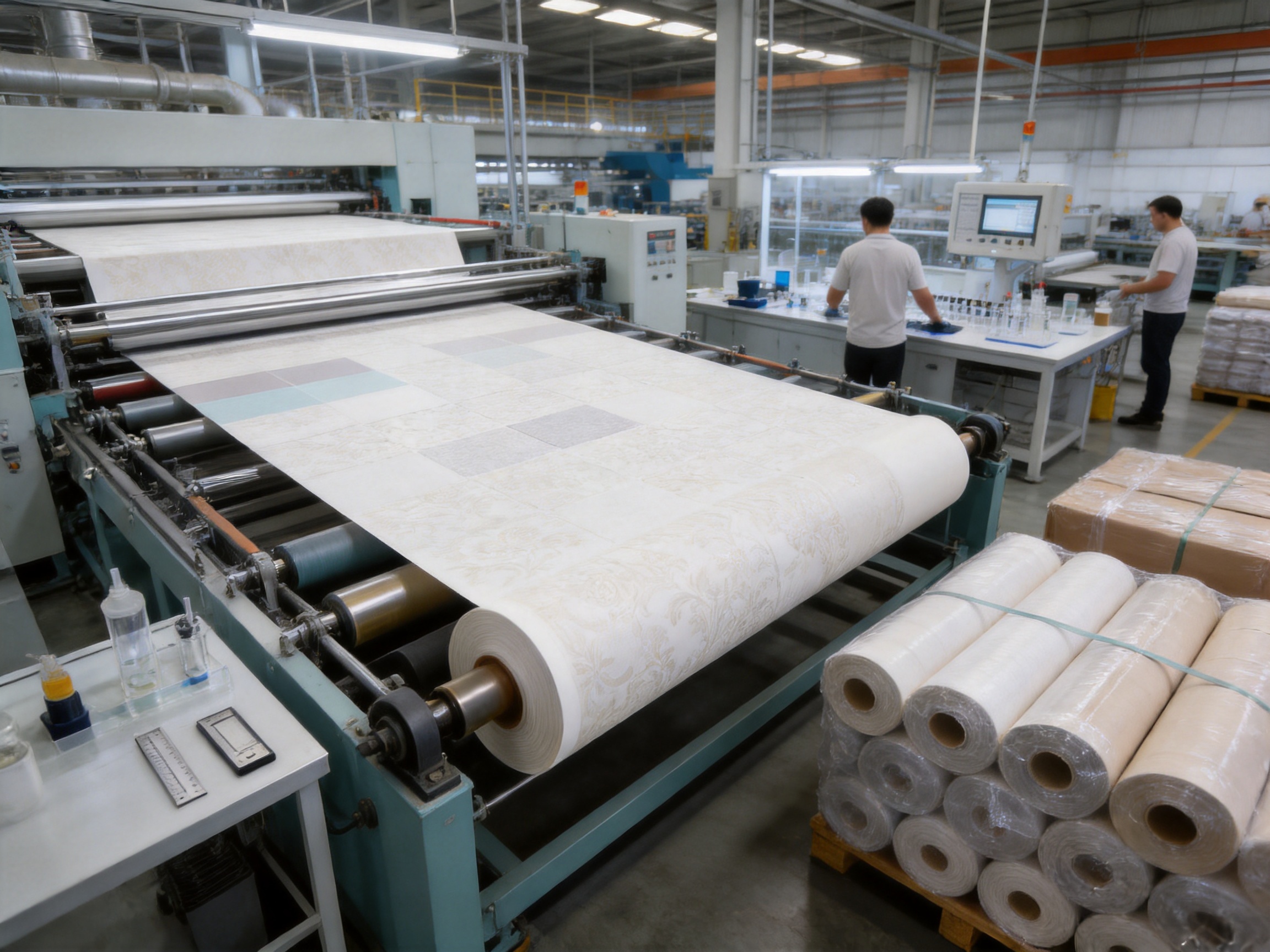
Interior design increasingly depends on materials that combine visual appeal, practical performance, installation efficiency, and long-term value. Decorative wall coverings must do more than create an attractive background. They must withstand daily contact, support a consistent design concept, adapt to different spaces, and remain easy to maintain throughout their service life. Square Pattern PVC Wallpaper responds to these requirements by combining embossed texture, printed surface design, moisture resistance, cleanability, and flexible application in one decorative material.
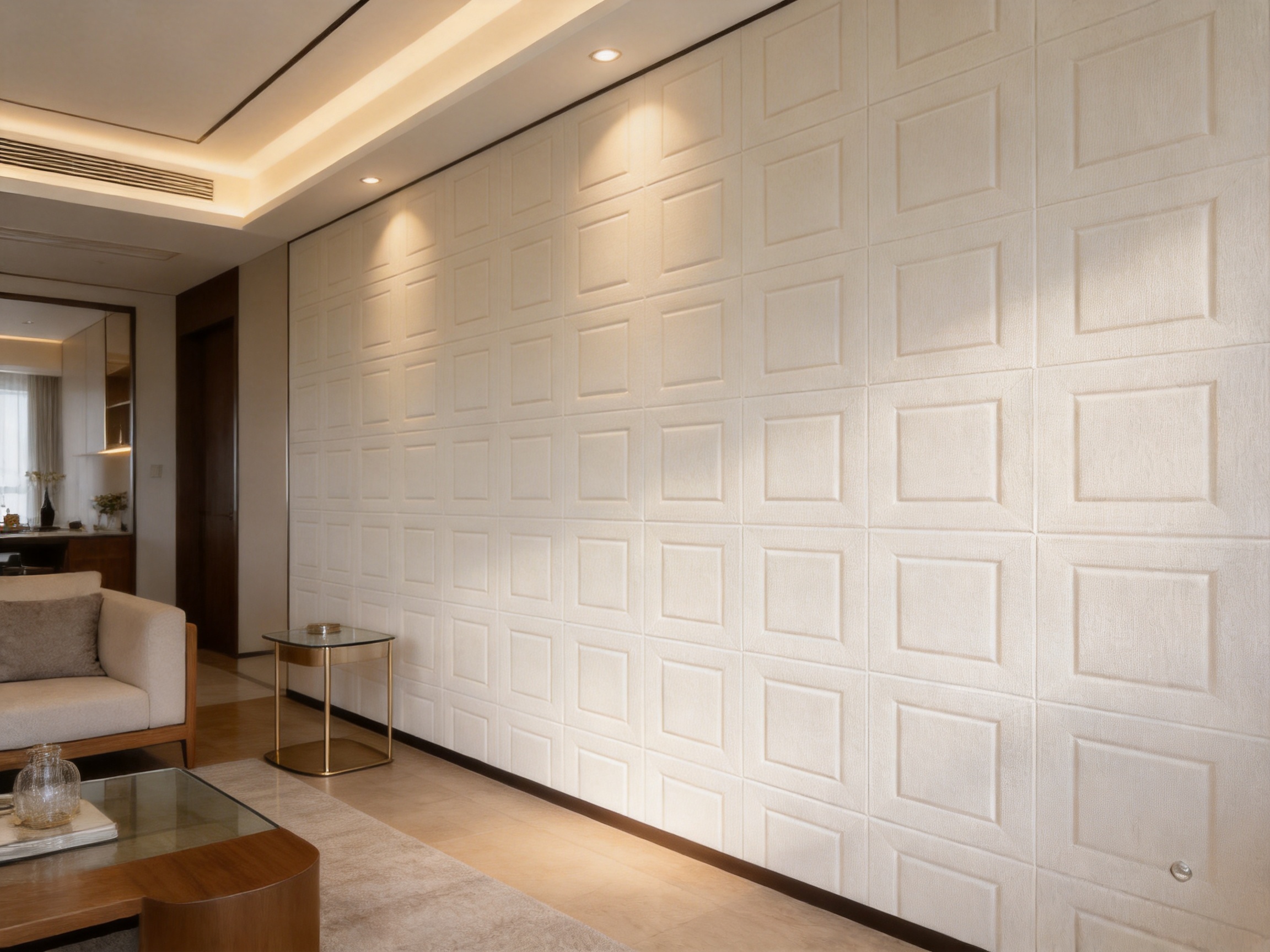
Designed for residential, hospitality, commercial, and whole-house projects, this PVC wallpaper features square grid patterns together with linen-inspired and striped visual effects. Its balanced texture creates a modern architectural appearance without overwhelming the surrounding furniture, lighting, or decorative details. The surface has a soft tactile character, while the embossed structure adds visual depth and helps walls appear more refined.
Unlike ordinary flat wallpaper or low-performance decorative film, this product is developed as a practical surface material for direct wall wrapping. It is suitable for living rooms, bedrooms, corridors, hotel interiors, offices, retail spaces, and other areas where appearance and daily usability are equally important. Its PVC construction supports water resistance, stain resistance, simple cleaning, color stability, and convenient installation.
Manufactured by ZheJiang ZhongSheng New Materials Co., Ltd., the product benefits from an established plastics manufacturing platform, extensive production capacity, dedicated research and development resources, modern laboratories, and experience in PET, PETG, and related decorative sheet and film technologies. These capabilities support stable quality control from material preparation and printing through embossing, finishing, inspection, and packaging.

Square Pattern PVC Wallpaper
1. The Design Concept Behind Square Pattern PVC Wallpaper
Square patterns are among the most adaptable visual elements in contemporary interior decoration. Their geometry creates order, rhythm, and proportion, making them suitable for both minimalist and more expressive design schemes. A square grid can make a wall appear structured and architectural, while a subtle embossed version can provide texture without introducing excessive contrast.
Square Pattern PVC Wallpaper is designed around this principle. The pattern provides a regular visual framework that works with modern furniture, natural wood, metal, glass, stone, and textile elements. It can support a clean commercial interior, a warm residential room, or a sophisticated hotel environment. Depending on the selected color, scale, and lighting conditions, the same design language can appear understated, luxurious, contemporary, or highly decorative.
The collection also includes linen and striped pattern effects. Linen-inspired textures create a softer and more natural impression, helping interiors feel comfortable and balanced. Striped patterns can contribute to a sense of direction and visual continuity, particularly on long corridors, feature walls, reception areas, and hospitality spaces. This range of surface effects gives architects, designers, developers, and contractors more options within a unified product category.
1.1 Visual depth without excessive complexity
Many interior projects require a wall finish that is more expressive than paint but less visually dominant than large-scale printed murals. A square or textile-inspired PVC wallpaper can fill this middle position effectively. The pattern is recognizable, yet it does not necessarily compete with artwork, furniture, signage, lighting, or architectural details.
The combination of printing and embossing is especially important. Printing establishes the base color and pattern definition, while embossing creates tactile relief. Together, these processes produce a surface that looks more dimensional than a flat printed sheet. The result is a refined appearance that can help conceal minor visual irregularities and provide a more substantial finish than ordinary paper-based wall coverings.
1.2 Adaptability across different interior styles
The product can be incorporated into modern, Scandinavian-inspired, contemporary, transitional, hospitality, and commercial design schemes. Neutral colors and fine grid structures can be used in bedrooms, meeting areas, corridors, and offices. Stronger colors or more pronounced textures can be applied to reception walls, feature areas, lounges, restaurants, and retail environments.
Colors are available according to existing patterns or can be customized for project requirements. This flexibility is valuable for hotel groups, property developers, interior design studios, and construction contractors that need a coordinated color system across several rooms or buildings.
2. Core Material and Surface Construction
Square Pattern PVC Wallpaper uses PVC as its primary decorative material. Polyvinyl chloride is widely used in building and interior applications because it can be formulated for flexibility, durability, moisture resistance, and consistent surface finishing. For wall decoration, PVC also provides a stable base for printing, embossing, and protective finishing.
The specified surface construction is PVC square pattern printing and embossing. This means that the product’s decorative performance is not based only on color. The printed design and embossed relief work together to establish the final visual and tactile result. The manufacturing process can be adjusted to create different levels of texture, pattern clarity, and surface character.
The available thickness range is listed as 0.12OZ to 0.5OZ. Because project specifications may differ, buyers should confirm the exact unit interpretation, final thickness, roll construction, and tolerance with the supplier before placing an order. The regular width is 1370 millimeters, with customized widths available for suitable projects.
| Specification | Available Information | Project Value |
|---|---|---|
| Product type | Square Pattern PVC Wallpaper | Decorative wall covering for residential and commercial interiors |
| Surface treatment | PVC square pattern printing and embossing | Combines pattern clarity with tactile depth |
| Pattern options | Square grid, linen, and striped effects | Supports multiple interior styles |
| Color | Existing patterns or customized colors | Useful for coordinated design programs |
| Thickness | 0.12OZ–0.5OZ as specified | Allows selection according to project needs |
| Regular width | 1370 millimeters | Efficient coverage for many wall applications |
| Application | Wrapping directly on walls | Supports practical installation workflows |
| Performance features | Moisture-resistant, stain-resistant, waterproof, color-stable, and easy to clean | Helps reduce maintenance demands |
The combination of a wide regular format and customizable dimensions can help reduce unnecessary seams in selected applications. Nevertheless, actual material yield depends on wall height, pattern repeat, installation direction, openings, corners, and the need for pattern matching. A professional installer should prepare a cutting and layout plan before installation.
3. Advantages Compared with Conventional Wall Coverings
Interior wall finishes vary greatly in quality and function. Traditional paper wallpaper can provide attractive designs, but it may be more vulnerable to moisture, staining, tearing, and difficult cleaning. Paint is easy to renew, yet it may lack texture and can show marks or unevenness over time. Decorative boards can deliver strong impact, but they may require more complex fixing systems and may not be suitable for every wall area.
Square Pattern PVC Wallpaper offers a balanced alternative. It provides decorative texture while remaining relatively thin and flexible. It offers a more washable surface than many conventional paper products and can be installed without the structural complexity associated with thick wall panels. This makes it suitable for projects seeking visual enhancement without excessive material weight or construction time.
3.1 Moisture resistance and waterproof performance
Moisture is a common concern in interior environments. Condensation, cleaning activity, humidity, and accidental splashes can affect wall coverings. The PVC material is designed to provide moisture-resistant and waterproof performance, helping the surface maintain its appearance in practical interior conditions.
This feature is particularly useful in hotel corridors, apartment interiors, entrances, dining areas, utility-adjacent walls, and other locations where occasional contact with moisture may occur. Waterproof performance does not mean that every installation can be exposed to continuous water immersion or uncontrolled water leakage. Walls should be properly prepared, and the installation environment should be evaluated according to the project’s moisture conditions.
3.2 Easy cleaning and stain resistance
Walls in hotels, offices, restaurants, public corridors, and family homes are exposed to fingerprints, dust, light contact, and accidental marks. A surface that can be wiped clean helps preserve the appearance of the interior and reduces the frequency of complete replacement.
The product is described as stain-resistant and anti-fingerprint. These properties are valuable in high-contact areas such as corridors, elevator approaches, reception spaces, children’s rooms, and hospitality environments. Cleaning methods should be selected according to the supplier’s technical instructions. In general, gentle cleaning with a soft cloth and compatible neutral detergent is preferable to abrasive tools or aggressive chemicals that may damage the printed or embossed surface.
3.3 Color stability
Color stability is an essential consideration when a wall covering is expected to remain attractive for an extended period. Fading, uneven color, and loss of pattern definition can reduce the quality of an interior project. The product’s stated color-stable characteristic supports consistent visual performance under normal indoor conditions.
Actual color retention depends on lighting intensity, ultraviolet exposure, temperature, cleaning chemicals, installation conditions, and product formulation. For rooms with strong direct sunlight, designers should request appropriate technical information and consider window treatments or UV-control measures.
3.4 Skin-touch surface and tactile comfort
The soft skin-touch quality gives the wallpaper a more comfortable and refined surface character. This is different from a hard, cold, or excessively glossy finish. The tactile effect is suitable for bedrooms, living rooms, lounges, hotel guestrooms, and other spaces where designers want to create a calm and welcoming atmosphere.
A tactile surface also allows lighting to interact with the wall in a more nuanced way. Daylight and artificial illumination can highlight the embossed pattern, producing gentle changes in shadow and reflection. This can make a wall appear richer without relying on highly reflective materials.
3.5 Flexible installation and lower visual weight
The product is intended for direct wrapping on walls. Its flexible sheet format can be easier to handle than rigid decorative panels, especially in renovation projects, curved transitions, narrow corridors, or spaces where heavy construction materials are undesirable. A lighter decorative layer can also simplify transportation, handling, cutting, and on-site storage.
Installation still requires skilled preparation. Walls should be clean, dry, smooth, stable, and free from dust, oil, loose coatings, and excessive moisture. Correct adhesive selection, alignment, pressure, seam treatment, and curing time are important to the final result.
4. Applications in Residential and Hospitality Projects
Square Pattern PVC Wallpaper is suitable for whole-house wall applications and selected feature areas. Its design flexibility enables it to work as a unified background throughout a project or as a coordinated finish used in specific zones.
4.1 Living rooms
In living rooms, the square pattern can establish a structured backdrop for sofas, media units, shelving, artwork, and decorative lighting. A subtle neutral shade can create a calm background, while a darker or more textured design can define a feature wall behind a seating area.
Because the material is easy to clean and resistant to ordinary household contact, it can be considered for family spaces where walls experience regular use. Designers can combine the wallpaper with timber, stone-look flooring, fabric upholstery, and warm lighting to create a balanced contemporary interior.
4.2 Bedrooms
Bedrooms benefit from wall finishes that create comfort without excessive visual stimulation. Linen-inspired and fine square patterns are suitable for headboard walls, bedside areas, or complete room applications. The soft tactile appearance can complement textiles and natural materials while maintaining a clean and modern atmosphere.
For bedrooms, designers may prefer lower-contrast colors and smaller pattern scales. This allows the wallpaper to support relaxation while still providing more depth than plain paint.
4.3 Corridors and transition areas
Corridors often require durable surfaces because they receive frequent contact and traffic. The product’s stain-resistant and easy-clean properties can support maintenance in apartment buildings, hotels, offices, and institutional interiors. Striped patterns can reinforce the direction of a corridor, while square designs can create a more stable and organized visual rhythm.
Pattern alignment should be planned carefully in long corridors. The layout should account for corners, doors, skirting boards, lighting fixtures, signage, and fire-safety equipment. A professional installation plan can reduce visible interruptions and improve continuity.
4.4 Hotel guestrooms and public areas
Hotels require materials that communicate quality while remaining practical for repeated use. Square Pattern PVC Wallpaper can be used in guestrooms, corridors, reception areas, lounges, meeting rooms, restaurants, and service-adjacent spaces. Its visual versatility allows a hotel operator to create different atmospheres while maintaining a coordinated design language.
For guestroom applications, the wallpaper can be used behind beds, on selected walls, or throughout the room. In public areas, stronger embossing or contrast can help establish a recognizable interior identity. The washable surface can also support housekeeping routines when maintained according to recommended procedures.
4.5 Offices, retail interiors, and commercial spaces
Commercial environments often need a professional finish that can be installed efficiently during renovation or fit-out work. The clean geometry of square patterns is suitable for offices, showrooms, clinics, reception spaces, retail stores, and display areas.
Retail designers can use color customization to support brand-neutral or campaign-specific interiors. Offices can use subtle grids to create an orderly atmosphere in meeting rooms and workspaces. In commercial projects, the material may be used alongside decorative panels, metal trims, glass partitions, and acoustic elements.
5. Manufacturing Strength and Process Control
Product performance depends not only on the design concept but also on the manufacturer’s ability to control raw materials, machinery, process parameters, and inspection standards. ZheJiang ZhongSheng New Materials Co., Ltd. was established in 2006 and has developed a substantial manufacturing platform for plastic sheets and films.
The company operates a manufacturing area of approximately 40,000 square meters, with registered capital stated as 11.21 million United States dollars. Its facilities include one research and development team, two laboratories, 33 production lines, and more than 100 sets of machinery and equipment. The company reports an annual production capacity of approximately 70,000 tons.
Although the company is known for transparent plastic sheets and plastic film rolls, its product portfolio includes PETA, PETG, and PET-GAG materials used in thermoforming, vacuum forming, blister packaging, furniture decorative film panels, and related applications. This broader materials experience can contribute to process knowledge in polymer formulation, film production, surface treatment, dimensional control, and decorative finishing.
5.1 Material preparation
A stable decorative film begins with controlled raw material preparation. PVC resin and appropriate additives must be processed according to the intended flexibility, surface quality, color, and performance requirements. Material preparation influences thickness consistency, printing behavior, embossing response, and final handling characteristics.
For customized projects, the manufacturer can evaluate color requirements, surface appearance, pattern definition, width, thickness, and intended application. Early communication is important because a decorative wall finish for a hotel corridor may require different priorities from a residential bedroom application.
5.2 Film forming and dimensional stability
Film forming is a critical stage because the base material must maintain consistent width, thickness, and surface uniformity. Variations in the base film can affect pattern registration, seam appearance, installation behavior, and the final visual quality of the wall.
Production lines and process controls help support repeatability across batches. Quality teams may evaluate dimensions, surface defects, color consistency, flexibility, and roll condition. These controls are especially important for projects that require repeated production of the same design or color over multiple orders.
5.3 Printing technology
Printing establishes the visible square, linen, or striped pattern. High-quality printing requires control of ink application, color matching, registration, drying, and pattern repeat. A well-controlled pattern helps the installer achieve more consistent seams and a more continuous appearance across adjacent strips.
Color customization requires suitable sample approval. Designers and buyers should review physical samples rather than relying only on digital images, because screen settings, lighting, substrate texture, and embossing can influence perceived color. Approved samples should be retained as a reference for production inspection.
5.4 Embossing and tactile finishing
Embossing creates the physical relief associated with the product’s tactile surface. The embossing roller, pressure, temperature, line speed, and material condition must work together to achieve a stable pattern. Excessive pressure may distort the printed design, while insufficient pressure may produce weak or inconsistent texture.
Controlled embossing can improve the relationship between visual pattern and tactile relief. When the square grid or textile effect is properly aligned, the wall covering appears more authentic and refined. It also creates subtle light variation that contributes to interior depth.
5.5 Inspection and laboratory support
The company’s two laboratories and dedicated research and development resources provide a foundation for testing and process improvement. Laboratory work can support material development, product evaluation, formulation adjustment, and performance verification.
Depending on the project, buyers may request information related to thickness tolerance, width tolerance, color consistency, surface appearance, moisture resistance, cleaning resistance, fire-related performance, and environmental documentation. Requirements vary by country, building type, and local regulation, so project-specific compliance should be confirmed before procurement.
5.6 Packaging and delivery considerations
Decorative wallpaper must arrive with its surface, edges, and roll structure protected. Suitable packaging helps prevent dust, moisture, crushing, deformation, and handling damage. Rolls should be stored horizontally or vertically according to supplier instructions and kept in a dry environment away from direct sunlight and extreme temperatures.
For large projects, delivery planning should consider batch identification, color lot management, production sequence, spare material, and installation schedule. Maintaining batch information can help contractors organize the material and reduce the risk of mixing visually different production lots.
6. Quality, Sustainability, and Responsible Material Selection
Modern buyers increasingly evaluate decorative materials according to appearance, durability, maintenance, and environmental responsibility. Square Pattern PVC Wallpaper is described as ECO-friendly within the supplied product information. Buyers should request the relevant technical documentation and certifications needed for their market, particularly when products are intended for hotels, public buildings, schools, healthcare facilities, or green-building projects.
Responsible material selection includes more than the word “eco-friendly.” It involves understanding raw material composition, manufacturing controls, emissions, packaging, service life, cleaning requirements, installation waste, and end-of-life considerations. A durable wall covering that remains attractive for a long period may reduce the need for frequent replacement, but the full project life cycle should be evaluated.
The company’s focus on research and development, scientific management, production capacity, and patent activity indicates an emphasis on ongoing technical development. It reports more than 60 invention and utility patents and more than 16 years of focus on the PET industry. These capabilities may support product innovation and process optimization across its material categories.
For international projects, documentation should be reviewed according to local requirements. Potential documents may include technical data sheets, safety information, fire-test reports, environmental declarations, restricted-substance statements, and quality inspection records. The appropriate documents depend on the installation location and intended use.
7. Installation Guidance for a Professional Finish
Good wall preparation is essential. The substrate should be solid, dry, clean, smooth, and free from dust, grease, loose paint, powdering surfaces, and structural movement. Cracks, holes, uneven joints, and moisture problems should be repaired before wallpaper installation begins.
Installers should measure the wall accurately and prepare a layout that considers pattern repeat, corners, windows, doors, sockets, switches, skirting boards, and ceiling lines. Square patterns require careful alignment because even small deviations may become visible over long distances.
Before full installation, a trial panel or sample section should be applied. This allows the installer to confirm adhesive compatibility, surface appearance, pattern direction, seam behavior, and color under actual project lighting. The product should be acclimatized according to supplier recommendations before installation.
Adhesive selection should be based on the PVC material, substrate type, room conditions, and local installation practice. Excess adhesive should be removed carefully without rubbing the surface aggressively. Seams should be aligned and pressed evenly, while trapped air should be released using suitable tools.
After installation, the room should be kept within a stable temperature and humidity range while the adhesive cures. Strong drafts, excessive heat, direct sunlight, or immediate heavy cleaning may affect the result. The installer should follow the technical instructions supplied for the specific product batch.
7.1 Maintenance recommendations
Routine maintenance is straightforward when the surface is cleaned correctly. Dust can generally be removed with a soft, dry cloth or a suitable non-abrasive tool. Light marks may be treated with a soft damp cloth and a mild, compatible cleaning solution. The surface should then be dried gently.
Abrasive powders, hard brushes, sharp objects, strong solvents, and untested chemicals should be avoided. Before using any cleaning product across a visible wall, a small test should be performed in an inconspicuous area. Prompt removal of spills can help preserve the original appearance.
Periodic inspection is useful in commercial and hospitality environments. Loose edges, damaged corners, impact marks, or moisture behind the wall covering should be addressed promptly. Early maintenance can prevent a small issue from developing into a larger replacement requirement.
8. Why the Product Is Competitive in Global Projects
The competitive value of Square Pattern PVC Wallpaper comes from the combination of design adaptability, practical performance, flexible customization, and manufacturing scale. Many decorative materials provide one or two of these advantages, but fewer combine them in a format suitable for both residential and commercial applications.
First, the range of square, linen, and striped patterns helps designers create different atmospheres without changing to an entirely different material system. Second, the PVC base offers moisture resistance, easy cleaning, and durable surface behavior. Third, the product can be supplied in a regular 1370-millimeter width or customized dimensions where appropriate. Fourth, the manufacturer has substantial production infrastructure that can support larger orders and repeat supply.
The company’s experience in plastic sheet and film manufacturing is another important strength. Production knowledge in PET, PETG, PET-GAG, and decorative film applications provides a technical foundation in polymer processing and surface finishing. Its reported production capacity, laboratories, production lines, machinery, and R&D resources can help support consistent supply for international customers.
Customization is particularly valuable for professional projects. A hotel group may require coordinated colors for different room categories. A developer may need one surface for living spaces and another for corridors. An interior design studio may request a particular tone, texture intensity, or pattern relationship. Subject to technical evaluation and minimum order requirements, the manufacturer can discuss these needs during the specification stage.
Compared with rigid decorative panels, wallpaper-format PVC material may also reduce handling complexity and wall-loading concerns. Compared with ordinary paper wallpaper, it can offer more practical resistance to moisture and cleaning. Compared with plain paint, it provides repeatable texture and pattern without requiring specialist decorative painting techniques.
9. Selecting the Right Pattern and Specification
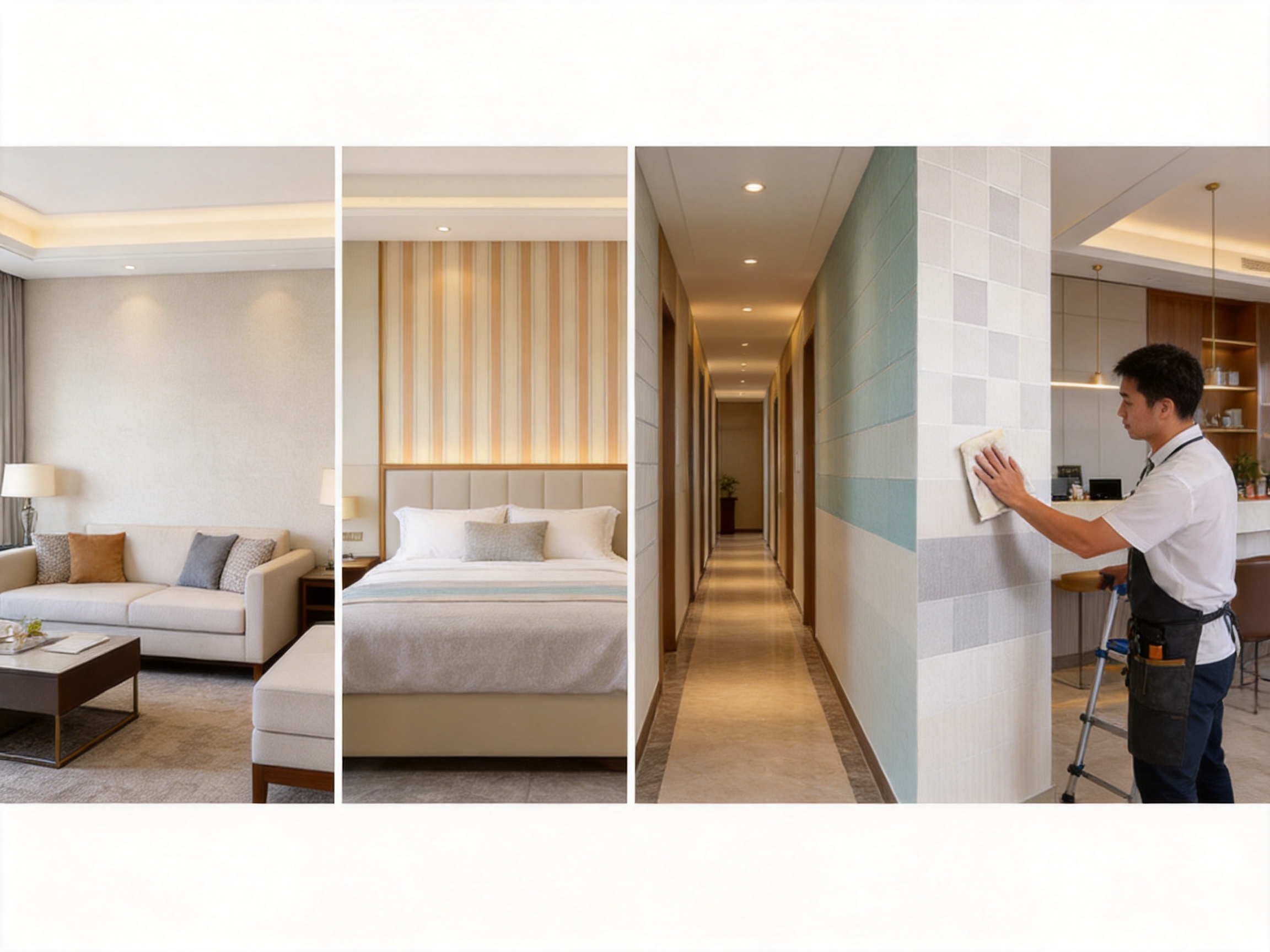
Pattern selection should begin with the purpose of the space. A subtle grid is suitable for rooms where furniture and artwork should remain visually prominent. A pronounced embossed pattern may be more appropriate for a feature wall or reception area. Linen effects are often suitable where designers want softness and warmth, while stripes can create directional emphasis.
Color should be evaluated under the actual lighting conditions of the project. Warm lighting may make beige, cream, and brown tones appear richer, while cool lighting may emphasize gray and blue undertones. Natural daylight can reveal texture and color differences that are not visible in a showroom.
Thickness and width should be selected according to the wall condition, installation method, desired tactile effect, project budget, and local technical requirements. The listed thickness range provides options, but final selection should be based on a confirmed technical data sheet rather than a general product description.
Buyers should also confirm roll length, pattern repeat, usable width, packaging method, minimum order quantity, production lead time, sample approval procedure, color tolerance, and replacement policy. These details are essential for professional procurement and project scheduling.
10. Frequently Asked Questions
What is Square Pattern PVC Wallpaper?
It is a decorative PVC wall covering featuring square grid designs and related linen or striped surface effects. The product combines printed decoration with embossing to create visual pattern and tactile depth.
Where can it be used?
It can be used in living rooms, bedrooms, corridors, hotel guestrooms, reception areas, offices, retail interiors, restaurants, commercial spaces, and whole-house wall applications, subject to suitable substrate preparation and local building requirements.
Is the wallpaper waterproof?
The product information describes it as waterproof and moisture-resistant. This supports use in many practical interior conditions, but it should not be treated as a substitute for waterproof construction or a solution for continuous water exposure. The wall must be dry and properly prepared before installation.
Can the color be customized?
Yes. Colors can be selected from existing patterns or discussed as customized options. Physical samples should be approved before mass production because lighting, substrate texture, and embossing can affect perceived color.
What is the regular width?
The regular width is 1370 millimeters. Customized widths may be available, depending on the production requirements, project quantity, and technical evaluation.
Is it easy to clean?
The surface is designed to be stain-resistant, anti-fingerprint, and easy to clean. Use a soft cloth and a mild compatible cleaning solution. Abrasive materials, strong solvents, and untested chemicals should be avoided.
Does the product require professional installation?
Professional installation is recommended, particularly for large walls, long corridors, patterned layouts, corners, and projects requiring accurate seam alignment. Proper wall preparation and adhesive selection are essential for a successful result.
How should the product be stored before installation?
It should be kept in a clean, dry, protected environment away from direct sunlight, excessive heat, moisture, and crushing pressure. Storage and acclimatization should follow the supplier’s instructions.
What manufacturing capabilities support this product?
The manufacturer operates a large production base with approximately 40,000 square meters of manufacturing area, 33 production lines, more than 100 sets of machinery and equipment, two laboratories, and a dedicated research and development team. It reports annual production capacity of approximately 70,000 tons across its material categories.
Can this product be used in a hotel project?
Yes. Its pattern flexibility, cleanable surface, moisture resistance, and direct wall application make it suitable for many hotel interiors, including guestrooms, corridors, reception areas, lounges, and meeting spaces. Project-specific fire, environmental, and performance documentation should be confirmed before approval.
Does “fireproof” mean it can be used without fire testing?
No. The product information lists fireproof performance, but building regulations vary by country and application. A project should obtain the relevant test reports and certifications before using the material in a regulated building or public space.
11. Procurement and Project Cooperation
Successful procurement begins with a clear project brief. Buyers should provide the intended application, wall conditions, required quantity, preferred pattern, color reference, width, thickness, delivery destination, local compliance requirements, and expected installation date.
The manufacturer can then evaluate material compatibility, production feasibility, customization requirements, sampling, packaging, and delivery planning. For repeat projects, an approved reference sample and documented color standard can help maintain consistency between orders.
ZheJiang ZhongSheng New Materials Co., Ltd. is located at No. 2, Duhu Road, Xiaying Industrial Zone, Anwen Town, Pan’an County, Zhejiang, China. The company provides multiple contact channels for international inquiries, including telephone and email communication. Customers should use the current official contact information when requesting quotations, samples, technical documents, and production schedules.
For international buyers, it is advisable to confirm shipping terms, export packaging, payment arrangements, inspection procedures, documentation, and after-sales support in writing. A well-defined purchase agreement helps protect both the buyer and the manufacturer while ensuring that the final product matches the approved specification.
12. Conclusion
Square Pattern PVC Wallpaper offers a practical and visually sophisticated solution for modern wall decoration. Its square grid, linen, and striped effects provide design flexibility, while PVC construction supports moisture resistance, easy cleaning, stain resistance, color stability, and durable everyday use. The soft tactile surface and embossed texture add depth that cannot be achieved through ordinary flat paint alone.
The product is suitable for homes, hotels, offices, retail spaces, corridors, and other interior environments where designers need a balance between decorative character and practical maintenance. Its regular 1370-millimeter width, customized color options, and direct wall application make it adaptable to a wide range of projects.
Its competitive position is strengthened by the manufacturer’s substantial production base, research and development resources, laboratories, production lines, machinery, polymer-processing experience, and international supply capabilities. With appropriate sample approval, wall preparation, installation, maintenance, and compliance verification, the product can provide a consistent and attractive finish for both individual interiors and large-scale decorative programs.
For designers, developers, contractors, and material distributors seeking a modern alternative to conventional wall coverings, this PVC wallpaper combines patterned elegance with practical performance. It is a strong choice for projects that require texture, cleanliness, durability, customization, and efficient interior transformation in one coordinated material solution.
References
1. Product technical information for Square Pattern PVC Wallpaper, including surface treatment, dimensions, application, and stated performance features.
2. Company profile and manufacturing information supplied by ZheJiang ZhongSheng New Materials Co., Ltd.
3. General principles of interior wall-covering specification, substrate preparation, installation, and maintenance.
4. General polymer-material considerations for PVC decorative sheets, films, and embossed surface products.
5. General building-material procurement practices covering sample approval, quality inspection, storage, installation, and project documentation.