 English
 Español

Zhongsheng
Zhongsheng
Zhongsheng
Zhongsheng
Zhongsheng
Zhongsheng
Zhongsheng
Zhongsheng
Zhongsheng
Zhongsheng
Zhongsheng
Zhongsheng
Zhongsheng
Zhongsheng
Zhongsheng
In premium cosmetic packaging, the package is more than a protective container. It is part of the product experience, a visual statement of quality, and an important communication tool between a brand and its customers. The choice of packaging material affects appearance, protection, processability, durability, and environmental performance. PET frosted film and sheet offer a balanced solution for manufacturers seeking an attractive surface, dependable mechanical strength, chemical resistance, and compatibility with modern packaging processes.
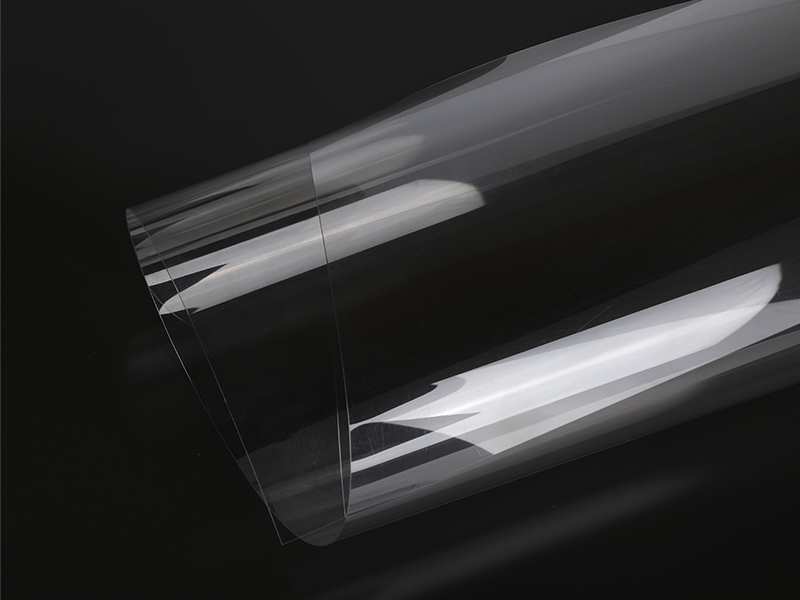
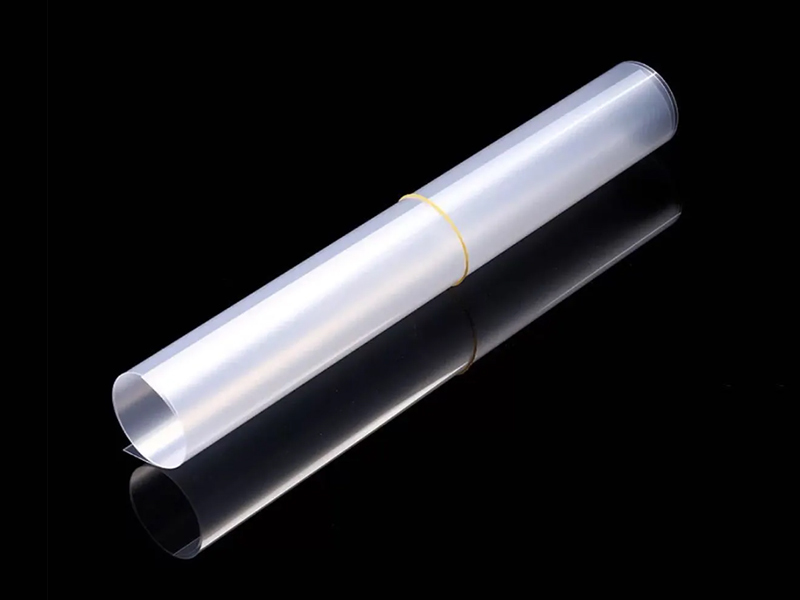
PET Frosted Film/Sheet for Cosmetics Package is designed for high-end cosmetic packaging and a wide range of related applications. Its frosted appearance provides a refined, soft-touch visual impression while retaining the functional advantages associated with polyethylene terephthalate. Depending on thickness and forming requirements, the material can be used for folding boxes, blister packaging, vacuum-formed trays, cosmetic containers, plastic windows, cards, stationery packaging, and other transparent or semi-transparent packaging structures.
Produced by ZheJiang ZhongSheng New Materials Co., Ltd., the product is supported by an industrial manufacturing platform that includes a large production area, multiple production lines, laboratories, research and development capabilities, and extensive equipment resources. The company has focused on PET-related products for more than 16 years and supplies plastic sheets and film rolls for domestic and international markets.
This article examines the product’s material characteristics, packaging advantages, processing suitability, manufacturing strengths, quality considerations, and application potential. It also explains why frosted PET can be a competitive alternative to conventional plastic films, paper-based packaging components, and other clear or decorative sheet materials.
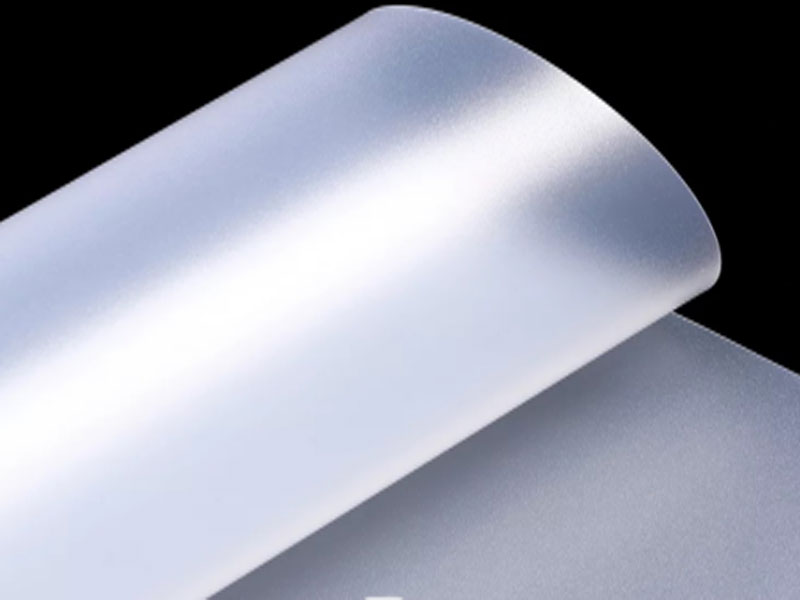
PET Frosted Film/Sheet for Cosmetics Package
What Is PET Frosted Film and Sheet?
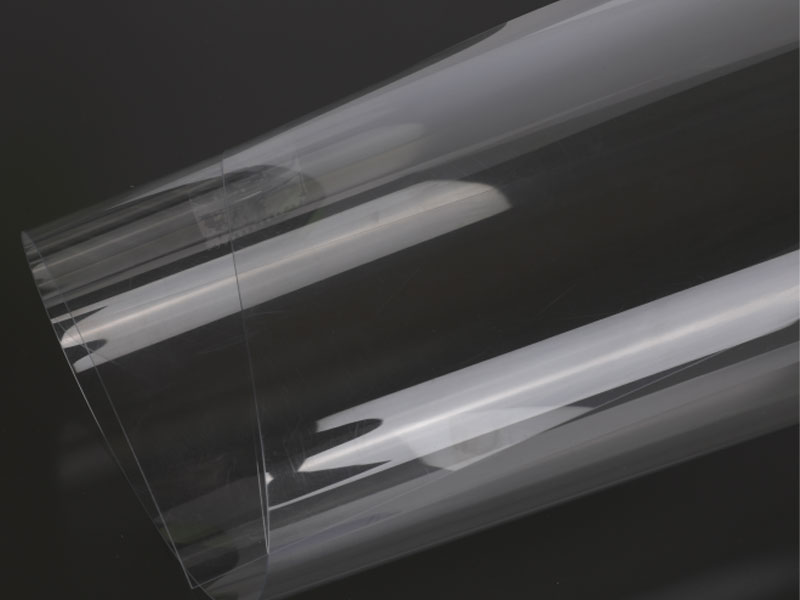
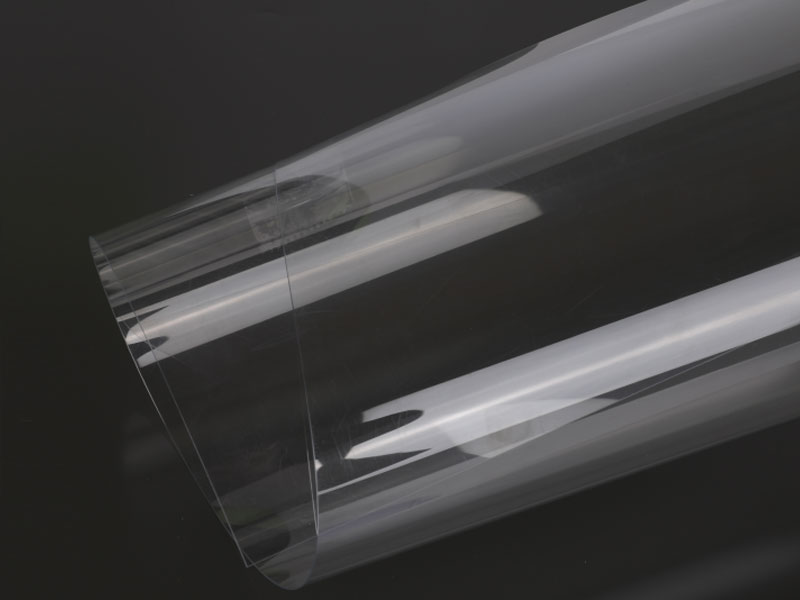
PET frosted film and sheet are polyethylene terephthalate materials with a matte or diffused surface appearance. Unlike a fully glossy transparent sheet, a frosted surface scatters reflected light. This produces a softer appearance that can reduce visual harshness, conceal minor fingerprints, and create a more sophisticated package presentation.
The material can be supplied in different thicknesses for different production requirements. The stated thickness range is 0.15 to 3.0 millimeters, allowing the product to serve both flexible film applications and more rigid sheet applications. Thin material may be selected for film laminations, wrapping, labels, and flexible decorative elements, while thicker grades can be suitable for folding boxes, formed trays, plastic windows, display structures, and rigid cosmetic packaging components.
Width is available from approximately 170 to 1,350 millimeters. This range supports different converting and fabrication systems, from narrow-format processing to wider roll-to-sheet or roll-to-roll operations. The suitable width depends on the customer’s equipment, package dimensions, cutting layout, forming method, and production volume.
PET is widely recognized as a strong and versatile packaging polymer. It combines dimensional stability, transparency, surface quality, chemical resistance, and practical processing characteristics. When a frosted finish is added, the material can provide the aesthetic character needed for premium packaging without giving up the fundamental performance of the PET substrate.
Why Frosted Appearance Matters in Cosmetic Packaging
Cosmetic products compete strongly through presentation. Consumers often encounter the package before they experience the product itself. A frosted finish can help establish a visual connection with concepts such as purity, refinement, softness, cleanliness, modern design, and understated luxury.
Compared with a completely glossy surface, a frosted surface produces less intense reflection. This can improve readability and make printed graphics appear more controlled under retail lighting. It can also create a more tactile visual effect, even when the package does not have a separate soft-touch coating.
Frosted PET can be used as a complete packaging surface or combined with printed graphics, metallic elements, transparent windows, colored layers, and other decorative treatments. Designers may use selective printing to create contrast between frosted and clear areas. For example, a cosmetic box can include a transparent product window surrounded by a matte surface, allowing the package to communicate both premium appearance and product visibility.
The surface can also support brand differentiation. Many cosmetic packages use similar shapes, colors, and materials. A carefully controlled frosted effect can make a package feel more distinctive without requiring excessive decoration. This may be especially useful for skincare, fragrance, personal care, gift sets, and professional beauty product packaging.
Core Product Specifications
The following specifications summarize the available product information. Final specifications should be confirmed according to the required grade, forming process, surface finish, and order conditions.
| Specification | Available Information | Packaging Relevance |
|---|---|---|
| Material | PET frosted film or sheet | Suitable for decorative and protective packaging structures |
| Thickness | 0.15–3.0 mm | Supports flexible film and more rigid sheet applications |
| Width | 170–1,350 mm | Compatible with a range of converting and forming layouts |
| Surface appearance | Frosted or matte visual effect | Provides a refined appearance and reduced surface glare |
| Primary application | Cosmetic and product packaging | Suitable for high-end presentation requirements |
| Processing possibilities | Vacuum forming, blister packaging, printing, folding, and cutting | Supports multiple package manufacturing methods |
| Temperature service range stated in product information | Approximately -20 to 70°C | Provides flexibility for ordinary storage, transport, and use conditions |
Mechanical Strength and Impact Performance
Packaging materials must withstand production, transportation, shelf handling, and consumer use. A package that cracks, tears, or deforms easily can create product loss and damage the perceived quality of the contents. PET frosted film and sheet offer good mechanical properties, including a stated impact strength of approximately three to five times that of certain other films.
Higher impact performance can be valuable in cosmetic packaging because many products contain glass bottles, pumps, caps, applicators, or other components with concentrated weight. The outer package must maintain its shape and appearance while moving through filling lines, distribution systems, retail environments, and customer handling.
The product also has good folding resistance. This is important for folding boxes, sleeves, inserts, display structures, and packages that require crease formation or repeated handling. Folding resistance does not mean that every design can be folded without engineering controls. Package designers should still confirm crease geometry, bending radius, temperature, printing treatment, and converting conditions. However, the material’s stated resistance to folding provides a useful basis for packaging applications that demand structural flexibility.
Compared with more brittle materials, a strong PET structure can reduce the risk of sudden fracture during normal handling. Compared with some flexible films, a thicker PET sheet can provide improved stiffness and shape retention. This balance between toughness and rigidity is one reason PET is widely used in packaging and thermoforming applications.
Chemical Resistance for Cosmetic Packaging
Cosmetic formulations may contain oils, fragrances, alcohols, surfactants, acids, salts, pigments, and other ingredients. Packaging materials must be selected with consideration for direct contact, indirect contact, vapor exposure, migration requirements, and long-term storage conditions.
The product information states that the PET frosted film and sheet are resistant to oil, grease, dilute acids, dilute alkalis, and most solvents. This resistance can help the package maintain its appearance and physical integrity when exposed to common substances associated with cosmetic products and packaging operations.
Chemical resistance is particularly useful for outer packaging components that may encounter product residue. During filling or consumer use, small amounts of cream, lotion, serum, fragrance, or makeup may come into contact with the package. A material with suitable resistance is less likely to become visibly damaged under ordinary conditions.
Nevertheless, chemical compatibility should be tested for every formulation. “Cosmetic product” covers a very broad range of compositions, and exposure duration, concentration, temperature, stress, surface treatment, and contact area can affect performance. A responsible packaging program should include compatibility testing with the actual product formula, especially where direct contact or prolonged exposure is expected.
Transparency, Light Control, and Surface Gloss
PET is known for its optical clarity, and the product information identifies high transparency, ultraviolet blocking, and good gloss among its characteristics. The exact visual effect depends on the level of frosting, sheet thickness, lighting conditions, and any printing or coating applied during conversion.
For cosmetic packaging, transparency can serve several purposes. It can allow consumers to see the color, quantity, or general appearance of the product. It can support a premium “window” effect on cartons and sleeves. It can also help packaging designers combine clear and frosted areas within a single visual system.
At the same time, light control can be important for products that may be affected by ultraviolet exposure. The stated ultraviolet-blocking characteristic may help reduce exposure to certain wavelengths. However, the required level of protection depends on the formulation, package geometry, storage conditions, and applicable product requirements. Packaging developers should confirm the optical transmission data for the selected material and conduct product-specific stability testing.
Good gloss and a frosted effect are not contradictory. A material can have a controlled matte appearance on one surface while retaining attractive visual quality overall. This combination can create a more complex and premium finish than a basic opaque or highly reflective plastic surface.
Temperature Performance and Dimensional Reliability
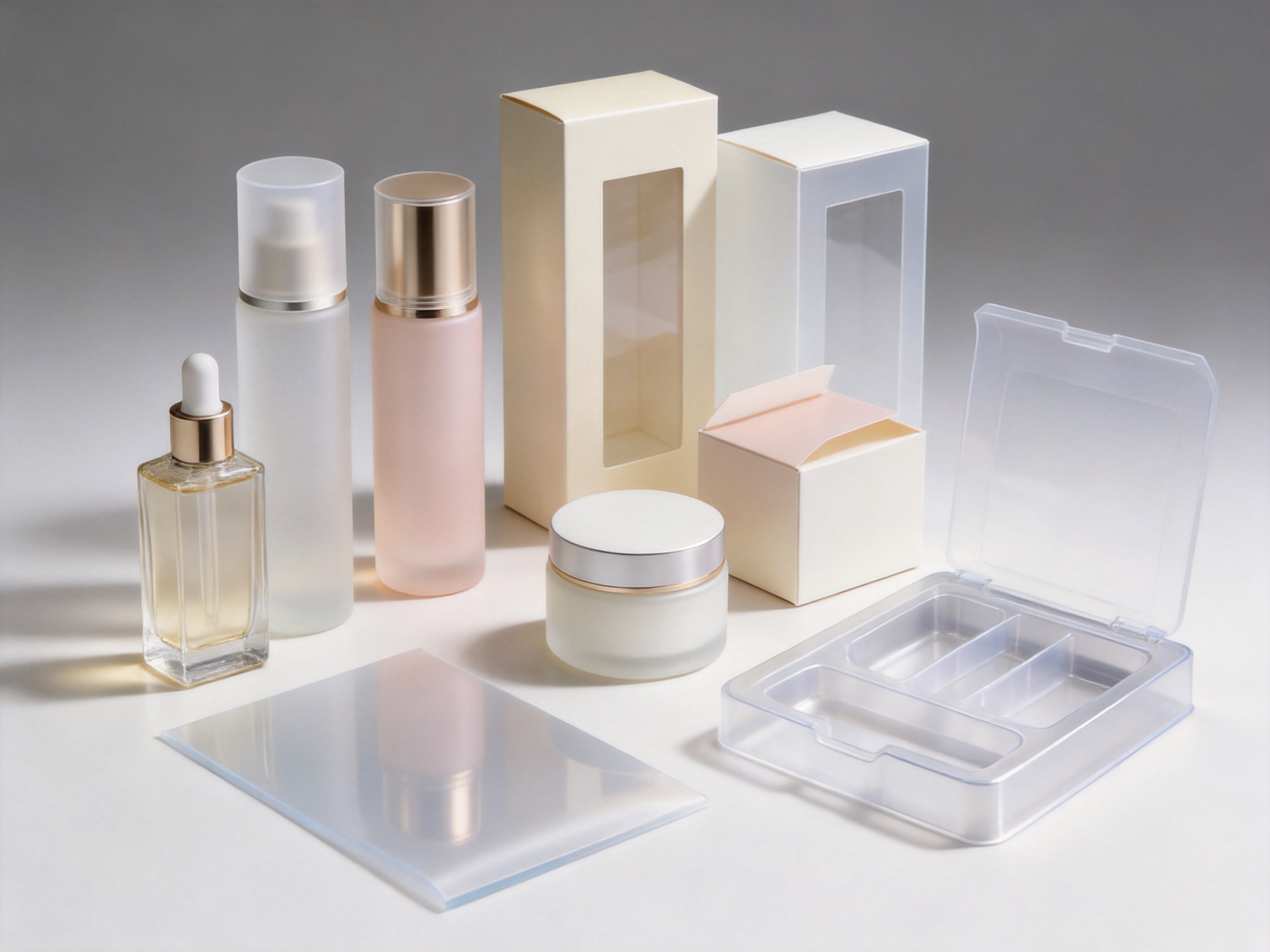
Cosmetic packages may experience temperature changes during manufacturing, warehousing, shipment, retail display, and consumer use. The product information indicates that the film and sheet can adapt to environments from approximately -20 to 70°C, with minimal impact on mechanical properties at high and low temperatures.
This stated range can be useful for ordinary distribution conditions, including cold transport, warm warehouses, and seasonal changes. Stable mechanical behavior helps reduce concerns about excessive brittleness in lower temperatures or unwanted softening in warmer environments.
Temperature performance is also relevant to processing. Vacuum forming and thermoforming operations use heat to shape plastic sheet. The forming temperature, heating time, mold design, cooling method, and machine settings must be developed according to the selected PET grade and thickness. A sheet that behaves consistently during heating and cooling can support more repeatable forming and reduce process variation.
Packaging manufacturers should distinguish between service temperature and processing temperature. The stated -20 to 70°C range describes an application environment, not necessarily the complete forming window. Production trials should be conducted to establish heating profiles, draw ratios, forming speed, cooling time, and dimensional tolerances.
Suitability for Vacuum Forming and Thermoforming
Vacuum forming is one of the stated applications for the product. In this process, a heated plastic sheet is positioned over a mold, and vacuum pressure draws the sheet against the mold surface. The process can produce trays, inserts, blister shells, display components, and protective packaging structures.
PET frosted sheet can be advantageous in vacuum forming because it combines a decorative surface with structural performance. A formed cosmetic tray can hold bottles, jars, tubes, brushes, applicators, or small accessories while presenting a coordinated visual appearance.
Successful forming requires attention to several factors:
1. Sheet thickness should be selected according to the final wall thickness, draw depth, structural requirement, and package size.
2. Mold design should account for material flow, corners, draft angles, vents, radii, and demolding requirements.
3. Heating should be uniform across the sheet to avoid thin areas, uneven appearance, warping, or incomplete forming.
4. Forming speed and vacuum timing should be matched to the material and the complexity of the mold.
5. Cooling should be sufficient to stabilize the finished shape before demolding and trimming.
6. The frosted surface should be protected from unnecessary abrasion during handling, stacking, cutting, and assembly.
When these factors are controlled, formed PET packaging can provide a clean appearance and repeatable dimensions. The suitability of the final structure should be confirmed through trial production and package performance testing.
Blister Packaging Applications
Blister packaging is commonly used for small consumer goods, personal care products, accessories, and promotional sets. In cosmetic applications, it may hold makeup tools, sample products, compact items, replacement components, or travel-size products.
PET frosted film and sheet can support blister packaging in several ways. The material can provide an attractive surface, adequate stiffness, and visibility of the packaged item. Depending on the design, the blister may be combined with a printed card, folding carton, backing board, or sealed lidding material.
The frosted appearance can make a blister pack look more premium than a basic clear plastic shell. It can also soften the visibility of internal components while preserving enough transparency for product recognition. This may be useful when the package must balance protection, display, and visual refinement.
Blister packaging designers should evaluate sealing compatibility, cutting quality, edge appearance, forming depth, and resistance to cracking. The selected sealing system must be compatible with the specific PET structure and any coating or printed layer applied to it.
Folding Boxes and Plastic Windows
Folding boxes require a material that can be cut, scored, folded, printed, and assembled with precision. PET frosted sheet can be used in folding box designs where a more durable or moisture-resistant alternative to conventional paper-based components is desired.
A plastic window is another important application. A transparent or semi-transparent window allows shoppers to view the product while the surrounding package carries branding and product information. PET can be used as an internal window film or as part of a more substantial decorative structure.
The frosted surface can provide a controlled visual transition between the printed package and the visible product. Designers may combine an opaque printed area with a clear window, or use a frosted panel to reveal an outline or color without exposing every detail.
Compared with some paper windows, PET provides resistance to moisture and good toughness. Compared with some low-strength transparent films, thicker PET sheet can provide better dimensional stability and a more substantial feel. The final choice should consider folding geometry, adhesive compatibility, recycling requirements, and the package’s expected service conditions.
Printing and Decorative Potential
Printing is listed among the product’s applications. A printable PET surface can support product names, ingredient information, usage instructions, barcodes, regulatory content, decorative patterns, and brand graphics.
Printing on a frosted surface requires attention to ink adhesion, surface energy, drying or curing, color density, registration, and abrasion resistance. The visual result may differ from printing on a glossy clear sheet because the matte surface diffuses reflected light. This difference can be used intentionally to create a softer, more elegant appearance.
Designers may use spot colors, metallic inks, white ink, transparent inks, reverse printing, or layered graphics. A clear or lightly frosted area can be left unprinted as a viewing window. Another approach is to print a translucent pattern over the frosted surface to create depth without adding a separate decorative film.
Before full production, converters should conduct ink adhesion testing and evaluate the printed surface after folding, forming, stacking, rubbing, and exposure to the expected cosmetic formulation. This helps ensure that the graphics remain attractive through the entire supply chain.
Advantages Compared with Conventional Packaging Materials
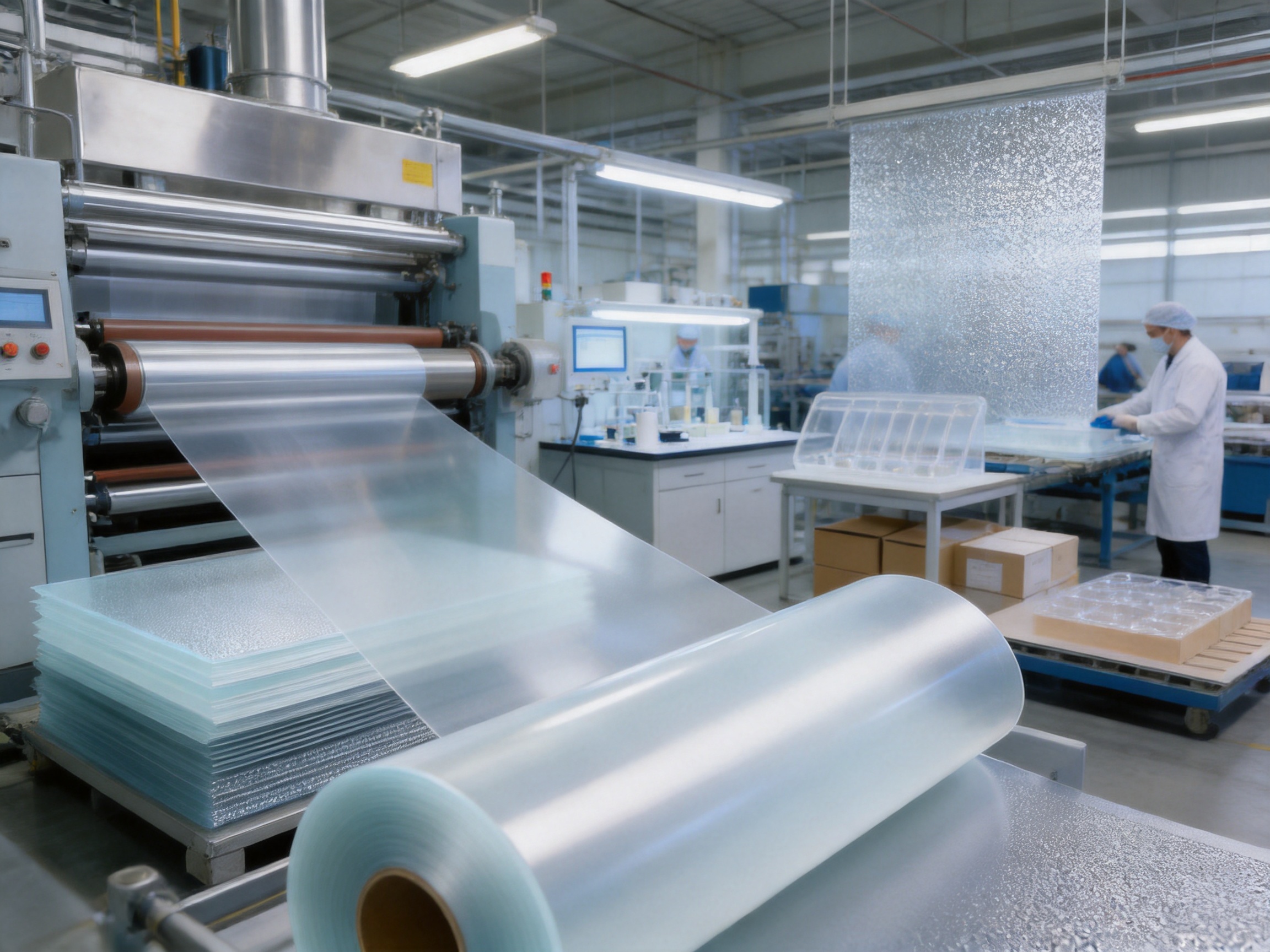
PET frosted film and sheet compete with a range of materials, including conventional clear films, opaque plastic sheets, paperboard, coated paper, PVC film, and other decorative laminates. The most suitable material depends on the package design and required performance, but several comparative advantages make frosted PET attractive.
Compared with basic glossy films
A basic glossy film may provide transparency and shine but may not deliver the refined matte appearance desired for premium cosmetics. Frosted PET adds visual softness and can help reduce the appearance of glare and fingerprints. It can also support a more tactile and sophisticated package identity.
Compared with brittle transparent plastics
Some transparent plastics may become vulnerable to cracking under impact, folding, or low-temperature handling. PET is valued for its strength and good folding resistance. The stated impact performance can provide an advantage where packaging must tolerate repeated handling.
Compared with paper-based materials
Paperboard is widely used for cartons and folding boxes, but it can be sensitive to moisture, grease, and liquid contamination unless protected by coatings or laminations. PET offers resistance to oil, grease, dilute acids, dilute alkalis, and most solvents, which may provide a practical benefit in cosmetic environments.
Compared with less dimensionally stable films
Flexible films can be efficient for wrapping and lamination but may not provide sufficient stiffness for trays, windows, inserts, and formed structures. PET sheet in the available thickness range can provide a broader balance between flexibility and rigidity.
Compared with visually plain materials
Some materials perform well functionally but offer limited decorative character. A frosted finish gives PET a distinct surface identity. This can help packaging designers achieve a premium appearance without relying exclusively on additional coatings, embossing, or complex laminations.
These comparisons should be treated as general material considerations rather than universal claims. Actual performance depends on grade, thickness, package structure, processing conditions, and the competing material selected.
Manufacturing Capabilities Supporting Product Consistency
The performance of a plastic film or sheet depends not only on polymer selection but also on manufacturing control. Thickness uniformity, width accuracy, surface quality, optical consistency, winding quality, and defect management all influence the final packaging result.
ZheJiang ZhongSheng New Materials Co., Ltd. operates a manufacturing area of approximately 40,000 square meters. The company has 33 production lines and more than 100 sets of machinery and equipment. This industrial base supports large-scale production of transparent plastic sheets and plastic film rolls, including PET-related products used for thermoforming, vacuum forming, blister packaging, and decorative applications.
A larger production platform can offer several practical advantages. It may support higher output, improved scheduling flexibility, multiple product specifications, and better separation of production stages. It can also provide the equipment resources needed for process adjustment, quality inspection, roll handling, cutting, and customized orders.
For packaging customers, manufacturing capacity is important because a material must be available not only for sampling but also for stable, repeatable supply. Annual production capacity is stated at approximately 70,000 tons. This capacity is relevant to customers that require regular deliveries, project expansion, or supply support across multiple packaging programs.
Research and Development Strength
Material innovation is an important part of the packaging industry. Cosmetic packaging trends change quickly, and customers may require new thicknesses, surface effects, forming behavior, printing characteristics, or decorative functions.
The company has one research and development team and two laboratories. These resources support the development and evaluation of PET, PETG, and PET-GAG products. The company also reports more than 60 invention and utility patents, demonstrating a continuing focus on technical development and intellectual property.
Research and development can contribute to product performance in several ways. It may help improve polymer formulation, surface finish, optical properties, forming behavior, thickness control, or compatibility with downstream equipment. Laboratory resources can also support testing of mechanical properties, appearance, dimensional behavior, and chemical resistance.
For customers, an experienced technical team can be valuable during material selection. A packaging project often involves more than choosing a nominal thickness. It may require matching the sheet to a mold, a printer, a folding machine, a sealing system, and a particular cosmetic formula. Technical communication between the material producer and converter can reduce trial-and-error and improve the probability of successful production.
Quality Management and Process Control
Quality control for PET film and sheet should cover incoming raw materials, extrusion or sheet formation, surface treatment, thickness, width, appearance, roll condition, packaging, and final inspection. Uniform process control helps ensure that the material performs consistently from one batch to another.
Important quality characteristics may include:
1. Thickness uniformity across the width and along the roll.
2. Surface consistency of the frosted effect.
3. Transparency, haze, and visual appearance.
4. Absence of gels, black spots, streaks, pinholes, wrinkles, and other visible defects.
5. Mechanical strength and folding performance.
6. Roll winding quality and edge condition.
7. Compatibility with printing, cutting, folding, forming, or sealing.
8. Packaging protection during storage and transportation.
The company’s stated philosophy of seeking development with quality and creating a brand with integrity reflects the importance of process discipline and customer trust. A reliable supplier should provide clear product information, consistent specifications, technical support, and practical communication regarding order requirements.
Production Process for PET Film and Sheet
Although exact production parameters vary by grade and equipment, PET film and sheet manufacturing generally involves several controlled stages. Understanding these stages helps packaging buyers evaluate supplier capability.
Raw material preparation
Polyester resin and approved additives are prepared according to the target grade. Moisture control is important because PET can be affected by hydrolysis during melt processing. Proper drying and material handling help protect molecular weight and support stable mechanical performance.
Melting and extrusion
The prepared material is heated and melted in an extrusion system. Temperature, pressure, residence time, and filtration must be controlled to achieve a uniform melt. Melt filtration can help reduce contamination and improve sheet appearance.
Sheet formation
The melt is delivered through a die or related forming system to create a continuous sheet or film. Cooling and initial shaping establish the basic dimensions and surface characteristics. Thickness control across the width is essential for downstream forming and printing.
Orientation and structural development
Depending on the product design, PET may undergo controlled stretching or orientation. This can improve strength, dimensional performance, and optical characteristics. The exact process differs between film and thicker sheet products.
Surface creation or treatment
A frosted effect may be created through material formulation, controlled surface structure, embossing, coating, or another manufacturing approach. The selected method affects the appearance, tactile character, printability, abrasion resistance, and transparency of the finished material.
Cooling and stabilization
After forming, the material is cooled and stabilized. Proper control can reduce internal stress, curling, shrinkage, and dimensional variation. These factors are especially important for sheets intended for vacuum forming, folding, or precision cutting.
Inspection and winding
The finished film or sheet is inspected for thickness, width, appearance, surface quality, and roll condition. Film may be wound into rolls, while sheet may be cut or stacked according to customer requirements. Protective packaging helps reduce damage during storage and transport.
Each stage contributes to the final performance of the product. Advanced equipment is valuable, but consistent operating procedures, trained personnel, laboratory testing, and production data management are equally important.
Application Range Beyond Cosmetics
Although the product is mainly positioned for high-end cosmetic packaging, its properties support other packaging and display applications. The stated application range includes vacuum-formed trays, bubble shells, blister packaging, toy packaging, food packaging, stationery, printing, folding boxes, plastic windows, and plastic cards.
In toy packaging, impact resistance and visual presentation can be important because the package may be transported, displayed, and handled frequently. In stationery packaging, the material can provide a clean window or protective shell. In food packaging, the specific grade, compliance status, and contact requirements must be confirmed before use.
Plastic cards and display components may benefit from a controlled surface appearance, suitable thickness, and resistance to normal handling. Decorative windows and folding structures can use the contrast between frosted and transparent areas to create a distinctive visual effect.
The broad application range demonstrates the versatility of the material platform. However, each end use has separate technical and regulatory requirements. A grade suitable for an external cosmetic carton may not automatically be suitable for direct food contact or a particular card-production process.
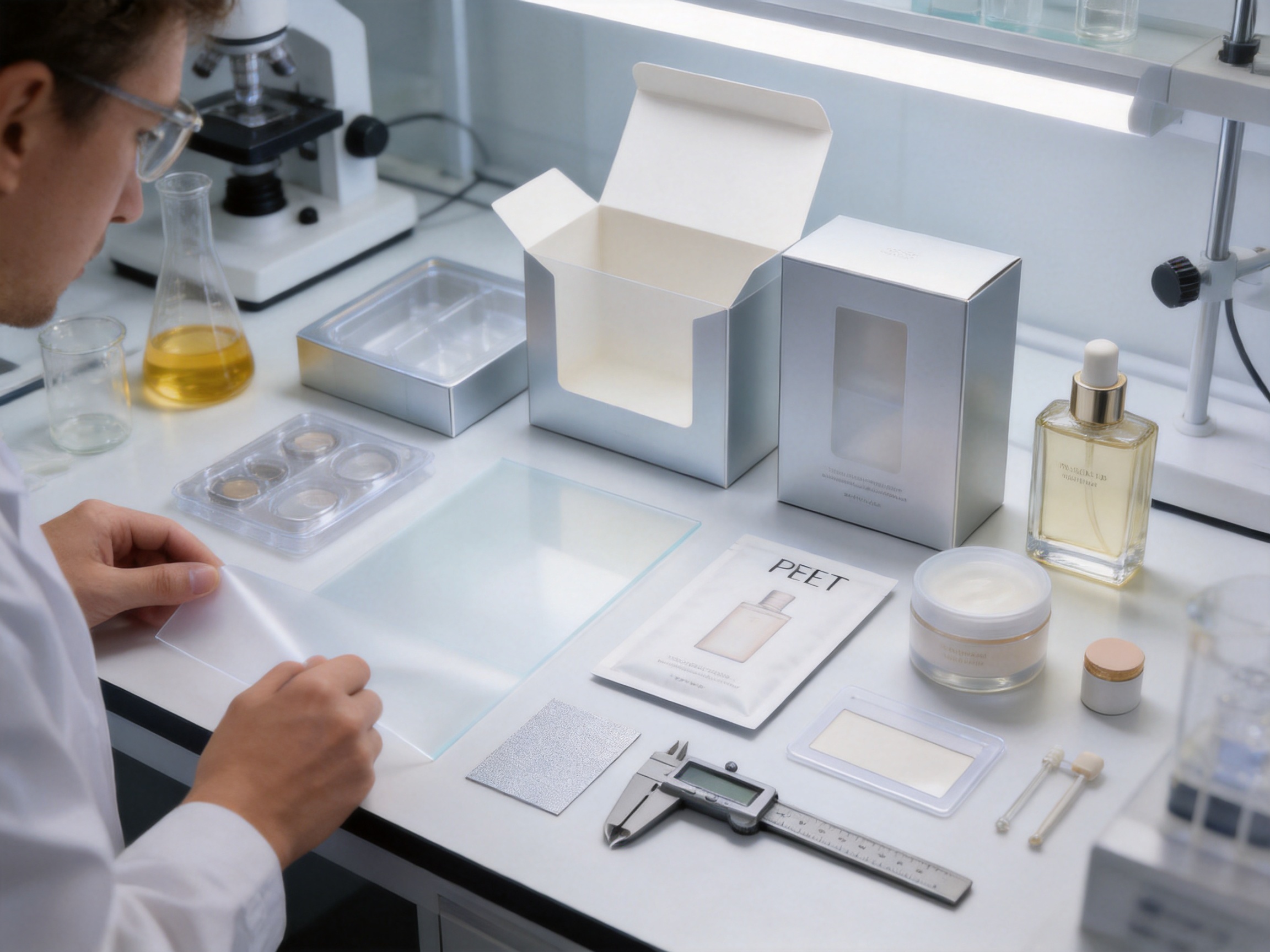
Design Guidance for Cosmetic Brands and Converters
Successful use of frosted PET begins with early cooperation between the product designer, packaging engineer, converter, printer, and material supplier. The design should reflect the material’s strengths while respecting its processing limits.
Select the correct thickness
Thickness affects stiffness, folding behavior, forming depth, transparency, cutting force, package weight, and cost. Thin film may be appropriate for laminations or windows, while thicker sheet may be better for trays, rigid inserts, and structural boxes.
Define the visual effect
“Frosted” can describe different levels of haze and surface diffusion. Designers should specify the desired balance between visibility and privacy. Samples should be evaluated under retail lighting, daylight, and the lighting used in product photography.
Plan printing and finishing together
Ink, adhesive, coating, embossing, and cutting decisions can affect the appearance and durability of the final package. The print supplier should test adhesion and abrasion resistance on the actual PET surface.
Consider package assembly
Folding lines, adhesive areas, heat sealing, snap fits, and mechanical locks should be tested on production-intent material. A package that performs well in a small prototype may require adjustment when converted at high speed.
Evaluate product compatibility
Cosmetic formulations should be tested against the final material, including any inks, coatings, adhesives, and laminations. Testing should consider temperature, time, pressure, and exposure to oils, fragrances, solvents, or other ingredients.
Protect the surface during production
Frosted surfaces can be visually attractive but may show damage if they are dragged across contaminated equipment or stacked without protection. Clean handling, suitable interleaf materials, and careful roll storage can preserve surface quality.
Storage, Handling, and Logistics
Plastic film and sheet should be stored in a clean, dry environment away from excessive heat, direct sunlight, water, and chemical contamination. Rolls and sheets should be supported correctly to prevent deformation, edge damage, or telescoping.
Before processing, the material should be allowed to reach the production-area temperature when required. Sudden temperature changes can contribute to condensation or dimensional variation. Packaging should remain intact until the material is ready for use.
During transport, the rolls or sheets should be protected from impact, excessive compression, and sharp contact points. Good logistics practices are particularly important for frosted materials because scratches, pressure marks, and contamination may be visible on the finished package.
Customers should communicate storage duration, shipping conditions, and production schedules with the supplier. This helps the supplier recommend suitable packaging protection and helps the converter plan material conditioning before use.
Commercial and Supply Advantages
For packaging manufacturers, the technical performance of the material is only one part of the purchasing decision. Supply reliability, production capacity, technical communication, customization capability, and long-term cooperation are equally important.
ZheJiang ZhongSheng New Materials Co., Ltd. has an annual production capacity of approximately 70,000 tons and serves customers in domestic and international markets. Its manufacturing scale can support recurring orders and larger packaging programs. The availability of 33 production lines and more than 100 sets of equipment may also provide flexibility for different thicknesses, widths, and product categories.
The company’s experience in PET products, including PETG and PET-GAG materials, supports a broader understanding of transparent and decorative plastic applications. This product knowledge can help customers compare materials according to forming, printing, visual, and structural requirements.
More than 16 years of focus on the PET industry also provides an accumulated base of process experience. In a competitive packaging supply chain, long-term material specialization can be an advantage because it supports faster communication, better troubleshooting, and more informed recommendations.
Responsible Material Selection
Material selection should consider the full packaging system rather than a single property. PET frosted film and sheet can offer strength, chemical resistance, attractive appearance, and processing versatility. Customers should also evaluate package weight, material usage, production efficiency, end-of-life requirements, and local regulations.
Efficient design can reduce material consumption by optimizing thickness, package geometry, trimming layout, and forming performance. A correctly designed tray or folding package may provide the required protection without unnecessary excess material.
Recycling and recovery considerations depend on the final structure. A package made from a single compatible material may be easier to sort and process than a complex combination of incompatible layers. If coatings, adhesives, inks, or laminations are used, their effect on the intended recovery route should be reviewed.
Customers should request relevant technical and compliance documentation for the selected grade and intended market. Requirements may vary according to whether the material is used for external packaging, indirect contact, direct contact, food packaging, or a regulated cosmetic component.
Quality Testing for Finished Packaging
Testing should be performed on the complete package, not only on the incoming film or sheet. A finished cosmetic package may behave differently after printing, folding, forming, sealing, laminating, or exposure to the product.
Useful evaluations may include:
1. Visual inspection under controlled lighting.
2. Thickness and dimensional measurement.
3. Impact and drop testing.
4. Folding and crease durability testing.
5. Chemical compatibility testing with the cosmetic formulation.
6. Ink adhesion and rub resistance testing.
7. Heat and cold exposure testing.
8. Vacuum-forming or thermoforming trials.
9. Seal strength testing where sealed packaging is used.
10. Transport simulation, stacking, and handling evaluation.
11. Shelf-life and appearance retention assessment.
Testing results should be documented and compared with the package specification. Any changes to resin, thickness, surface finish, printing system, adhesive, or forming equipment should be reviewed through a change-control process.
Why the Product Is Suitable for Premium Packaging
Premium packaging requires a combination of appearance and performance. An attractive material that scratches easily, cracks during assembly, or reacts with the product may not be suitable for commercial use. Conversely, a strong material with limited visual appeal may fail to communicate the desired brand positioning.
PET frosted film and sheet address both sides of this challenge. The frosted finish supports a refined visual language, while PET provides good mechanical strength, folding resistance, chemical resistance, transparency, ultraviolet-blocking characteristics, and temperature adaptability. The material is also compatible with forming, blister packaging, printing, folding boxes, and plastic windows.
The product is further supported by an established manufacturing organization with large-scale production, research resources, laboratories, extensive equipment, and experience in PET-related materials. Together, these factors make frosted PET a practical option for cosmetic packaging developers looking for a material that combines design flexibility with dependable performance.
Frequently Asked Questions
What is PET frosted film and sheet used for?
PET frosted film and sheet are mainly used for high-end cosmetic packaging and other product packaging. Applications include vacuum-formed trays, blister packaging, bubble shells, folding boxes, plastic windows, printed packaging, toy packaging, stationery packaging, plastic cards, and selected food packaging applications.
What thicknesses are available?
The stated thickness range is 0.15 to 3.0 millimeters. The correct thickness depends on whether the material will be used as a flexible film, folding component, window, formed tray, blister shell, or rigid packaging sheet.
What widths can be supplied?
The stated width range is approximately 170 to 1,350 millimeters. The appropriate width should be selected according to the customer’s equipment, cutting layout, forming mold, and production requirements.
Why choose a frosted surface instead of a glossy surface?
A frosted surface creates a softer, more refined appearance and can reduce strong reflections. It can help cosmetic packaging look more distinctive and premium while still allowing designers to retain transparency or create clear and frosted visual contrasts.
Is the material suitable for vacuum forming?
Yes. Vacuum forming is one of the stated applications. Production trials should be completed to determine the correct heating, forming, cooling, mold, and trimming conditions for the selected thickness and package design.
Can the material be printed?
Printing is one of the stated applications. Ink adhesion, curing, abrasion resistance, and appearance should be tested using the intended printing system and the actual frosted PET surface.
Is PET frosted sheet resistant to cosmetic oils and solvents?
The product information states resistance to oil, grease, dilute acids, dilute alkalis, and most solvents. Because cosmetic formulas vary, compatibility testing with the final product formulation is recommended.
What temperature range is indicated for use?
The stated application range is approximately -20 to 70°C, with minimal impact on mechanical properties at high and low temperatures. The final package should still be evaluated under its actual storage, transport, and use conditions.
What manufacturing resources support the product?
The manufacturer operates a manufacturing area of approximately 40,000 square meters, with 33 production lines, more than 100 sets of machinery and equipment, one research and development team, and two laboratories. The company reports an annual production capacity of approximately 70,000 tons.
Does the manufacturer provide other PET-related products?
Yes. The company manufactures transparent plastic sheets and film rolls, including PET, PETG, and PET-GAG products used for thermoforming, vacuum forming, blister packaging, furniture decorative film panels, and related applications.
How should customers choose the correct grade?
Customers should consider thickness, width, transparency, frosting level, forming method, printing process, chemical exposure, package structure, temperature conditions, and applicable regulatory requirements. Samples and production trials should be used before final approval.
Can the material be used for food packaging?
Food packaging is included among the listed applications, but the exact grade and structure must be confirmed for the intended food-contact or indirect-contact requirement. Customers should request the necessary technical and compliance documentation for their target market.
How can the frosted surface be protected during production?
Clean equipment, careful handling, suitable interleaf protection, controlled stacking, and proper storage can help reduce scratches, pressure marks, dust, and contamination. The recommended practices may vary according to the surface finish and converting process.
Conclusion
PET Frosted Film/Sheet for Cosmetics Package provides a strong combination of appearance, mechanical performance, chemical resistance, temperature adaptability, and processing versatility. Its frosted visual effect is well suited to premium cosmetic packaging, where consumers expect a package to communicate quality before opening the product.
The material supports vacuum forming, blister packaging, printing, folding boxes, plastic windows, trays, and other packaging structures. Its available thickness range of 0.15 to 3.0 millimeters and width range of 170 to 1,350 millimeters allow it to serve both flexible and rigid applications.
Compared with basic glossy films, brittle transparent plastics, and some unprotected paper-based materials, frosted PET can offer a more balanced combination of premium appearance, toughness, resistance, and dimensional performance. The stated resistance to oil, grease, dilute acids, dilute alkalis, and most solvents is valuable for cosmetic environments, while the stated temperature adaptability supports ordinary storage, transport, and use conditions.
The product is supported by ZheJiang ZhongSheng New Materials Co., Ltd., a manufacturer with more than 16 years of PET industry experience, approximately 40,000 square meters of manufacturing space, 33 production lines, more than 100 sets of equipment, two laboratories, one research and development team, and an annual production capacity of approximately 70,000 tons. Its experience in PET, PETG, and PET-GAG products, together with its reported patent portfolio, provides a foundation for continuous product development and technical support.
For cosmetic brands, packaging converters, and product developers, the best results will come from selecting the correct thickness and surface finish, testing the actual formulation, validating printing and forming conditions, and evaluating the complete finished package. When these steps are properly managed, frosted PET can help deliver packaging that is visually refined, structurally reliable, and suitable for modern high-end product presentation.
References
1. ZheJiang ZhongSheng New Materials Co., Ltd. Product information for PET Frosted Film/Sheet for Cosmetics Package.
2. ZheJiang ZhongSheng New Materials Co., Ltd. Technical information concerning PET, PETG, and PET-GAG film and sheet applications.
3. General technical literature on polyethylene terephthalate film, sheet processing, thermoforming, and packaging conversion.
4. General packaging engineering references covering cosmetic packaging design, material compatibility, printing, folding, blister packaging, and vacuum forming.
5. General polymer materials references concerning mechanical properties, chemical resistance, optical performance, temperature behavior, and quality control of PET products.