 English
 Español

Zhongsheng
Zhongsheng
Zhongsheng
Zhongsheng
Zhongsheng
Zhongsheng
Zhongsheng
Zhongsheng
Zhongsheng
Zhongsheng
Zhongsheng
Zhongsheng
Zhongsheng
Zhongsheng
Zhongsheng
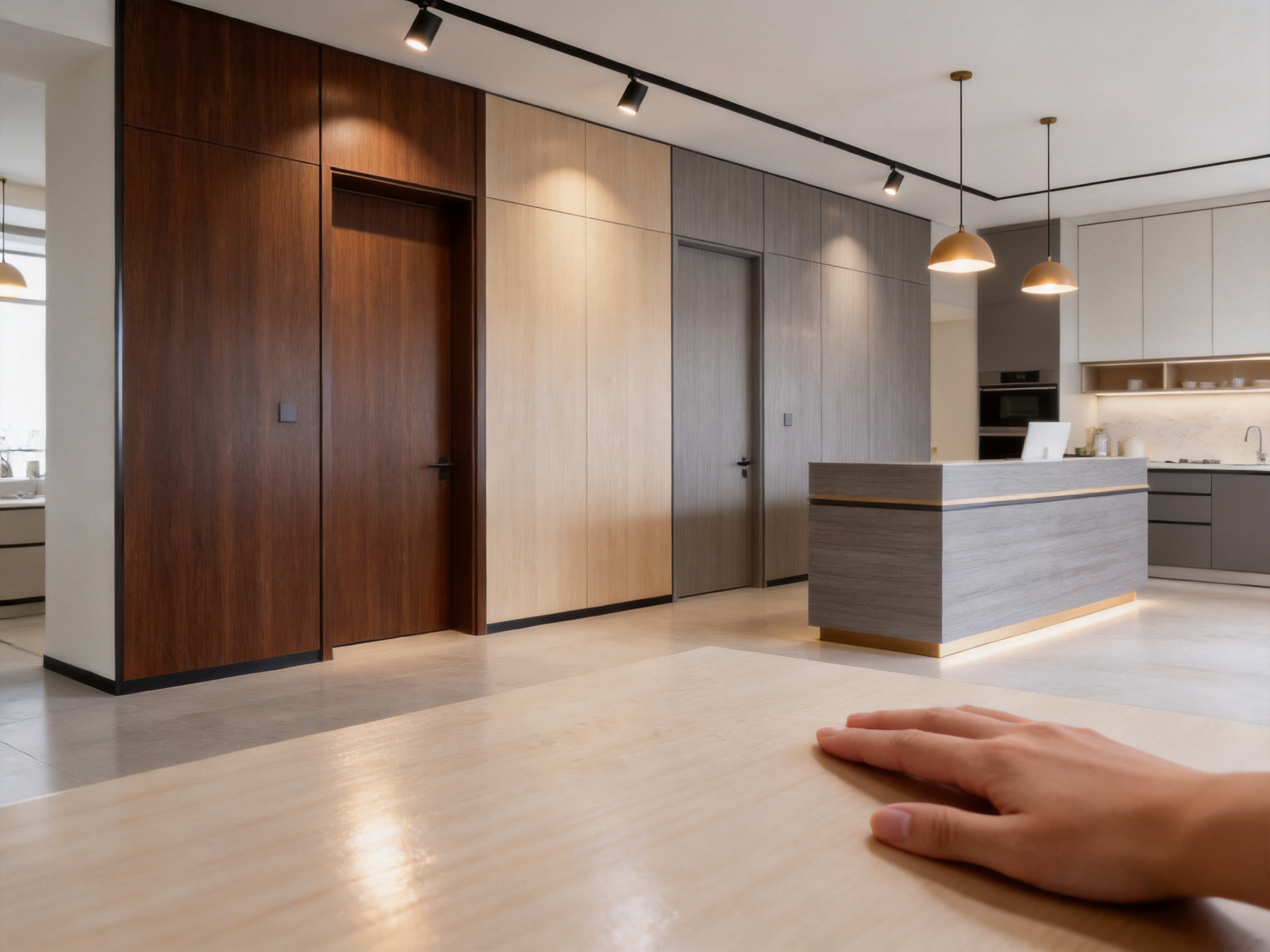
PETG Optical Wood Veneer Film is a premium decorative film designed to bring the visual richness of natural wood to modern furniture, wall panels, architectural surfaces, and commercial interiors. By combining high-quality PETG material with masterful embossing technology, the film creates realistic wood grain patterns that appear three-dimensional, tactile, and visually dynamic.
Unlike ordinary decorative films that may look flat or repetitive, the optical surface of this PETG film responds subtly to changing light. As the viewing angle or lighting condition changes, the wood pattern produces variations in gloss, depth, and reflection. This optical effect gives laminated panels a more sophisticated appearance and helps designers create surfaces that feel refined, contemporary, and distinctive.
The product is manufactured for demanding applications where appearance, durability, easy maintenance, and production reliability are equally important. It can be laminated onto wall panels, furniture panels, wardrobe doors, kitchen cabinets, bathroom cabinets, door boards, commercial decoration panels, and other interior surfaces. Its combination of skin-touch texture, anti-fingerprint performance, stain resistance, waterproof properties, impact strength, weather resistance, and color stability makes it suitable for both residential and commercial projects.
With a thickness range of 0.16 to 0.5 millimeters and a regular width of 1,250 millimeters, the film can support a wide variety of panel sizes and design requirements. Customized colors and dimensions are also available, allowing manufacturers, interior designers, furniture brands, and project contractors to develop coordinated decorative collections.
What Is PETG Optical Wood Veneer Film?
PETG Optical Wood Veneer Film is a decorative surface material based on PETG, a modified form of polyethylene terephthalate known for its clarity, toughness, chemical resistance, and processing flexibility. The material is formed into a thin film and finished with a wood-inspired embossed pattern. A controlled optical surface treatment then enhances the interaction between the film, its grain pattern, and surrounding light.
The result is a film that combines the appearance of wood veneer with the practical characteristics of a modern polymer-based surface. It is not intended to replace every application of solid wood or traditional veneer. Instead, it provides an efficient, consistent, and flexible decorative alternative for laminated panels and engineered surfaces.
The embossed grain contributes more than a printed image. It adds physical structure to the surface, allowing users to see and feel the grain. When combined with the optical glossy finish, the embossed pattern can create highlights and shadows that vary across the panel. This helps the finished product achieve a more authentic and premium appearance than a conventional flat printed film.
PETG is particularly suitable for decorative film applications because it can offer a strong balance between visual quality and functional performance. It can be manufactured in thin gauges while retaining useful flexibility and impact resistance. It also supports precise color development, surface finishing, and roll-to-roll production, which are important for large-scale furniture and interior panel manufacturing.
Key Product Specifications
The film is designed as a versatile decorative material for manufacturers that require controlled dimensions, consistent appearance, and dependable lamination performance.
| Specification | Product Information | Practical Benefit |
|---|---|---|
| Material | PETG decorative film | Combines flexibility, toughness, clarity, and reliable surface performance |
| Surface | Optical glossy | Creates changing reflections and visual depth under different lighting |
| Design | Embossed wood grain | Provides a realistic three-dimensional appearance and tactile character |
| Thickness | 0.16 to 0.5 millimeters | Supports different lamination requirements and design specifications |
| Width | Regular width of 1,250 millimeters or customized | Suitable for standard production lines and project-specific panel sizes |
| Color | Customized colors available | Helps brands and designers develop coordinated interior collections |
| Applications | Wall panels, furniture panels, wardrobe doors, kitchen cabinets, door boards, bathroom cabinets, and commercial decoration | Supports multiple interior and architectural applications |
| Surface features | Skin touch, anti-fingerprint, stain-resistant, waterproof, and color-stable | Improves daily usability, appearance retention, and maintenance efficiency |
| Structural performance | High impact strength when laminated and good weather resistance | Provides additional protection for finished panels in demanding environments |
| Sustainability profile | ECO-friendly material approach | Supports contemporary projects seeking responsible decorative material solutions |
Three-Dimensional Wood Grain Through Embossing
The most recognizable advantage of the product is its realistic wood grain effect. A printed image alone can reproduce color and pattern, but it may not provide the depth, tactile sensation, or changing highlights associated with natural wood. Embossing addresses this limitation by introducing a controlled surface structure that follows the visual grain.
During production, the film surface is formed against a specialized embossing structure. The pressure, temperature, and process conditions must be carefully managed so that the grain remains sharp without compromising film thickness, flexibility, or dimensional stability. When the embossed profile is properly aligned with the printed or colored pattern, the finished surface appears more natural and convincing.
The grain can be designed to resemble different wood styles, from calm and linear patterns to stronger cathedral grains and more expressive natural textures. Customized colors allow the same grain concept to be adapted for light oak, warm walnut, dark wood, contemporary gray wood, or other interior palettes. This flexibility is valuable for furniture manufacturers that need several decorative options within one product family.
The three-dimensional effect is especially effective on broad surfaces. On a wardrobe door, kitchen cabinet, wall panel, or commercial display panel, the grain catches light across the entire plane. This gives the surface movement and prevents it from appearing visually flat. The result can contribute to a warm, high-end atmosphere while maintaining the clean geometry associated with modern panel furniture.
Compared with many basic decorative films, an embossed optical finish can provide a stronger connection between visual design and physical touch. Users can see the grain from a distance and recognize its texture when they interact with the surface. This sensory combination is important in furniture, hospitality, retail, and residential interiors, where people regularly touch doors, cabinets, counters, and wall surfaces.

PETG Opticial Wood Veneer Film
Optical Gloss for More Dynamic Interior Surfaces
The optical glossy surface is designed to create subtle visual changes under different lighting conditions. Natural daylight, warm artificial lighting, directional spotlights, and diffuse ambient light can each interact with the surface differently. Instead of presenting a completely uniform reflection, the film produces controlled variations that emphasize the embossed grain and create a sense of depth.
This effect is valuable in contemporary interiors because lighting is often used as an architectural element. A cabinet or wall panel may appear softer in indirect daylight, more reflective under a spotlight, and more textured under side lighting. The optical finish helps the same material adapt visually to these environments without requiring complicated surface treatments after lamination.
The finish also supports a premium design language. Gloss is carefully balanced with the wood pattern so that the surface does not appear excessively artificial. The objective is not simply to maximize shine. Instead, the optical surface should highlight the grain, improve visual clarity, and add elegance while preserving a comfortable and usable appearance.
For commercial decoration, this optical behavior can help surfaces remain visually engaging as customers move through a space. Retail fixtures, reception walls, hotel furniture, restaurant interiors, and branded display panels can benefit from a material that changes subtly as people approach from different directions.
For residential furniture, the same feature can make a familiar wood design feel more contemporary. Wardrobes, kitchen cabinets, bathroom cabinets, and door boards can achieve a coordinated wood appearance while retaining the clean lines and easy-care properties expected from modern manufactured panels.
Skin-Touch Comfort and Easy Maintenance
A decorative surface is evaluated not only by how it looks but also by how it feels during daily use. The skin-touch feature gives the film a smoother, more comfortable tactile quality. This is particularly useful for doors, cabinet fronts, wardrobe panels, and other surfaces that are frequently opened, closed, or handled.
Anti-fingerprint performance helps reduce the visibility of marks caused by regular contact. On dark, glossy, or heavily used surfaces, fingerprints can quickly affect the overall appearance. By limiting the prominence of these marks, the film can help finished panels maintain a cleaner appearance between routine cleaning cycles.
Stain resistance provides another practical advantage. Kitchens, bathrooms, hospitality spaces, retail interiors, and commercial environments are exposed to dust, oils, water droplets, and occasional spills. A stain-resistant decorative film makes it easier to remove common surface contaminants and reduces the likelihood that everyday use will permanently affect the appearance of the panel.
These properties can reduce maintenance demands for building owners and users. A simple cleaning routine is generally more convenient than frequent refinishing or replacement. For furniture manufacturers, easy-care performance can also be used as a meaningful product benefit when presenting cabinet and panel collections to distributors, contractors, and end users.
Cleaning procedures should still follow the recommendations of the panel manufacturer and project supplier. Mild cleaning methods are normally preferable, while highly abrasive tools and aggressive chemicals should be avoided unless they have been verified for the specific laminated construction.
Waterproof Performance for Interior Applications
The film is designed with waterproof surface performance, making it appropriate for many interior locations where occasional exposure to moisture is expected. Bathroom cabinets, kitchen panels, washroom furniture, utility areas, and commercial interiors can all benefit from a decorative surface that helps resist water-related damage at the film level.
Waterproof performance is particularly important for laminated furniture because moisture can affect both appearance and service life. A decorative film that resists water can help protect the visible surface from common splashes, condensation, and cleaning activities. It also supports more consistent appearance in environments where humidity changes regularly.
However, the finished panel is a complete system. The quality of the substrate, adhesive, edge treatment, lamination process, and installation conditions also influence moisture resistance. Proper sealing of edges and joints remains essential, especially in bathrooms, kitchens, and other areas where water may accumulate.
When correctly specified and processed, PETG Optical Wood Veneer Film can help manufacturers create attractive panel products that are easier to maintain than many untreated wood surfaces. It offers the visual warmth of wood while supporting the practical requirements of modern wet-area furniture and decorative construction.
Impact Strength and Weather Resistance
Furniture and interior panels can be exposed to knocks, impacts, friction, and repeated handling during manufacturing, transportation, installation, and use. The film provides high impact strength when laminated, helping the finished panel withstand the everyday contact associated with cabinets, doors, wall systems, and commercial fixtures.
Impact performance is affected by the entire laminate structure. Adhesive selection, bonding quality, substrate rigidity, surface preparation, and processing conditions all contribute to the final result. PETG Optical Wood Veneer Film is designed to work as part of this system, providing a durable decorative layer rather than a fragile visual coating.
Good weather resistance expands the potential range of applications. While the film is primarily suited to interior decoration and protected architectural uses, resistance to environmental influences can help preserve color and appearance when panels are exposed to changing temperatures, daylight, or moderate outdoor conditions. Project-specific testing is recommended where the material will face prolonged exterior exposure or severe climate conditions.
Color stability is another important advantage for large installations. If a project uses many panels across different rooms or production batches, consistent color helps maintain a unified visual identity. Stable color also supports long-term design quality by reducing the likelihood of noticeable fading or uneven appearance under normal service conditions.
Advantages Over Conventional Decorative Alternatives
PETG Optical Wood Veneer Film offers several advantages when compared with basic printed films, untreated wood veneer, and some conventional surface materials. Each application must be evaluated individually, but the product is designed to address common requirements that arise in contemporary panel manufacturing.
Compared with Flat Printed Film
Flat printed film can reproduce attractive colors and wood images, but it may lack physical depth. The embossed structure of this product adds tactile realism and helps the grain respond to light. The optical glossy finish further separates the surface from a simple two-dimensional image.
The result is a more premium appearance that can be used for high-visibility furniture and architectural surfaces. It gives manufacturers a way to develop decorative panels that feel more substantial without using thick solid materials.
Compared with Natural Wood Veneer
Natural wood veneer offers authentic organic variation, but it can involve more complex sourcing, grading, matching, finishing, and maintenance requirements. PETG film provides a more controlled decorative solution with repeatable dimensions and customizable colors. It can also help manufacturers maintain more consistent appearance across larger production volumes.
The film is flexible, thin, and suitable for lamination, which may simplify integration into engineered furniture panels. Its waterproof, stain-resistant, and anti-fingerprint properties can provide practical benefits in applications where untreated or lightly finished wood would require additional protection.
Compared with Rigid Decorative Sheets
Rigid decorative sheets can provide strong surface coverage, but they may be less adaptable to certain panel shapes, production methods, or roll-based manufacturing systems. A film format allows efficient storage, transportation, cutting, and continuous processing. The 1,250-millimeter regular width is suitable for many standard panel applications, while customized widths support project-specific needs.
The relatively thin profile also helps designers achieve a finished wood appearance without adding unnecessary bulk to the panel assembly. This can be useful where edge details, component weight, or production efficiency must be carefully controlled.
Compared with Lower-Performance Decorative Films
Some lower-performance films may prioritize price while offering fewer functional advantages. They may be more vulnerable to fingerprints, staining, moisture, fading, or surface wear. By combining PETG material, controlled embossing, optical finishing, and a functional surface package, this product is positioned for projects where appearance retention and service performance matter.
Its value therefore extends beyond the initial decorative effect. A film that remains attractive, cleanable, and stable during use can support better customer satisfaction and reduce the need for early replacement or refinishing.
Application in Furniture Manufacturing
Furniture is one of the most important application areas for PETG Optical Wood Veneer Film. The film can be laminated onto wardrobe doors, kitchen cabinet fronts, bathroom cabinets, storage units, door boards, shelving components, and other engineered panels.
In wardrobes, the optical wood grain can create a calm, continuous appearance across large door surfaces. The anti-fingerprint and stain-resistant properties are useful because wardrobe doors are frequently touched. A skin-touch finish also makes the furniture more comfortable to use and helps soften the visual character of a glossy panel.
Kitchen cabinets require a combination of attractive appearance, moisture resistance, easy cleaning, and durability. The film can support wood-inspired designs while providing a surface that is suitable for regular wiping and exposure to common kitchen conditions. Designers can coordinate cabinet fronts, side panels, end panels, and decorative wall elements using related colors and grain patterns.
Bathroom cabinets benefit from waterproof surface performance and color stability. The material can help create a warm wood aesthetic in an environment where solid wood may require more extensive protection. Proper edge sealing and correct substrate selection remain essential for long-term performance.
Door boards and interior doors provide another opportunity for the material. A wood-grain optical finish can add visual warmth to minimalist spaces, hospitality rooms, offices, and residential entrances. Because the film is available in different thicknesses and customized colors, manufacturers can select a specification that matches the construction and appearance requirements of the door system.
Application in Wall Panels and Architectural Decoration
Wall panels are increasingly used to create feature walls, acoustic compositions, hospitality interiors, retail displays, office environments, and residential decorative zones. PETG Optical Wood Veneer Film can be laminated onto suitable wall panel substrates to provide a consistent wood-inspired surface across broad areas.
The optical finish helps large walls avoid a monotonous appearance. As lighting changes throughout the day or as people move through the space, the grain can display subtle differences in reflection. This can make the wall feel more dimensional without relying on complex three-dimensional construction.
For interior designers, the film offers flexibility in coordinating wood aesthetics with other materials such as metal, stone, glass, fabric, and painted panels. A warm wood color can soften a modern space, while a darker or gray-toned wood can support a more dramatic commercial identity.
The material may also be used for decorative columns, reception backgrounds, display walls, partition systems, and feature surfaces. Project teams should select the appropriate substrate and adhesive system according to fire, moisture, impact, and installation requirements. Where regulations apply, the complete finished assembly should be evaluated rather than the film alone.
Commercial Decoration and Display Applications
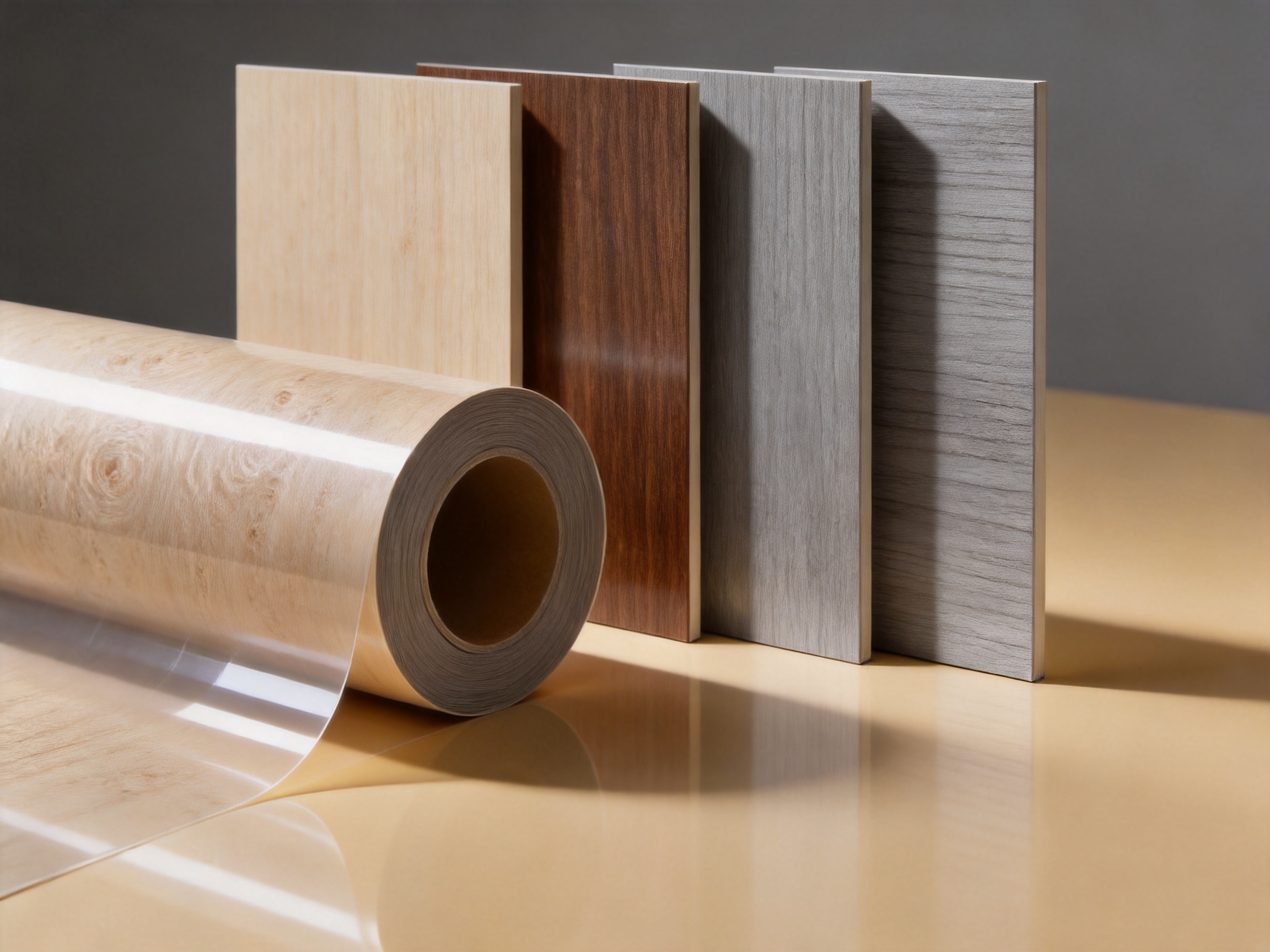
Commercial environments place special demands on decorative surfaces. Materials must look attractive under strong lighting, tolerate frequent contact, and remain easy to maintain. Retail stores, hotels, restaurants, offices, showrooms, exhibition spaces, and service counters can benefit from the combination of optical appearance and functional surface performance.
In retail display systems, the film can provide a consistent visual identity across shelving, cabinets, wall panels, counters, and brand presentation zones. Customized colors help businesses align decorative surfaces with corporate or collection-specific palettes. The wood-grain effect can add warmth and craftsmanship to product displays while preserving a clean, manufactured appearance.
Hotels and hospitality projects often require materials that can maintain a premium appearance during repeated use. Wardrobe fronts, bedside furniture, reception features, wall panels, and cabinet systems can use coordinated film designs to create a unified interior. Anti-fingerprint and stain-resistant performance can reduce the visible effects of guest contact and daily cleaning.
Restaurants and cafes can use wood-inspired panels to create a welcoming atmosphere. The waterproof and easy-care characteristics are valuable in areas exposed to spills and frequent maintenance. Designers can select different wood tones to support rustic, Scandinavian, contemporary, luxury, or industrial interior concepts.
Office interiors can also use the material to balance technical modernity with natural visual warmth. Meeting rooms, reception spaces, executive storage, collaborative areas, and acoustic wall systems may incorporate the film as part of a broader material palette.
Manufacturing Process and Quality Control
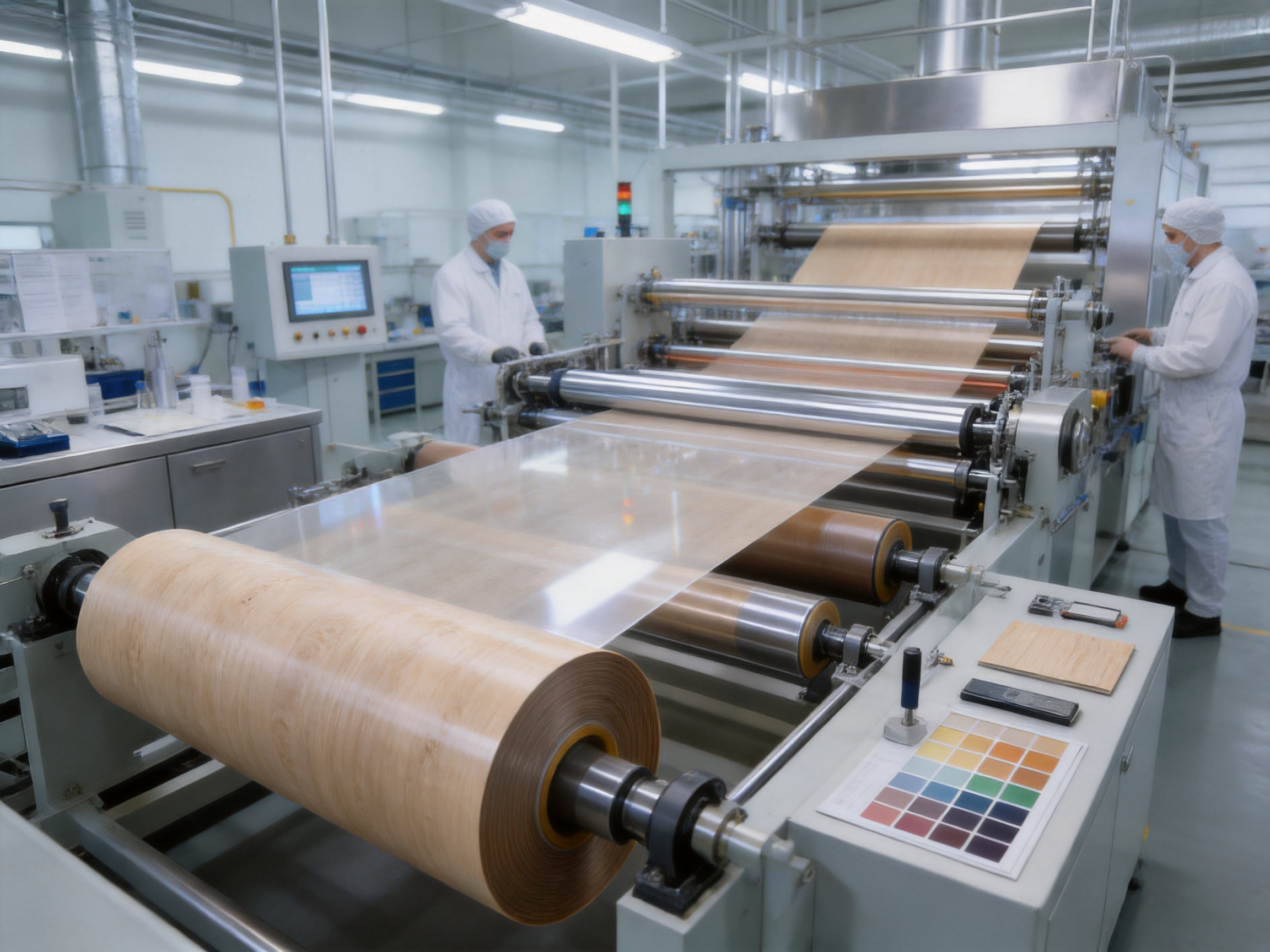
The performance of a decorative film depends on careful control across the entire manufacturing process. A high-quality result requires more than a suitable polymer. Material formulation, extrusion, surface preparation, color development, embossing, finishing, inspection, and roll handling must work together.
Material Preparation
The production process begins with the preparation of PETG raw materials and approved additives. Material selection influences clarity, toughness, flexibility, thermal behavior, and surface quality. Proper storage and handling are important because moisture, contamination, or inconsistent blending can affect film appearance and processing stability.
Advanced manufacturing management helps ensure that incoming materials meet defined requirements before they enter production. Batch identification and process records support traceability, allowing the manufacturer to monitor consistency and investigate any deviation efficiently.
Film Extrusion
During extrusion, the PETG material is melted and formed into a continuous film. Temperature, pressure, melt flow, cooling, and thickness control must be carefully coordinated. Stable extrusion is essential for maintaining uniform thickness across the film width and avoiding surface defects.
The 0.16-to-0.5-millimeter thickness range allows the product to be specified for different applications. Thinner films may support lightweight decorative constructions and efficient material use, while thicker options can provide additional body and may be selected for more demanding lamination requirements.
Surface Treatment and Color Development
The surface must be prepared to receive the wood design and optical finish. Color development is controlled to achieve the desired shade, visual density, and consistency. Customized colors require careful coordination between sample approval, production formulation, and batch inspection.
Color matching is especially important when the film will be used across multiple furniture components or combined with other decorative materials. A controlled color process helps reduce variation and supports a more consistent appearance from one production run to another.
Embossing
Embossing introduces the three-dimensional wood grain. The embossing structure, temperature, pressure, line speed, and film condition must be coordinated to achieve a clear and stable pattern. Excessive pressure may affect film uniformity, while insufficient pressure may produce a weak or inconsistent texture.
Alignment between the visual wood pattern and the embossed grain is also important. When these elements are properly coordinated, the surface appears more natural and the tactile experience becomes more convincing.
Optical Finishing
The optical glossy effect is developed through controlled surface finishing. The process must preserve the clarity of the wood pattern while creating the desired level of reflection. Surface uniformity is closely monitored because variations in gloss can be noticeable across a large panel.
The final finish must balance visual impact with practical usability. A premium surface should show attractive changes under light while remaining suitable for routine handling, cleaning, and lamination.
Inspection and Roll Handling
Finished film rolls are inspected for thickness, width, color consistency, surface defects, embossing quality, gloss, winding condition, and other relevant characteristics. Careful roll handling helps prevent creasing, contamination, edge damage, and deformation during storage and transportation.
Inspection data can support customer confidence and help downstream processors select the correct film specification for their lamination equipment. Consistent manufacturing also reduces production interruptions and material waste for furniture and panel manufacturers.
Manufacturing Strengths and Technical Resources
The manufacturer behind this product was established in 2006 and has focused on the PET industry for more than 16 years. Its manufacturing area covers approximately 40,000 square meters and includes one research and development team, two laboratories, 33 production lines, and more than 100 sets of machinery and equipment.
The company reports an annual production capacity of approximately 70,000 tons and an annual turnover exceeding 70 million United States dollars. Its product portfolio includes PETA, PETG, and PET-GAG materials used for thermoforming, vacuum forming, blister packaging, and furniture decorative film panels.
This breadth of experience is relevant to PETG Optical Wood Veneer Film because decorative film performance depends on both polymer expertise and process control. Experience in transparent sheets, film rolls, thermoforming materials, and furniture decoration can support a deeper understanding of thickness control, surface quality, flexibility, and downstream processing.
The company owns more than 60 invention and utility patents, demonstrating a long-term commitment to technical development. Its self-developed PETG films have been used in furniture decoration panels and have gained recognition in domestic and international markets.
Laboratory resources support product development, testing, troubleshooting, and process improvement. Research teams can evaluate material behavior, surface appearance, lamination compatibility, and application performance. This is particularly important when customers request customized colors, widths, thicknesses, or surface effects.
Large-scale production capacity can also benefit customers that require stable supply for ongoing furniture programs or architectural projects. A supplier with multiple production lines and substantial equipment resources may be better positioned to manage repeat orders, support project schedules, and coordinate different product specifications.
Customization for Designers and Panel Manufacturers
Interior projects rarely use a single universal decorative specification. Different furniture collections, architectural concepts, and brand identities may require different shades, grain strengths, surface effects, widths, or thicknesses. Customized production allows PETG Optical Wood Veneer Film to be adapted to those requirements.
Color customization can support coordinated collections. A furniture brand may need a series of light, medium, and dark wood tones, while a hotel project may request a specific shade that matches flooring, wall paint, metal finishes, or lighting design. Color samples and approval procedures should be established before full production.
Customized width can improve material utilization and reduce unnecessary trimming. The regular width is 1,250 millimeters, but project-specific dimensions may be discussed according to equipment, panel size, and order requirements. Thickness selection can also be coordinated with the lamination process and the intended end use.
Customization is most successful when the film supplier works closely with the panel manufacturer. Information about substrate type, adhesive, lamination temperature, line speed, panel dimensions, edge treatment, and final environment can help determine the appropriate product specification.
Lamination and Processing Considerations
For best results, the film should be processed using equipment and conditions suitable for PETG decorative materials. The substrate must be clean, dry, flat, and properly prepared. Dust, oil, moisture, or surface irregularities can affect bonding and may become visible through the finished film.
Adhesive selection is important because different substrates and production methods may require different bonding systems. The adhesive must be compatible with PETG, provide adequate adhesion, and withstand the expected temperature, humidity, and use conditions.
Processing temperature and pressure should be established through trials. Excessive heat may affect the film or optical finish, while insufficient heat or pressure may lead to incomplete bonding. Production trials should verify appearance, adhesion, dimensional stability, edge quality, and resistance to handling.
The direction of the wood grain should be considered during panel design and cutting. Consistent grain orientation can improve the visual quality of wardrobes, cabinet doors, wall panels, and matched furniture components. For larger projects, production teams should plan roll usage to maintain continuity and reduce variation between adjacent panels.
After lamination, panels should be stored in a clean, dry environment and protected from excessive heat, moisture, pressure, and direct sunlight before installation. Proper handling helps preserve the film surface and reduces the risk of scratches or deformation.
Environmental and Resource Considerations
The product is presented as an ECO-friendly decorative material solution. Its thin-film format can support efficient material use, and its durability may help extend the service life of laminated furniture and panels. Longer-lasting surfaces can reduce the frequency of replacement and the associated consumption of materials and labor.
PETG film can also provide a consistent alternative to some decorative systems that require multiple finishing stages. By integrating visual design, embossed texture, optical appearance, and functional surface properties into one laminated layer, manufacturers may be able to simplify certain aspects of panel production.
Environmental performance should always be assessed in the context of the complete product system. Substrate selection, adhesive chemistry, manufacturing energy, transportation, installation, maintenance, and end-of-life management all influence overall sustainability. Customers should request project-specific environmental documentation where required by a building standard or procurement policy.
Responsible manufacturing also depends on scientific management, quality control, efficient production lines, and waste reduction. The manufacturer’s investment in research, laboratories, production capacity, and process development provides a foundation for improving material efficiency and product consistency over time.
How to Select the Correct Specification
Choosing the appropriate PETG Optical Wood Veneer Film begins with identifying the final application. A decorative wardrobe door may have different requirements from a commercial wall panel, bathroom cabinet, or retail display fixture.
Thickness should be selected according to the lamination process, substrate, handling requirements, and desired surface body. The available range of 0.16 to 0.5 millimeters provides flexibility, but the final decision should be confirmed through production trials.
Width should be considered in relation to panel dimensions and cutting efficiency. The regular 1,250-millimeter width may suit many standard applications, while customized widths can be considered for specialized production lines or large-format panels.
Surface appearance should be evaluated under the lighting conditions expected in the finished project. Optical effects can appear different under daylight, warm lighting, cool lighting, spotlights, and diffuse illumination. Samples should therefore be reviewed in representative environments whenever possible.
Color and grain should be assessed across multiple samples rather than a single small piece. Larger samples provide a better understanding of pattern repetition, grain direction, gloss variation, and overall design impact.
Finally, the complete laminate should be tested. This includes adhesion, scratch and stain behavior, water exposure, impact resistance, edge performance, cleaning compatibility, and dimensional stability. Testing helps ensure that the selected film specification is suitable for the actual manufacturing and installation conditions.
Benefits for Different Stakeholders
For Furniture Manufacturers
The film offers a repeatable decorative solution that can be integrated into engineered panel production. Its customizable colors, standard width, thickness options, and roll format can support different furniture collections. Functional surface properties may also help manufacturers offer products with stronger everyday-use performance.
For Interior Designers
Designers gain access to a wood-inspired material that combines tactile grain, optical reflection, and contemporary surface behavior. It can be coordinated with other materials and used across furniture, walls, doors, and commercial fixtures.
For Project Contractors
Contractors can benefit from a decorative material that is suitable for large panel applications and can be supplied in repeatable specifications. Consistent rolls and planned customization may help support project scheduling and installation coordination.
For Building Owners
The combination of stain resistance, anti-fingerprint performance, waterproof surface behavior, and color stability can support easier maintenance and longer-lasting visual quality. This is particularly valuable in high-traffic commercial environments.
For End Users
Homeowners and occupants receive the visual warmth of wood with a smooth, modern, and easy-care surface. The product can create attractive cabinets, wardrobes, wall features, and doors without requiring the same level of routine care associated with some natural wood finishes.
Frequently Asked Questions
What is PETG Optical Wood Veneer Film used for?
It is used as a decorative laminated surface for wall panels, furniture panels, wardrobes, kitchen cabinets, bathroom cabinets, door boards, commercial decoration, retail displays, and other interior applications.
What creates the three-dimensional wood appearance?
The three-dimensional appearance comes from the combination of a wood-inspired visual pattern and a physically embossed surface. The embossing follows the grain direction and creates tactile depth, while the optical glossy finish adds changing reflections under different lighting.
What thicknesses are available?
The standard thickness range is 0.16 to 0.5 millimeters. The best thickness depends on the substrate, adhesive, lamination equipment, handling requirements, and final application.
What is the regular film width?
The regular width is 1,250 millimeters. Customized widths may be available according to production requirements, panel dimensions, and order specifications.
Can the color be customized?
Yes. Customized colors are available. Customers should provide a reference sample, color target, or design requirement and approve production samples before placing a large order.
Is the film suitable for kitchen and bathroom furniture?
It is designed for applications such as kitchen cabinets and bathroom cabinets because it offers waterproof, stain-resistant, anti-fingerprint, and easy-care surface characteristics. The complete laminated panel must still be properly sealed, especially at edges and joints.
Is the film suitable for outdoor use?
The product has good weather resistance, but suitability for outdoor use depends on exposure duration, ultraviolet radiation, temperature changes, humidity, and the construction of the finished panel. Project-specific testing should be completed for prolonged or severe exterior exposure.
How should the film be cleaned?
Routine cleaning should normally use a soft cloth and a mild cleaning method approved for the finished laminate. Abrasive pads, harsh solvents, and unverified chemicals should be avoided because they may affect the optical surface or embossed finish.
Can the film be used on curved panels?
Its flexibility may support certain shaped or curved applications, but the allowable radius and processing conditions depend on the film thickness, substrate, adhesive, temperature, and forming method. Trial production should be conducted before mass manufacturing.
How does it compare with natural wood veneer?
Natural wood veneer offers organic variation, while PETG Optical Wood Veneer Film provides more controlled color, thickness, width, and repeatability. The film also offers functional features such as anti-fingerprint performance, stain resistance, waterproof behavior, and easy maintenance.
How does embossing affect lamination?
Embossing adds surface texture and visual depth, but the lamination process must be matched to the film. Adhesive selection, pressure, temperature, and substrate flatness should be verified through trials to protect the embossed appearance and ensure reliable bonding.
What manufacturing resources support this product?
The manufacturer has a 40,000-square-meter manufacturing area, one research and development team, two laboratories, 33 production lines, more than 100 sets of machinery and equipment, and an annual production capacity of approximately 70,000 tons. It also has more than 60 invention and utility patents.
What information should be provided when requesting a quotation?
Customers should provide the intended application, required thickness, width, color reference, estimated order quantity, substrate type, lamination method, panel dimensions, delivery requirements, and any testing or compliance standards that apply to the project.
Conclusion
PETG Optical Wood Veneer Film combines the visual appeal of wood with the controlled performance of a modern polymer decorative material. Its embossed grain provides tactile and three-dimensional realism, while the optical glossy surface creates subtle changes in reflection under different lighting. This combination gives furniture and architectural panels a premium appearance that is more dynamic than a basic flat printed film.
The product also addresses practical requirements. Skin-touch comfort, anti-fingerprint performance, stain resistance, color stability, waterproof behavior, high impact strength when laminated, and good weather resistance help support demanding applications in homes, offices, hospitality spaces, retail environments, and commercial interiors.
Its thickness range of 0.16 to 0.5 millimeters, regular width of 1,250 millimeters, and availability of customized colors provide flexibility for different manufacturing programs. When paired with appropriate substrates, adhesives, equipment, and quality control, the film can support efficient production of wardrobes, kitchen cabinets, bathroom cabinets, wall panels, door boards, display fixtures, and other decorative products.
The manufacturer’s long-standing focus on PET materials, extensive production resources, research and laboratory capabilities, large annual capacity, and patent portfolio provide important support for product consistency and continued development. Through advanced extrusion, embossing, optical finishing, inspection, and roll-handling processes, the company is positioned to serve customers seeking reliable decorative film solutions for modern furniture and interior design.
For designers and manufacturers seeking a wood-inspired surface with a contemporary optical effect, practical maintenance advantages, and scalable supply potential, PETG Optical Wood Veneer Film represents a versatile option for premium laminated panels.
References
1. Product specification information for PETG Optical Wood Veneer Film, including surface finish, thickness, width, applications, and functional features.
2. Manufacturer information concerning PETG film production, research and development resources, production capacity, laboratories, machinery, and patent ownership.
3. General principles of polymer film extrusion, embossing, surface finishing, and decorative panel lamination.
4. General technical considerations for furniture panel construction, adhesive compatibility, moisture protection, edge sealing, and surface maintenance.
5. General interior design practices relating to wood-grain materials, optical finishes, commercial decoration, furniture surfaces, and architectural wall panels.