 English
 Español

Zhongsheng
Zhongsheng
Zhongsheng
Zhongsheng
Zhongsheng
Zhongsheng
Zhongsheng
Zhongsheng
Zhongsheng
Zhongsheng
Zhongsheng
Zhongsheng
Zhongsheng
Zhongsheng
Zhongsheng
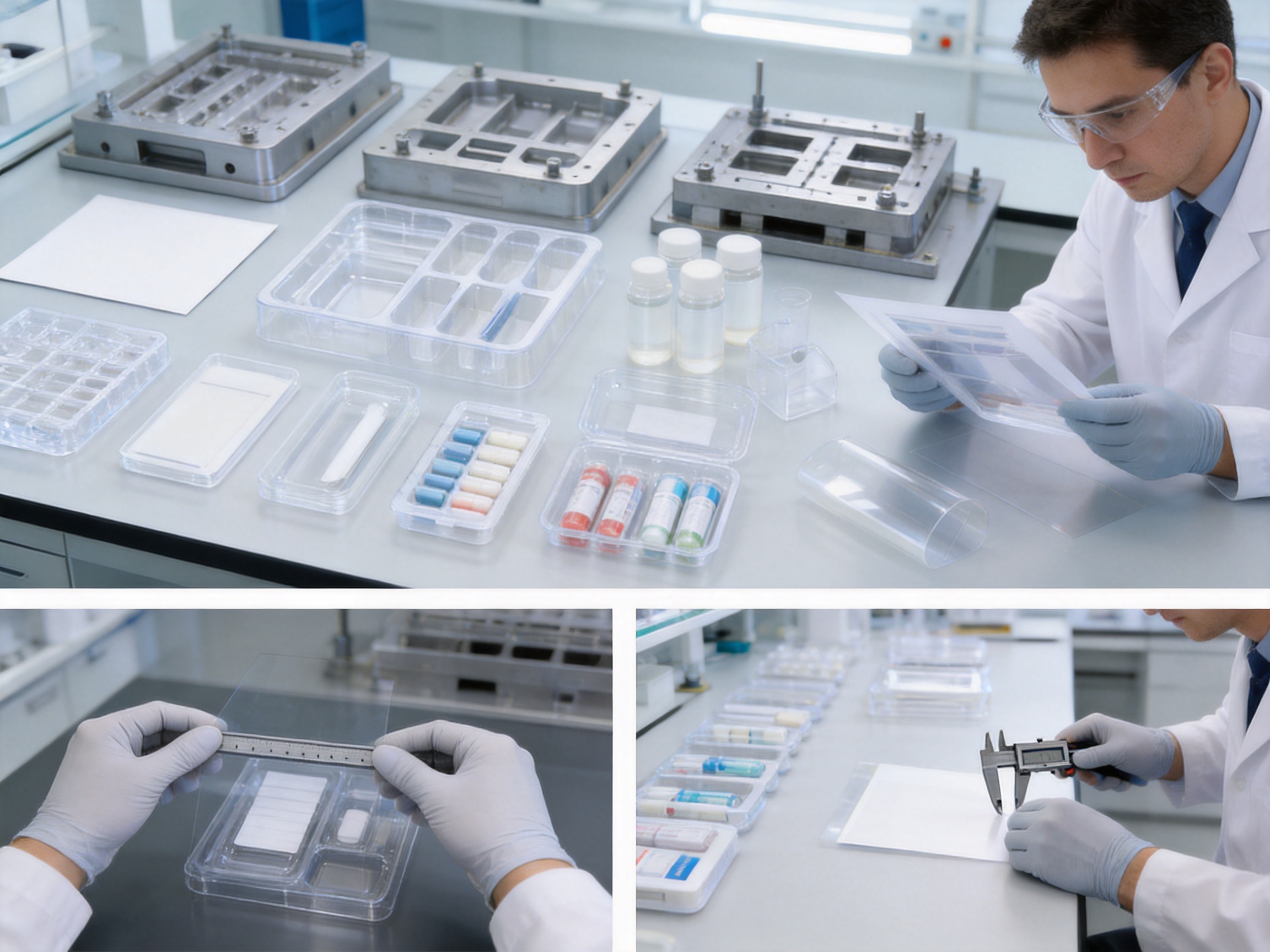
Packaging for medicines and medical products must combine safety, clarity, durability, and dependable processing performance. A package is not merely an outer covering. It protects the product, supports identification, communicates information, and helps manufacturers maintain efficient production. For these reasons, transparent rigid plastic sheets and films have become important materials for pharmaceutical packaging, medical-device packaging, cosmetic containers, and other applications requiring a clean, attractive, and functional appearance.
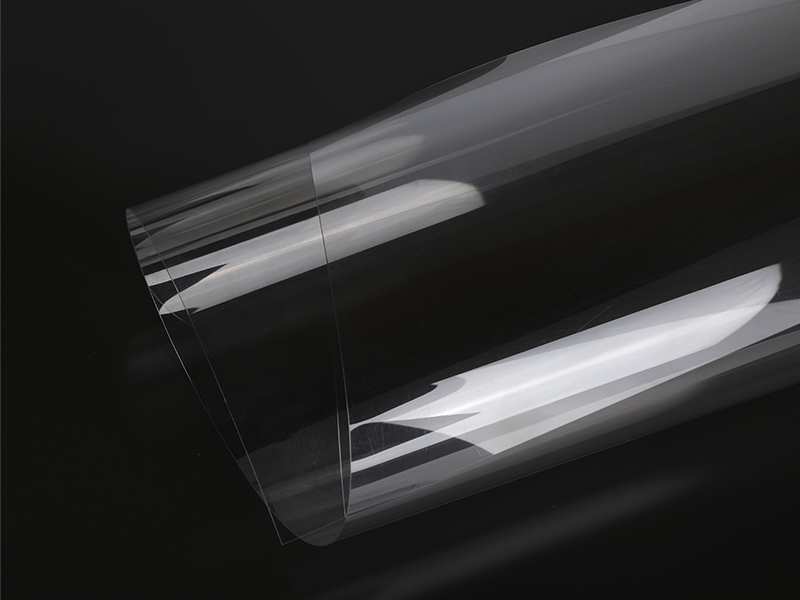
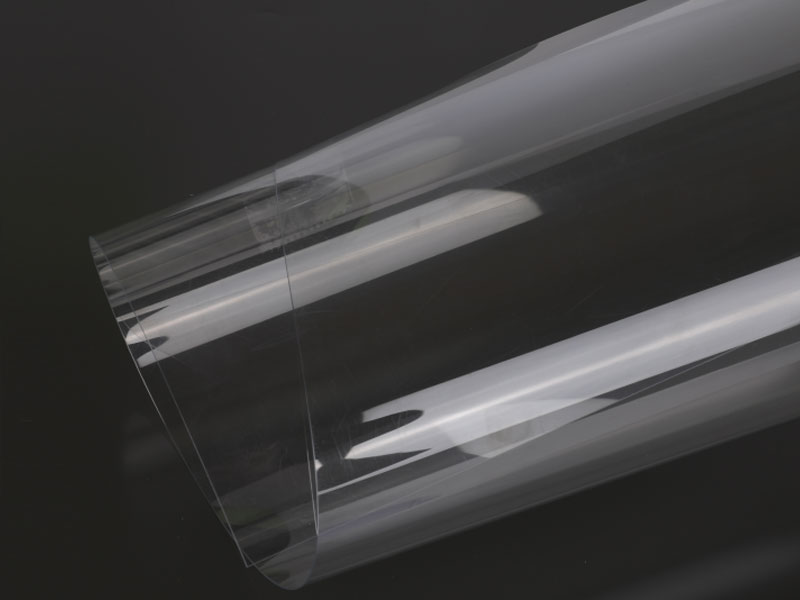
PETG transparent film and sheet are designed to meet these practical requirements through a balanced combination of high transparency, good surface luster, flexibility, and durability. PETG is a glycol-modified polyethylene terephthalate material that provides the familiar clarity associated with polyester while offering processing characteristics suited to thermoforming, vacuum forming, blister packaging, and related converting operations. Its combination of appearance and performance makes it an effective material for medicine packages that need to protect contents while allowing visual inspection.
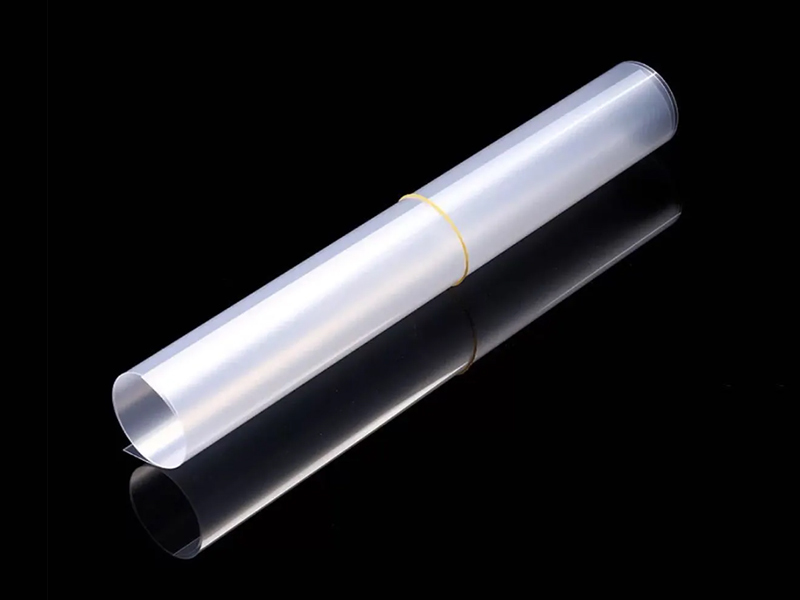
The material is available in thicknesses from 0.2 to 3.0 millimeters and widths from 300 to 1,250 millimeters. These dimensions provide manufacturers with flexibility when selecting a sheet or roll format for different packaging designs, forming depths, production speeds, and equipment configurations. PETG can be converted into trays, blisters, transparent covers, display components, and other formed structures in accordance with the requirements of the finished package.
Manufactured by ZheJiang ZhongSheng New Materials Co., Ltd., the product benefits from more than 16 years of experience in the PET industry, a large-scale production base, dedicated research and development resources, multiple laboratories, and a broad portfolio of production equipment. The company’s manufacturing capabilities support consistent output for customers requiring transparent plastic sheets and film rolls for packaging, decorative, and thermoforming applications.
Why Transparent PETG Matters in Medicine Packaging
Medicine packaging performs several functions at the same time. It must help preserve the packaged product, provide a suitable barrier structure when combined with other packaging components, resist damage during handling, and present information in a clear and professional way. In many applications, transparency is equally important because manufacturers, healthcare professionals, retailers, and end users may need to inspect the product without opening the package.
A transparent package can make it easier to identify tablets, capsules, medical components, instruments, and other contents. It can also support quality-control procedures by allowing visual checks for defects, contamination, incomplete filling, or damage. When the package is formed from a clear and glossy material, the product can have a clean, high-quality appearance that supports brand presentation and consumer confidence.
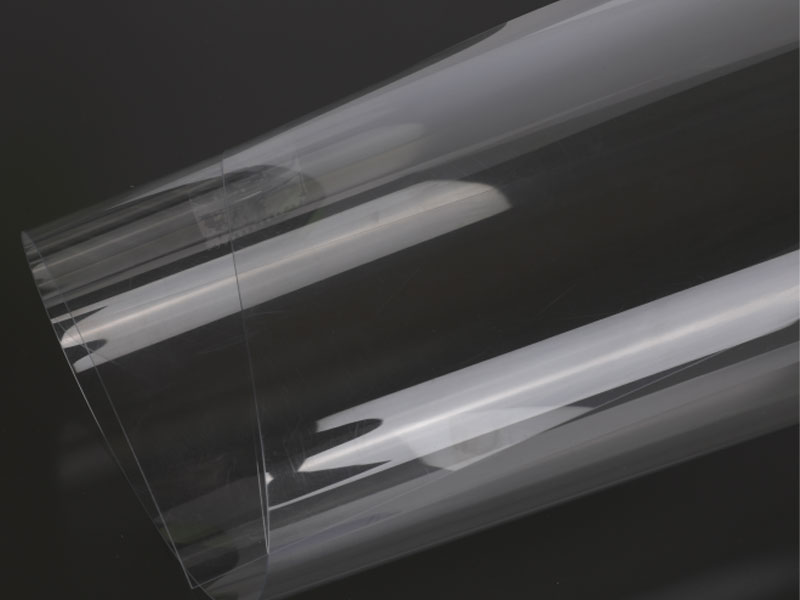
PETG transparent film and sheet provide this visual performance while retaining the mechanical characteristics required for practical packaging production. The material has high transparency and good luster, allowing formed packages to maintain a bright and attractive appearance. Its durability helps the package withstand normal transportation and handling conditions, while its flexibility supports forming into functional shapes.
For medicine packaging, these characteristics are valuable because the package often has to balance protection and presentation. A material that is highly rigid but difficult to form may limit design options and increase production complexity. A material that is flexible but lacks sufficient strength may not provide the desired package stability. PETG offers a practical middle ground, combining forming suitability with a durable finished structure.
Product Overview
PETG transparent film and sheet for medicine packaging are clear rigid polyester-based materials intended for applications such as pharmaceutical packages, medical-device packages, food packages, and cosmetic packages. They can be supplied in suitable sheet or roll formats for downstream processes including thermoforming, vacuum forming, and blister packaging.
The material is non-toxic and can be used for packaging applications involving food, medicine, and medical devices, subject to the applicable regulations, specifications, and validation requirements of the final product. Packaging manufacturers remain responsible for confirming that the selected grade, thickness, structure, processing conditions, and finished package meet the legal and technical requirements of their target market.
| Product | PETG transparent film and sheet |
| Primary category | Clear rigid PET sheet and film |
| Material type | Glycol-modified polyethylene terephthalate |
| Thickness range | 0.2–3.0 mm |
| Width range | 300–1,250 mm |
| Typical applications | Medicine packaging, medical-device packaging, food packaging, cosmetic packaging, blister packaging, thermoforming, and vacuum forming |
| Key properties | Durability, high transparency, good luster, and high flexibility |
| Available format | Transparent sheet or film roll, depending on production requirements |
The available thickness and width range enables customers to select a configuration that matches the intended package design. Thin material can be considered for lightweight packaging components, while thicker sheet can provide a more substantial structure for trays, covers, or rigid formed parts. Width selection can also help manufacturers optimize nesting, reduce trim waste, and match existing thermoforming lines.
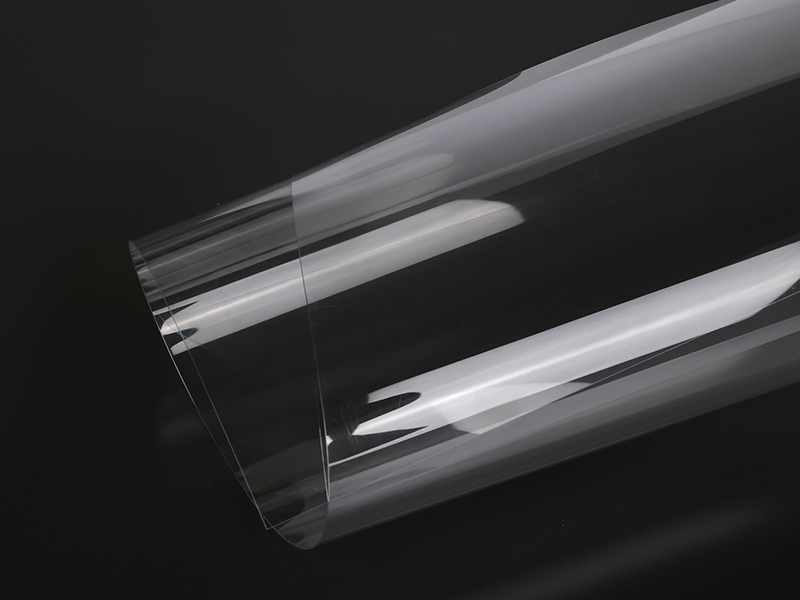
PETG transparent FILM/SHEET for medicine package
Key Advantages of PETG Transparent Film and Sheet
High Transparency
High transparency is one of the most important advantages of PETG for medicine packaging. A clear package allows the contents to remain visible, which can support product identification and visual inspection. This is particularly useful for packages containing tablets, capsules, syringes, diagnostic components, medical accessories, and other products that benefit from direct visibility.
Clarity can also simplify the relationship between the package and printed information. Labels, inserts, cartons, and printed surfaces can be combined with a transparent PETG component to create layered visual effects. A manufacturer may use the transparent section to show the product while reserving an opaque or printed section for instructions, warnings, identification, or promotional information.
Compared with materials that appear cloudy, gray, or uneven, a highly transparent sheet can give the finished package a cleaner and more refined appearance. The visual quality of the package often influences how customers perceive the quality of the contents. PETG helps manufacturers produce packages that are both functional and visually consistent.
Good Surface Luster
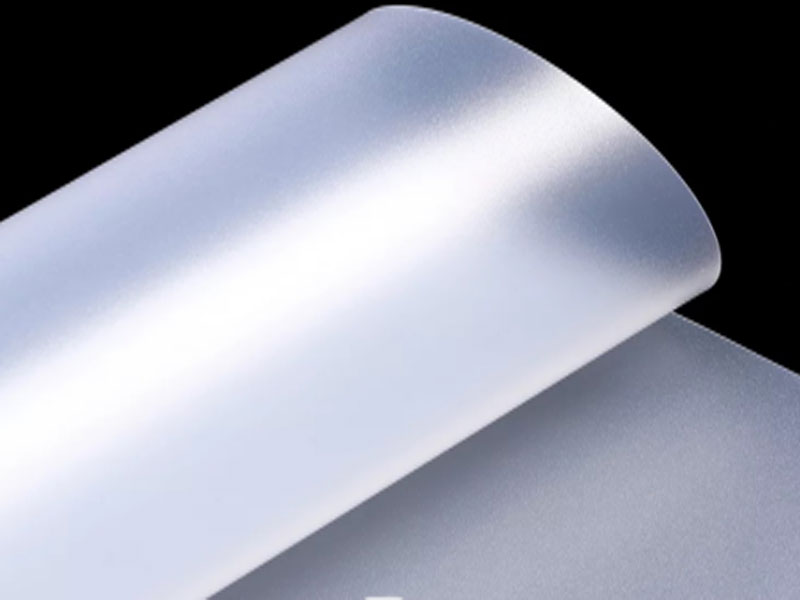
Good luster contributes to the appearance of the finished package. A glossy surface can reflect light evenly and help formed parts appear smooth and polished. This is valuable in medicine and cosmetic packaging, where a clean surface can support an impression of hygiene, precision, and quality.
Surface luster can also improve the visual performance of display packaging. Transparent PETG components can be used in blister packs, product covers, presentation trays, and other structures that need to attract attention on shelves or in professional environments. When the surface is combined with accurate forming and clean trimming, the resulting package can have a consistent and professional appearance.
Durability for Handling and Transport
Medicine packages may pass through many stages before reaching the end user. They can be stacked, transported, loaded into cartons, placed on shelves, handled by healthcare professionals, and opened by consumers. A durable packaging material helps reduce the risk of cracking, tearing, or losing its shape during these routine conditions.
PETG’s durability provides a useful advantage over less robust transparent materials in applications where the package must retain its structure. The material can support the protection of individual items and help keep the package presentable throughout the distribution cycle. Final performance depends on thickness, package geometry, forming conditions, sealing methods, and the complete packaging system, but the base material provides a strong foundation for durable designs.
High Flexibility and Forming Suitability
PETG combines rigidity with flexibility. This balance is important because medicine packages often include cavities, rounded corners, retaining features, channels, or other formed details. A material with suitable flexibility can conform to the shape of a mold while maintaining a stable finished structure.
The material can be used for thermoforming and vacuum forming, allowing manufacturers to create customized cavities and package profiles. Forming flexibility can reduce the need to rely on simple flat designs and may support more efficient use of internal space. It can also help designers develop packages that hold products securely and reduce unnecessary movement inside the package.
Good forming performance may support production efficiency as well. When a sheet heats and forms consistently, manufacturers can work toward uniform cavity dimensions and repeatable package quality. Production results depend on equipment and process controls, but PETG is well suited to converting operations that require transparent formed packaging.
Suitable for Multiple Packaging Markets
The product is suitable for a broad range of packaging applications. In addition to medicine packaging, PETG transparent film and sheet can be used for food packages, cosmetic packages, and medical-device packages. This multi-market suitability allows converters and packaging manufacturers to use a familiar material platform across different product categories.
Using one material family for several applications may simplify purchasing, processing knowledge, inventory management, and production planning. It can also allow manufacturers to transfer established forming experience between related packaging projects. Each application still requires individual testing and compliance review, but the underlying material properties provide a flexible starting point.
Advantages Compared with Alternative Transparent Packaging Materials
Packaging manufacturers typically compare materials according to transparency, forming behavior, mechanical performance, appearance, processing stability, and application requirements. No single plastic is ideal for every package, but PETG offers a balanced profile that can be especially useful when both appearance and formability are important.
Compared with Conventional Rigid Plastics
Some conventional rigid plastics may provide good stiffness but offer less flexibility during forming. If a package design includes complex cavities or requires controlled shaping, excessive rigidity can make processing more demanding. PETG’s flexibility can help manufacturers produce detailed formed packages without giving up the clear appearance required for product visibility.
Other materials may be transparent but have a less attractive surface or lower visual consistency after forming. PETG’s high transparency and good luster help support a more polished result. This is especially relevant for packages displayed in retail environments or used for premium medical and cosmetic products.
Compared with Less Transparent or Opaque Materials
Opaque packaging can provide privacy or protection from light in applications where those properties are required, but it prevents direct visual inspection. When the contents do not require an opaque barrier, transparent PETG can offer a more informative and attractive package. It allows users to see the product and may reduce confusion between similar packages.
Transparency may also improve workflow in healthcare and distribution environments. Staff can identify contents without opening every package, which can be useful when packages are stored in trays, cartons, cabinets, or clinical areas. The exact benefit depends on the application and package design, but visibility is a meaningful functional advantage.
Compared with Brittle Clear Materials
Some clear materials can become brittle or crack more easily when exposed to impact, bending, temperature variation, or repeated handling. PETG’s durability and flexibility can help produce a package that is less vulnerable to ordinary handling stress. This can be valuable for medicine packages that must remain intact during transportation and storage.
Improved durability can contribute to reduced product loss and a more consistent customer experience. A package that retains its shape and clarity is more likely to protect the contents and communicate quality until the moment of use.
Compared with Materials That Offer Limited Design Flexibility
Medicine packaging is increasingly designed around product-specific dimensions, user convenience, tamper-evident features, and efficient material use. PETG’s ability to be thermoformed and vacuum formed supports a wide range of package geometries. Designers can consider formed cavities, retaining features, rounded profiles, and clear covers that would be difficult to achieve with a material intended only for flat applications.
This design flexibility can help manufacturers develop packaging that fits the product more closely. A closer fit may reduce movement, improve presentation, and support more efficient use of storage space. It can also help separate individual products within a package, which is useful for medical accessories, diagnostic components, and dose-related packaging formats.
Applications in Medicine and Medical-Device Packaging
Blister Packaging
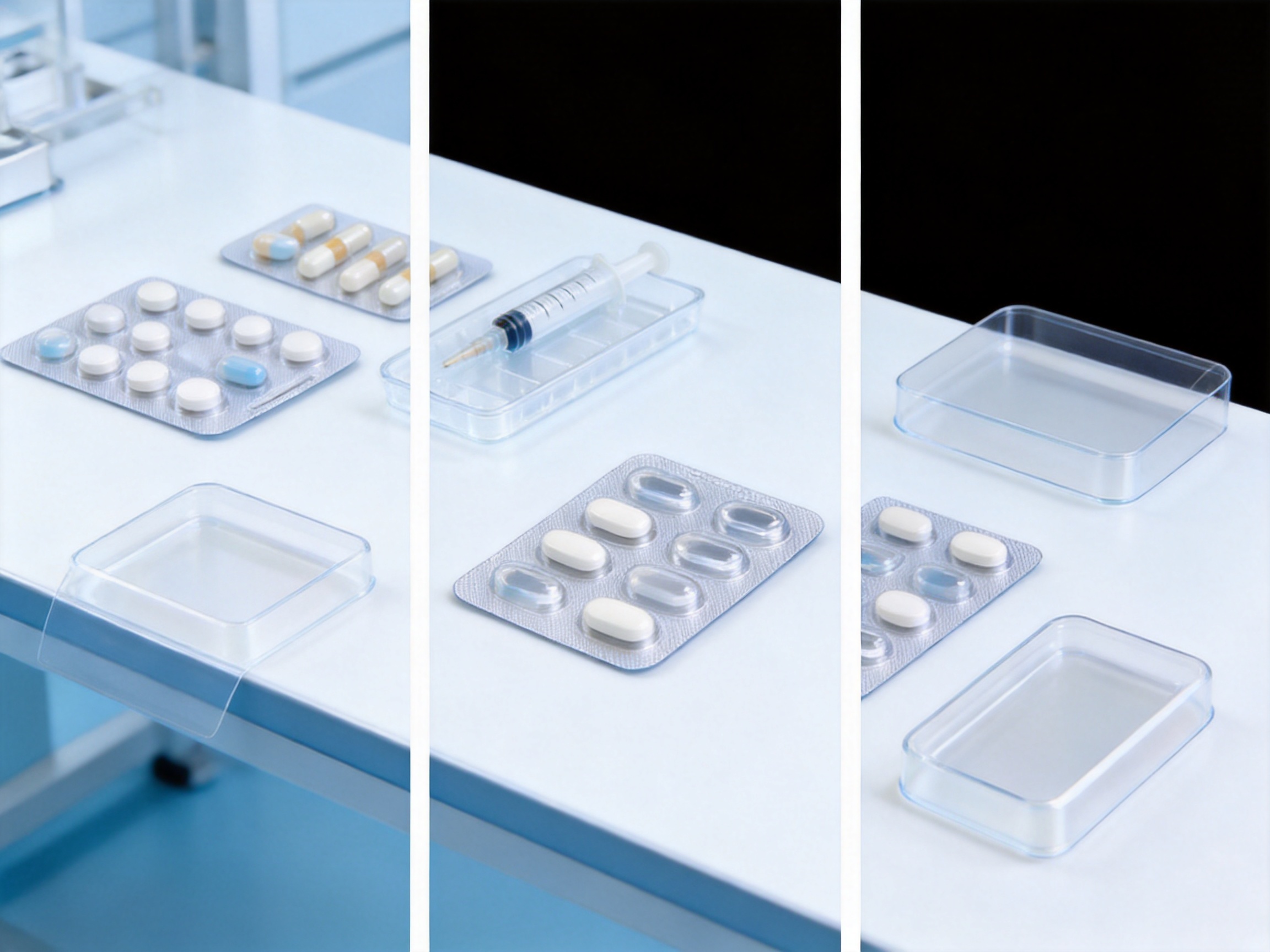
PETG can be used for blister packaging structures that present individual products in formed cavities. The transparent cavity allows the product to remain visible while the backing layer provides printed information or a sealing surface. Depending on the design, blister packages can be used for pharmaceutical products, healthcare accessories, small medical components, and consumer health products.
The material’s clarity is valuable for confirming the presence and condition of the packaged item. Its forming flexibility supports cavities designed around the dimensions of the product. Durable formed pockets can also help maintain product separation and reduce movement during handling.
Thermoformed Trays
Thermoformed PETG trays can be designed to hold multiple items in organized positions. Such trays may be used for medical devices, diagnostic kits, healthcare tools, cosmetic products, or specialized components. Transparent trays allow operators and end users to see the arrangement of the contents without removing them from the package.
A tray can also be designed with custom compartments, supports, or retaining structures. This may help prevent contact between individual components and make the package easier to inspect. PETG’s balance of formability and durability provides a practical material option for these structures.
Transparent Covers and Display Components
Some medical and healthcare products require a clear cover rather than a fully enclosed blister. PETG film or sheet can be used for transparent covers that protect the product from handling while maintaining visibility. Clear covers may also be used in cosmetic and consumer healthcare packaging where appearance is an important part of the buying decision.
The material’s good luster helps these covers present a clean appearance. When the part is accurately formed and trimmed, it can combine protective function with an attractive display effect.
Packaging for Medical Devices
Medical devices can vary greatly in size, shape, and sensitivity. PETG’s processing flexibility allows package developers to consider customized cavities and protective supports for different products. Clear packaging can make it easier to identify device components and confirm package contents before opening.
For medical-device packaging, the selected material must be evaluated together with sterilization conditions, sealing methods, transportation requirements, cleanliness standards, and applicable regulations. PETG can serve as a useful packaging material, but the final package must be validated for its intended device and distribution environment.
Manufacturing Capabilities Behind the Product
Product performance is closely related to manufacturing consistency. A transparent sheet must maintain suitable clarity, thickness uniformity, surface quality, and dimensional stability across the production width and throughout repeated production batches. These requirements call for controlled equipment, experienced personnel, technical knowledge, and systematic quality management.
ZheJiang ZhongSheng New Materials Co., Ltd. was established in 2006 and has focused on the PET industry for more than 16 years. The company operates a manufacturing area of approximately 40,000 square meters and has registered capital of 11.21 million United States dollars. Its production base includes one research and development team, two laboratories, 33 production lines, and more than 100 sets of machinery and equipment.
The company reports an annual production capacity of approximately 70,000 tons. This scale supports the production of PETA, PETG, and PET-GAG products for thermoforming, vacuum forming, blister packaging, and furniture decorative film panels. A broad product portfolio and large production capacity can help the manufacturer serve both standard and customized requirements while supporting stable supply for international customers.
Advanced Production Process
Material Preparation and Formulation Control
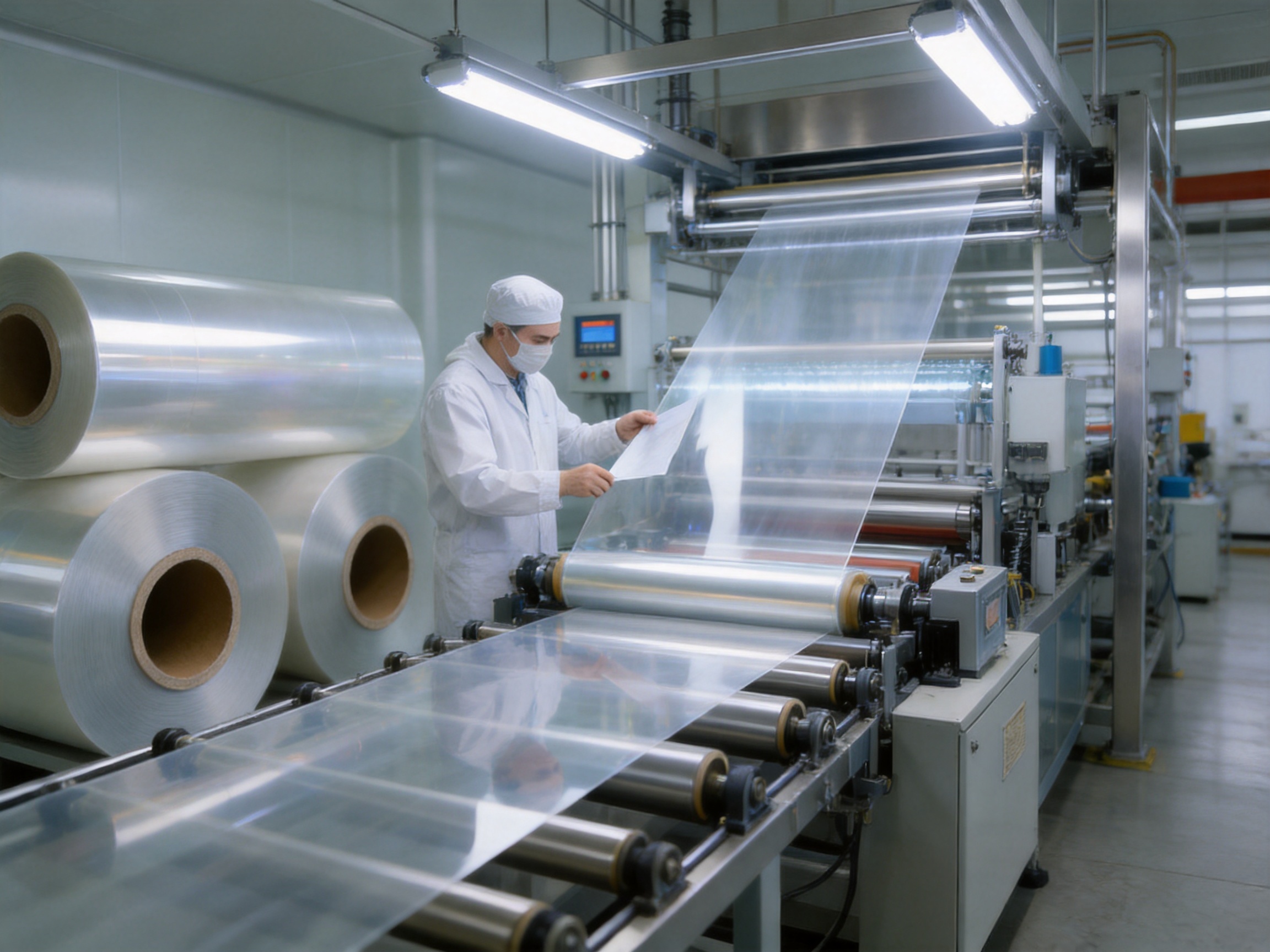
The manufacturing process begins with the controlled preparation of the PETG material. Resin selection, drying, blending, and feeding must be managed carefully because moisture and contamination can affect the quality of polyester-based sheet and film. Proper material preparation supports transparency, surface appearance, mechanical consistency, and stable extrusion.
For packaging applications, formulation control is especially important. Customers expect clear material with a consistent appearance across the entire roll or sheet. Process personnel therefore need to control the material feed and processing conditions so that the product remains suitable for downstream forming and packaging production.
Extrusion and Sheet Formation
PETG transparent film and sheet are produced through extrusion and sheet-forming operations. During extrusion, the material is melted and delivered through a controlled die to create a continuous web. Cooling, calibrating, and winding or cutting operations then establish the required sheet thickness, width, and final format.
Maintaining a stable melt flow is essential for achieving uniform thickness. Variations in thickness can affect forming depth, package strength, cavity dimensions, and material consumption. Advanced production equipment and process monitoring help manufacturers control these factors throughout the run.
The available thickness range of 0.2–3.0 millimeters indicates that the production system can support both relatively thin film applications and thicker rigid sheet requirements. Widths from 300 to 1,250 millimeters provide additional flexibility for different converting lines and package layouts.
Surface and Appearance Management
Transparent packaging materials require careful attention to surface quality. Scratches, inclusions, haze, uneven gloss, and other visible defects can reduce the appearance of the finished package. For this reason, manufacturing systems must control the cleanliness of the process environment, the condition of contact surfaces, and the handling of the sheet after extrusion.
Inspection procedures can help identify visible defects and confirm whether the film or sheet meets the agreed specification. Consistent transparency and luster are particularly important for medicine and cosmetic packaging because the material remains visible throughout the customer experience.
Thickness and Width Control
Accurate thickness control supports reliable thermoforming and package performance. If the sheet is too thin in critical areas after forming, the package may not provide the desired durability. If it is unnecessarily thick, material use and package weight may increase. Starting with a consistent sheet helps manufacturers achieve more predictable forming results.
Width control is also important for efficient production. A suitable width can help converters optimize mold layouts and reduce edge trim. Consistent roll dimensions can simplify machine setup, improve production planning, and support repeatable output between batches.
Laboratory Testing and Research Support
The company operates two laboratories and maintains a dedicated research and development team. These resources can support product development, process optimization, material evaluation, and application testing. Laboratory work may include checks related to appearance, dimensions, forming behavior, and other properties relevant to customer requirements.
Research and development capabilities are particularly valuable when customers require a specific thickness, width, surface finish, forming behavior, or application-oriented solution. Packaging projects may involve different molds, temperatures, forming depths, sealing systems, and transportation conditions. Technical resources help connect the material specification with the practical needs of the finished package.
Quality and Supply Strengths
The company’s production scale is supported by 33 production lines and more than 100 sets of machinery and equipment. This equipment base provides capacity for different product formats and may help the manufacturer organize production according to material type, thickness, width, or customer requirements.
An annual capacity of approximately 70,000 tons is significant for customers seeking a reliable long-term supplier. Stable capacity can reduce the risk of supply interruptions and help customers plan production schedules with greater confidence. It may also support larger orders, regular replenishment programs, and international distribution.
The company reports annual turnover exceeding 70 million United States dollars and owns more than 60 invention and utility patents. These indicators reflect ongoing investment in product development, production technology, and intellectual property. Its self-developed PETG films are used in furniture decoration panels and have received recognition in domestic and international markets, demonstrating the company’s experience in developing PETG materials for more than one application sector.
Although medicine packaging has specialized requirements, experience in furniture decorative film panels, thermoforming materials, blister packaging, and related PET products can contribute to broader process knowledge. Different applications may require different grades and validation procedures, but fundamental expertise in extrusion, film production, surface quality, and dimensional control remains valuable.
From Raw Material to Finished Package
The performance of PETG packaging depends not only on the material itself but also on how it is converted. Packaging manufacturers typically carry out several stages after receiving the sheet or film.
1. Material Receiving and Inspection
Upon arrival, the converter may inspect the roll or sheet for packaging integrity, identification, dimensions, surface appearance, and other agreed characteristics. Proper storage helps prevent contamination, damage, and unnecessary exposure to environmental conditions.
2. Unwinding or Sheet Loading
Film rolls are unwound, while cut sheets are loaded into the forming equipment. Careful handling helps preserve the surface and prevent scratches or dents. The material should be aligned correctly so that the package geometry remains consistent across the production run.
3. Heating
For thermoforming, PETG is heated within a controlled temperature range until it reaches a suitable forming condition. Heating must be uniform because uneven temperatures can produce variations in wall thickness, clarity, shrinkage, or cavity shape.
4. Forming
The heated sheet is shaped over or into a mold using vacuum, pressure, mechanical assistance, or a combination of methods. The selected forming method depends on the package design, cavity depth, required detail, and equipment configuration. PETG’s flexibility supports the production of formed cavities and customized profiles.
5. Cooling and Stabilization
After forming, the package is cooled so that it retains its intended shape. Cooling conditions can influence dimensional stability and the final appearance. Controlled cooling helps limit deformation and supports consistent cavity dimensions.
6. Trimming and Finishing
Excess material is removed after forming. Accurate trimming creates clean edges and prepares the package for sealing, assembly, labeling, or further processing. Trim quality is important for safe handling and an attractive finished appearance.
7. Inspection and Packing
Finished packages are inspected for forming accuracy, visible defects, dimensions, and other customer-defined criteria. Approved parts are then packed in a way that protects them during storage and transportation.
This conversion sequence illustrates why consistent PETG film and sheet are important. A stable starting material supports more predictable behavior at each stage, from heating and forming through trimming and final inspection.
Design Considerations for Medicine Packaging
Choosing the Correct Thickness
Thickness should be selected according to the package size, forming depth, product weight, handling conditions, and required rigidity. A small blister may require a different thickness from a deep medical-device tray. The thickness range of 0.2–3.0 millimeters gives designers a broad starting point for different packaging structures.
Thicker material may provide greater rigidity and impact resistance, while thinner material may support lightweight designs and efficient material use. The best selection should be confirmed through forming trials and package testing rather than based on thickness alone.
Selecting the Appropriate Width
Width influences how efficiently the material fits the forming machine and mold layout. A suitable width can help maximize the number of cavities per web and reduce unused edge areas. Available widths from 300 to 1,250 millimeters can accommodate different equipment sizes and production requirements.
Converters should consider the usable forming area, edge trim, web direction, roll handling, and packaging line configuration when selecting width. For repeat production, consistent width is important for stable machine setup.
Considering Cavity Geometry
Package designers should evaluate the depth, radius, corner shape, and transitions of each formed cavity. Smooth corners and appropriately designed transitions can support more uniform material distribution. Sharp features may require special attention during mold design and process development.
PETG’s forming flexibility allows designers to create customized shapes, but every design should be evaluated through prototypes and production trials. The final package must retain sufficient strength and clarity after forming.
Balancing Visibility and Protection
Transparency is beneficial when visual inspection is important, but the complete packaging system may require additional features to protect the product from moisture, light, oxygen, contamination, or mechanical damage. PETG may serve as the transparent formed component while a lidding material, carton, coating, or secondary package provides other protection.
Packaging engineers should therefore evaluate PETG as part of a complete system rather than as an isolated material. The appropriate combination depends on the medicine, medical device, storage period, distribution conditions, and regulatory requirements.
Printing, Labeling, and Sealing
Many packages combine transparent PETG with printed backing cards, labels, cartons, or lidding films. Compatibility between the PETG surface and the selected adhesive, ink, coating, or sealing layer should be tested before commercial production.
Sealing performance is especially important for medicine and medical-device packaging. The seal must provide the required closure strength and package integrity without damaging the transparent component. Seal temperature, pressure, dwell time, and the selected sealing layer all influence the final result.
Regulatory and Application Validation
PETG is described as non-toxic and suitable for food, medicine, and medical-device packaging applications. However, suitability for a specific market is determined by the applicable laws, regulations, standards, customer specifications, and intended conditions of use. A material statement alone does not replace finished-package validation.
Before commercialization, packaging manufacturers should evaluate the selected PETG grade and package design for product compatibility, cleanliness, mechanical performance, sealing, storage, transportation, and any sterilization or conditioning requirements. Testing should be conducted according to the regulations and technical standards applicable to the destination market.
For pharmaceutical applications, the packaging system may need to be assessed for interaction with the medicine, protection during the stated shelf life, extractables and leachables where relevant, closure integrity, and tamper-evident performance. Medical-device packaging may require additional testing related to sterility maintenance, distribution simulation, and device protection.
These requirements do not reduce the value of PETG. Instead, they highlight the importance of matching the material to the application and validating the complete packaging system. A qualified material supplier can support this process by providing product specifications, technical information, sample material, and manufacturing guidance.
Sustainability and Material Efficiency Considerations
Material efficiency is an important part of modern packaging design. A package that uses the right thickness, has a close fit around the product, and minimizes unnecessary trim can reduce material consumption while maintaining required performance. PETG’s forming suitability can support designs that are adapted to the product rather than based on oversized cavities.
Manufacturers can also consider nesting arrangements, mold utilization, roll width, and trim recovery during production planning. Efficient layout design can reduce waste and improve production economics. The practical sustainability outcome depends on the complete manufacturing and end-of-life system, including collection, sorting, recycling infrastructure, and local regulations.
When evaluating material options, packaging engineers should consider the full service life of the package. A durable package that protects the product effectively may help prevent product loss caused by breakage or damage. Avoiding damaged medicine or medical devices can be an important part of overall resource efficiency.
Recycling and disposal decisions should be based on the actual PETG structure, additives, labels, coatings, adhesives, and local waste-management capabilities. Customers should obtain application-specific guidance when designing a recyclable or resource-efficient package.
Benefits for International Packaging Customers
International customers often require a supplier that can combine product quality, production capacity, technical support, and communication efficiency. A large manufacturing base can help address volume requirements, while research and laboratory capabilities can support application development.
ZheJiang ZhongSheng New Materials Co., Ltd. serves customers worldwide and has developed experience in PET-based products for packaging and decorative applications. Its production facilities, technical teams, and equipment resources provide a foundation for supplying transparent films and sheets in different thicknesses and widths.
The company’s stated philosophy of seeking development through quality and creating a brand through integrity emphasizes long-term manufacturing performance and customer service. For packaging customers, this approach can be reflected in consistent specifications, responsive technical communication, and a focus on maintaining product quality across repeated orders.
Customers evaluating PETG for medicine packaging may benefit from discussing the following information with the supplier:
- Required thickness and width
- Sheet or roll format
- Target forming process
- Package dimensions and cavity depth
- Required transparency and surface appearance
- Sealing or lamination method
- Expected storage and transportation conditions
- Applicable regulatory and testing requirements
- Estimated order volume and delivery schedule
- Need for sample development or customized specifications
Providing these details at the beginning of a project can help the supplier recommend a more suitable material configuration and reduce unnecessary trial-and-error during package development.
Why Choose a Specialized PET Manufacturer
Working with a manufacturer that specializes in PET products can provide advantages over purchasing transparent sheet from a general plastics supplier. Specialized manufacturers are more likely to understand the relationship between resin behavior, extrusion conditions, sheet thickness, surface appearance, and forming performance.
Long-term industry experience also supports practical problem-solving. If a customer encounters uneven forming, insufficient rigidity, surface defects, dimensional variation, or other production concerns, a knowledgeable supplier may be able to investigate the issue from both material and process perspectives.
A specialized manufacturer can also support product development across related material families. The company’s portfolio includes PETA, PETG, and PET-GAG products, allowing customers to compare options according to transparency, structure, forming behavior, and application needs. The final selection should always be made through technical evaluation, but access to several material solutions can simplify development.
In addition, a supplier with its own research and development team, laboratories, production lines, and equipment base can support more than simple order fulfillment. It can participate in specification discussions, sample preparation, process optimization, and continuous product improvement.
Quality Control Priorities for PETG Sheet and Film
Quality control for transparent PETG should address both measurable properties and visible appearance. The exact inspection plan depends on the customer specification, but common priorities include:
- Thickness consistency across the width and along the production direction
- Width and roll-length accuracy
- Transparency and visual clarity
- Surface luster and smoothness
- Absence of significant scratches, inclusions, contamination, and bubbles
- Forming performance under agreed processing conditions
- Dimensional stability after forming
- Packaging integrity during storage and transportation
Transparent products require especially careful visual inspection because even small defects may be visible in the finished package. Good production control begins with raw-material handling and continues through extrusion, cooling, winding, cutting, inspection, and final packing.
Quality is also connected to repeatability. A package manufacturer may qualify a material through a specific forming process and then expect future deliveries to behave in the same way. Stable production procedures and documented specifications help reduce variation between batches.
Technical Development and Customization
Not every medicine package has the same requirements. Some projects prioritize deep forming, while others need high rigidity, lightweight construction, excellent appearance, or a specific width for a specialized line. A suitable PETG supplier should be prepared to discuss these differences rather than offering only a single standard configuration.
Customization may involve thickness, width, roll dimensions, surface requirements, or packaging format. In some cases, a customer may need sample material for mold trials before confirming a larger order. Pilot testing can reveal how the sheet behaves under the customer’s actual heating, forming, cooling, and trimming conditions.
The supplier’s research and development team can help identify potential adjustments when the standard material does not fully meet a particular requirement. Development work should be based on clearly defined performance targets and verified through testing. This approach helps ensure that customization provides a practical benefit rather than adding unnecessary complexity.
Q&A
What is PETG transparent film and sheet?
PETG transparent film and sheet are clear rigid polyester-based materials made from glycol-modified polyethylene terephthalate. They are designed for applications requiring transparency, durability, flexibility, and forming suitability.
Can PETG be used for medicine packaging?
Yes. PETG is non-toxic and can be used for packaging applications involving medicine, food, and medical devices, provided that the selected material and finished package meet the applicable regulations and validation requirements.
What are the main advantages of this PETG product?
The main advantages are durability, high transparency, good luster, and high flexibility. These properties support attractive, visible, and practical packages for medicine and related products.
What thicknesses are available?
The stated thickness range is 0.2–3.0 millimeters. The appropriate thickness depends on the package design, forming depth, required rigidity, handling conditions, and customer specifications.
What widths are available?
The stated width range is 300–1,250 millimeters. Width should be selected according to the forming machine, mold layout, usable production area, and material-efficiency objectives.
Can PETG be thermoformed?
Yes. PETG is suitable for thermoforming and vacuum forming. It can be used to produce blister packages, trays, transparent covers, and other formed packaging structures.
Is PETG suitable for blister packaging?
Yes. PETG can be formed into clear blister cavities that display and protect the packaged product. The complete blister structure, including the backing and sealing system, should be tested for the intended application.
Can PETG be used for medical devices?
Yes. PETG can be used for medical-device packaging and transparent protective structures. The final design must be validated for device compatibility, transportation, storage, sealing, cleanliness, and any sterilization requirements.
Why is transparency important in medicine packaging?
Transparency allows users, healthcare professionals, and quality personnel to see the contents without opening the package. It can support product identification, inspection, presentation, and package organization.
How does PETG compare with other transparent plastics?
PETG provides a balanced combination of clarity, luster, durability, flexibility, and forming suitability. The best material depends on the specific application, but PETG is particularly useful when a package needs both an attractive transparent appearance and reliable forming performance.
What manufacturing strengths support this product?
The manufacturer has a 40,000-square-meter manufacturing area, one research and development team, two laboratories, 33 production lines, more than 100 sets of machinery and equipment, and an annual production capacity of approximately 70,000 tons. The company has focused on the PET industry since its establishment in 2006.
Does the company offer other PET materials?
Yes. The company produces PETA, PETG, and PET-GAG products for applications including thermoforming, vacuum forming, blister packaging, and furniture decorative film panels.
Can the material be customized?
Customers can discuss thickness, width, format, forming requirements, surface expectations, and other technical details with the manufacturer. Sample trials and application testing are recommended before confirming a large production order.
What should customers confirm before placing an order?
Customers should confirm the intended application, thickness, width, roll or sheet format, forming process, package dimensions, sealing method, regulatory requirements, storage conditions, order volume, and delivery schedule.
Does PETG replace the need for package validation?
No. PETG can provide a suitable material platform, but the complete package must still be validated for its intended product, shelf life, distribution conditions, sealing system, regulatory requirements, and end-use environment.
Conclusion
PETG transparent film and sheet provide a practical and versatile solution for medicine packaging, medical-device packaging, food packaging, and cosmetic packaging. Their combination of high transparency, good luster, durability, and flexibility allows manufacturers to create packages that protect products while maintaining a clear and professional appearance.
The available thickness range of 0.2–3.0 millimeters and width range of 300–1,250 millimeters support a broad selection of package designs and converting equipment. PETG is suitable for thermoforming, vacuum forming, blister packaging, trays, transparent covers, and other structures that require controlled shaping and product visibility.
The product is supported by the manufacturing capabilities of ZheJiang ZhongSheng New Materials Co., Ltd., including a 40,000-square-meter production area, 33 production lines, more than 100 sets of machinery and equipment, two laboratories, a dedicated research and development team, and an annual production capacity of approximately 70,000 tons. More than 16 years of focus on the PET industry, a portfolio of patents, and experience with PETA, PETG, and PET-GAG products further strengthen the company’s position as a transparent plastic sheet and film supplier.
For packaging manufacturers, the most important value of PETG is its balanced performance. It offers visibility without sacrificing practical durability, flexibility without losing a rigid finished structure, and attractive surface quality together with forming suitability. When selected and validated correctly, PETG can help packaging producers develop reliable, efficient, and visually effective packages for modern medicine and healthcare products.
References
1. Product specification information for PETG transparent film and sheet for medicine packaging.
2. Company information and manufacturing profile of ZheJiang ZhongSheng New Materials Co., Ltd.
3. General technical literature on glycol-modified polyethylene terephthalate materials and polyester packaging applications.
4. General packaging engineering references covering thermoforming, vacuum forming, blister packaging, and transparent medical-device packaging.
5. General quality-control references for plastic sheet extrusion, thickness measurement, surface inspection, and formed-package evaluation.