 English
 Español

Zhongsheng
Zhongsheng
Zhongsheng
Zhongsheng
Zhongsheng
Zhongsheng
Zhongsheng
Zhongsheng
Zhongsheng
Zhongsheng
Zhongsheng
Zhongsheng
Zhongsheng
Zhongsheng
Zhongsheng
Reducing material purchasing costs is a common objective in construction procurement. Contractors and project managers often compare several plywood suppliers before placing bulk orders, especially for concrete formwork projects that require large quantities of panels. A lower quotation may appear attractive at the purchasing stage, but the initial price does not always represent the actual expenditure throughout a construction project.
At Zhongsheng, we understand that plywood procurement involves more than comparing prices per sheet. Panel construction, surface treatment, bonding quality, dimensional consistency, and application requirements all influence material value. Buyers evaluating white film faced plywood and other plywood-based panels should consider how material specifications affect handling, service life, replacement frequency, and project expenses.
So, does purchasing cheaper film faced plywood increase formwork expenses? The answer depends on its actual performance under site conditions. A lower-priced panel may reduce the initial budget, but additional replacements, surface repairs, labor, and concrete finishing work can change the overall cost calculation.
1. Why Does the Initial Plywood Price Not Represent Total Formwork Costs?
The purchase price is only one component of a formwork budget. Construction teams also spend money on panel preparation, cutting, installation, dismantling, cleaning, storage, and replacement. Differences in panel quality can affect several of these activities simultaneously.
Consider two purchasing options with different prices and expected reuse cycles. The cheaper panel may require replacement after relatively few concrete pours, while a higher-priced alternative may remain serviceable for a longer period under comparable working conditions.
Compare Cost Per Use Instead of Cost Per Sheet
A practical starting point is to calculate the material cost for each accepted formwork cycle.
Cost per use = Purchase price per sheet ÷ Actual number of successful uses
The following example illustrates how the purchasing decision can change after considering reuse frequency.
| Cost Item | Budget Panel | Higher-Specification Panel |
| Purchase price per sheet | $15 | $24 |
| Expected reuse cycles | 5 | 12 |
| Material cost per use | $3.00 | $2.00 |
| Material cost for 60 uses | $180 | $120 |
Note: These figures are illustrative purchasing assumptions, not guaranteed product performance or quotations.
The comparison shows that a 60% higher purchase price can still produce a lower material expense per use. However, buyers should not rely entirely on supplier-promised reuse figures. Actual results depend on the panel structure, concrete conditions, installation methods, release agents, cleaning procedures, and storage practices.
2. Which Material Characteristics Affect Formwork Expenses?
Low-cost plywood is not necessarily unsuitable for construction. The important consideration is whether its specifications match the intended application. Several material characteristics deserve attention during supplier evaluation.
Core Construction and Veneer Quality
The plywood core affects panel stiffness, structural consistency, and resistance to damage during handling. Uneven veneer thickness, internal gaps, poorly bonded layers, and weak core construction may create problems during repeated installation and dismantling.
Our approach at Zhongsheng is to emphasize the relationship between panel construction and its intended application. Plywood and block board products can serve different furniture, decorative, and construction requirements, but their technical suitability should be evaluated according to the actual working conditions.
Buyers comparing formwork materials should examine:
- Core material and veneer arrangement.
- Internal bonding consistency and visible layer separation.
- Panel flatness and thickness uniformity.
- Resistance to moisture exposure and edge deterioration.
- Mechanical strength under the specified formwork loads.
Surface Film Weight and Durability
The surface layer plays an important role in protecting plywood from moisture, abrasion, and direct contact with concrete. Film faced plywood commonly uses resin-treated paper, with film weights varying according to product grade and intended application.
For reference, commercial product specifications may include film weights around 120–220 g/m². A heavier film does not automatically guarantee a longer service life, since bonding quality, resin formulation, pressing conditions, and surface integrity also matter.
Weak surface adhesion can cause peeling, blistering, or localized damage during repeated use. Such defects may require additional cleaning, repair, or panel replacement. The resulting expenditure should be included in the project budget rather than treated as an unrelated maintenance issue.
Adhesive Performance and Moisture Resistance
Adhesive selection is another important purchasing consideration. Phenolic resin and melamine-based bonding systems are commonly used in construction plywood, with different performance levels depending on the formulation and manufacturing process.
Buyers should request clear information about:
- Adhesive type and bonding classification.
- Applicable water resistance or boiling resistance test results.
- Moisture content and testing method.
- Resistance to veneer separation after moisture exposure.
Panels with inadequate bonding may experience delamination after repeated contact with water and wet concrete. Replacement costs can become significant, particularly across projects involving large casting areas.
3. How Can Poor Dimensional Accuracy Increase Installation Costs?
Panel dimensions influence cutting plans, joint alignment, installation speed, and concrete surface consistency. A low quotation may not offer meaningful savings if the delivered sheets have inconsistent thicknesses or dimensional deviations.
Consider an order containing several hundred plywood sheets. Small variations between individual panels can create additional work during preparation and installation. Workers may need to measure, trim, adjust, or replace sheets to achieve the required formwork dimensions.
Specifications Worth Checking Before Ordering
| Parameter | Common Reference | Procurement Consideration |
| Standard sheet size | 1220 × 2440 mm | Confirm compatibility with formwork layouts. |
| Panel thickness | 12, 15, 18, 21 mm | Match thickness with structural design requirements. |
| Thickness tolerance | ±0.5 mm in some specifications | Verify the agreed tolerance and inspection method. |
| Moisture content | 8–12% in some commercial specifications | Check the applicable product standard and test report. |
| Surface condition | Smooth, without major visible defects | Inspect coating continuity and bonding quality. |
| Edge treatment | Water-resistant edge sealing | Check protection against moisture penetration. |
These values are general reference points rather than universal requirements. Actual specifications should follow the project design, local construction standards, and agreed product documentation.
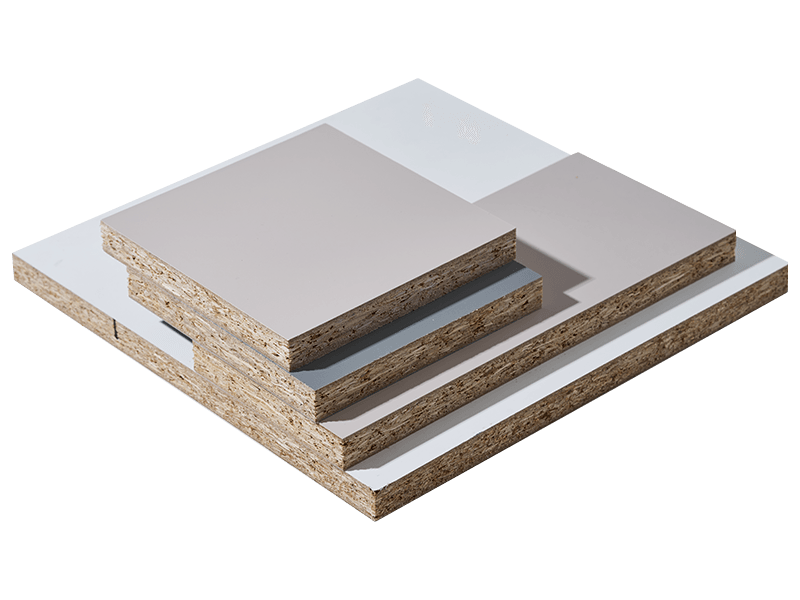
At Zhongsheng, we offer customized plywood and block board dimensions for different applications. Our PET/PVC surface plywood/block board is available in a standard size of 1220 × 2440 mm, with thicknesses from 3 mm to 40 mm or customized dimensions. Its listed applications include furniture, decoration, and construction. These specifications relate to our decorative panel product and should not be interpreted as certification for concrete formwork use.
4. Hidden Expenses Beyond Material Replacement
Material replacement is only part of the financial impact associated with low-grade formwork plywood. Several additional expenses can affect project scheduling and construction budgets.
Additional Labor Requirements
Panels with damaged surfaces, irregular edges, or inconsistent dimensions may require extra preparation before installation. Workers might spend additional time trimming sheets, sealing edges, correcting joints, and removing damaged sections.
During dismantling, weak panels may also suffer damage around nail holes, corners, and fastening points. Such damage reduces the number of sheets available for subsequent casting operations.
Concrete Surface Repair
The condition of the formwork surface affects the appearance of the finished concrete. Damaged film, uneven joints, or surface contamination can create visible marks and irregularities.
Depending on the project acceptance criteria, additional grinding, filling, patching, or surface treatment may be necessary. These activities involve labor and materials that are not included in the original plywood quotation.
Storage and Transportation Losses
Improper storage can reduce the usable life of plywood regardless of its original purchase grade. Exposure to rain, standing water, direct sunlight, and unsuitable stacking conditions may cause warping, edge deterioration, and surface damage.
Our recommendations for project material management include:
- Store panels on a flat, dry, and adequately supported surface.
- Protect unused sheets from rain and prolonged moisture exposure.
- Avoid dragging panels across rough concrete or abrasive surfaces.
- Clean concrete residue using methods suitable for the surface coating.
- Apply an appropriate release agent before concrete placement.
- Inspect panel edges and surfaces after dismantling.
5. How Should Buyers Evaluate Different Plywood Suppliers?
Price comparison becomes more meaningful after procurement teams establish a consistent technical evaluation process. Suppliers may quote products with similar descriptions but different core materials, bonding systems, surface treatments, and manufacturing tolerances.
At Zhongsheng, we believe clear product information is essential for matching panel specifications with customer requirements. Our manufacturing experience in decorative panels and engineered board materials has shown us the importance of checking the relationship between surface treatment, substrate construction, and intended use.
A Practical Supplier Evaluation Checklist
- Product identification: Confirm whether the quotation covers concrete formwork plywood, decorative plywood, or another panel category.
- Technical documentation: Request product specifications, test reports, and applicable quality certificates.
- Sample inspection: Check surface uniformity, thickness, edge condition, and internal construction where possible.
- Bonding performance: Verify adhesive classification and relevant test results.
- Batch consistency: Establish inspection requirements for dimensions, appearance, and material properties.
- Application suitability: Confirm that the panel is designed and tested for the intended construction conditions.
- After-sales support: Clarify procedures for handling quality complaints, damaged goods, and specification discrepancies.
Requesting samples and reviewing technical documents before a large purchasing commitment can help reduce uncertainty. Buyers should also compare quotations based on equivalent specifications rather than relying on product names alone.
6. A More Practical Method for Calculating Formwork Expenses
Procurement teams can build a more realistic budget by including material consumption, labor, maintenance, and replacement costs within the same calculation.
Total formwork expenditure can be estimated using the following formula:
Total Cost = Initial Panel Purchase + Installation Labor + Cleaning and Maintenance + Replacement Panels + Concrete Surface Repair + Transportation and Storage
Another useful indicator is the cost per accepted casting cycle:
Cost per Accepted Cycle = Total Formwork Expenditure ÷ Number of Accepted Casting Cycles
This calculation provides a clearer comparison between different material grades. It also helps project managers understand whether a higher initial investment is justified by reduced replacement and maintenance expenses.
For accurate comparisons, keep the following conditions consistent:
- Use the same casting area and project volume.
- Apply comparable installation and dismantling procedures.
- Include labor and maintenance expenses for each option.
- Count only successful uses that meet project acceptance requirements.
- Account for panel cutting losses and unusable offcuts.
This method prevents purchasing teams from judging material value solely through the unit price displayed on a supplier quotation.
7. Does Paying More Always Guarantee Lower Project Expenses?
Not necessarily. Higher-priced plywood may offer improved surface protection, stronger bonding, or more consistent construction, but its actual economic value still depends on project conditions.
A short-term project with limited casting requirements may not benefit from purchasing a premium panel designed for repeated heavy-duty applications. Conversely, a large infrastructure project involving numerous concrete pours may justify additional investment in materials with verified durability and suitable structural properties.
We recommend matching the product grade with the expected workload instead of purchasing according to price alone.
| Project Condition | Procurement Focus | Cost Evaluation |
| Limited casting operations | Application suitability and initial budget | Cost per completed use |
| Repeated concrete pours | Bonding, film durability, and core construction | Cost per reuse cycle |
| Large infrastructure projects | Structural performance and batch consistency | Total project expenditure |
| Projects requiring smooth finishes | Surface integrity and dimensional accuracy | Material and finishing costs |
Look Beyond the Quoted Price
A lower-priced plywood sheet can reduce the initial purchasing budget, but it may increase overall formwork expenses through additional replacements, installation adjustments, surface repairs, and material losses. The actual financial outcome depends on panel specifications, construction conditions, and the number of successful uses achieved on site.
At Zhongsheng, we encourage buyers to establish clear technical requirements before comparing supplier quotations. Our PET/PVC surface plywood and block board products serve furniture, decorative, and related panel applications, with customizable dimensions and surface options. We focus on matching product construction and surface treatment with the intended use rather than making unsupported performance promises.
For construction procurement teams, the more useful question is not simply how much a sheet costs, but how much expenditure is required to complete the project with acceptable quality. A well-defined purchasing specification, supported by product documentation and realistic cost calculations, provides a more reliable basis for material sourcing decisions.