 English
 Español
Zhongsheng
Zhongsheng
Zhongsheng
Zhongsheng
Zhongsheng
Zhongsheng
Zhongsheng
Zhongsheng
Zhongsheng
Zhongsheng
Zhongsheng
Zhongsheng
Zhongsheng
Zhongsheng
Zhongsheng
In many interior projects, decisions around surface materials do not always feel straightforward. Furniture makers, cabinet producers, and designers often end up balancing appearance, fabrication effort, and long term usability at the same time. A material might look appealing on a sample board but behave differently once it enters mass production or gets installed across large wall systems. Even small supporting components quietly shape how stable a system feels in real use, which is why surface choices often carry more weight than one might think from a quick glance. There is also a known tension between visual ambition and practical constraints. Some projects demand a strong metallic presence that feels authentic, while others lean toward flexibility and production efficiency. Somewhere in the middle of these expectations, Metallic Decorative Film often enters the conversation as a possible alternative to traditional metal sheets.
Two Surface Approaches That Solve Similar Needs In Different Ways
It is easy to assume both materials serve the same purpose, but the way they function in real projects is quite different.
Real metal sheets behave as physical materials. They carry weight, structure, and a natural texture that comes from the material itself. When installed on furniture or architectural surfaces, they feel permanent and solid, but that strength also brings handling and shaping limitations.
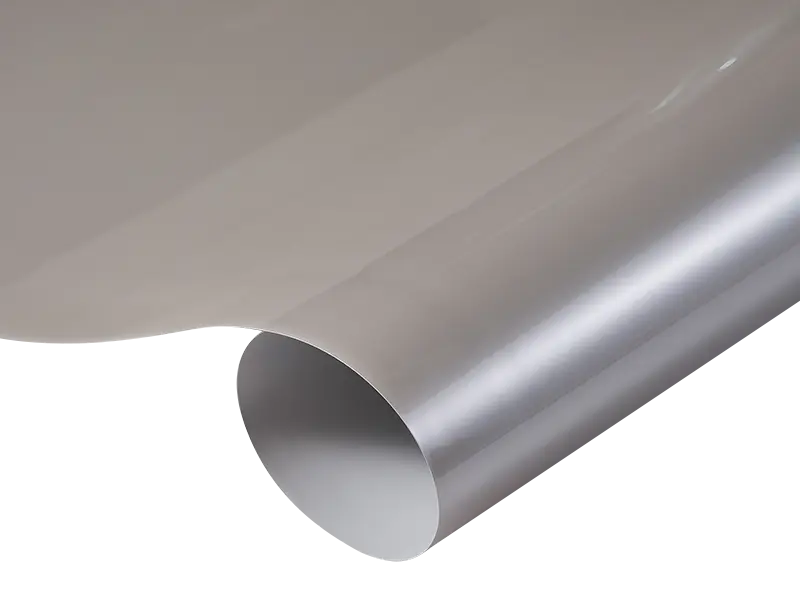
The film based approach works more like a surface transformation layer. Instead of building the structure, it changes how the surface looks. Once applied onto boards or panels, it creates a metallic appearance without changing the base material underneath.
That difference alone already explains why these two options rarely compete on equal terms. They serve the same visual direction but come from completely different production logic.
Visual Impression And How Surfaces Behave Under Light
In interior environments, lighting changes everything. A surface that looks refined in one condition can appear very different under another.
Real metal sheets tend to react strongly to light. Reflections can shift depending on angle, finishing method, and installation precision. That dynamic behavior can feel natural and expressive, but it may also introduce inconsistency when multiple panels are installed together.
The alternative surface solution behaves in a more controlled way. It is designed to keep tone, grain direction, and reflection closer to a stable visual pattern across larger areas. Designers often appreciate this when working on furniture systems or continuous wall panels where visual rhythm matters more than material authenticity.
There is also a subtle advantage in how predictable the surface remains during large scale production. When dozens or hundreds of panels are produced, consistency becomes more important than individual variation.
A Closer Look At Installation Reality
On paper, installation differences might not seem dramatic, but on site or in production lines, they change everything.
Metal sheets require cutting, shaping, alignment, and careful fixing. Each step adds time and demands attention from skilled workers. Even minor errors can affect how joints align or how light reflects across connected surfaces.
With Metallic Decorative Film, the process shifts away from structural handling. The material is applied onto prepared surfaces, which reduces the number of steps involved. It does not remove the need for care, but it simplifies coordination between production and installation teams.
There is also a practical detail that often gets overlooked. Handling heavy materials across multiple production stages increases the chance of surface damage before installation even begins. Lighter surface systems reduce that risk in a quiet but meaningful way.
Cost Is Not Just About Material Price
Talking about cost only in terms of purchase price can be misleading. Real project cost is shaped by several layers that sit underneath the material itself.
Metal sheets usually involve higher handling effort. Transport requires more care, storage takes more space, and installation requires additional labor. These elements add up during scaling, especially when projects involve repeated modules like cabinets or wall panels.
The film based option reduces several of these pressure points. Lighter material weight makes handling easier, and simplified installation reduces dependency on specialized labor. Over time, this can shift how efficiently a production line operates.
Instead of focusing on a single number, it becomes more useful to think about how smoothly a material moves through each stage of a project.
Durability In Everyday Environments
Durability is often misunderstood as pure strength, but in interior environments it is more about how surfaces hold their appearance over time.
Metal sheets are physically strong, yet they can show fingerprints, surface marks, or subtle changes depending on usage conditions. In some environments, this aging effect is acceptable or even desirable. In others, it becomes a maintenance concern.
The film based surface is designed with indoor use in mind. It focuses on maintaining visual stability during routine cleaning and daily contact. Instead of changing character over time, it tries to keep a steady appearance.
When thinking about durability in furniture or wall applications, it is less about resisting force and more about staying visually consistent through everyday interaction.
Flexibility In Shaping And Design Direction
Modern interior design rarely stays flat. Curved panels, layered structures, and irregular shapes are becoming more common across furniture and architectural systems.
Metal sheets can be shaped, but the process often requires additional steps and careful planning. Once the form becomes complex, production complexity increases quickly.
The film based surface behaves differently. It adapts to flat and curved surfaces with much less structural restriction. This allows designers to explore forms that would otherwise be difficult or costly to achieve with rigid materials.
Metallic Decorative Film often becomes part of that design exploration because it allows visual continuity across different shapes without breaking the surface language.
When Each Option Fits Better In Real Projects
There is no single direction that works for every situation. The choice usually depends on how a project defines its priorities.
Metal sheets tend to fit environments where material authenticity and physical presence are part of the design intention. They are often selected when structure and visual weight matter together.
The film based solution fits better when production efficiency, surface consistency, and design flexibility carry more importance. It works well in furniture systems, cabinet production, and interior wall applications where scalability is a key concern.
In some projects, both approaches even appear side by side, depending on different functional zones within the same space.
A Practical Way To Approach Selection
Instead of treating the decision as a simple comparison, it helps to break it down into how the material will actually behave in the project lifecycle.
A useful way to think about it:
- Whether the surface is decorative or structural
- How complex the shapes will be during production
- How much installation time the project can accommodate
- How consistent the visual result needs to be across multiple units
- How maintenance is expected to be handled over time
These points often reveal more than a simple material comparison ever could.
Why Surface Based Solutions Are Gaining Attention
Interior manufacturing has been gradually shifting toward solutions that reduce complexity without limiting design potential. Production lines are under pressure to deliver consistent output while still supporting varied design demands.
Within that environment, Metallic Decorative Film has become part of a broader movement toward surface driven design. It does not replace metal in every situation, but it offers a different path when flexibility and efficiency matter more than structural authenticity.
What makes it relevant is not only appearance, but how it integrates into real production workflows. That connection between design and manufacturing is where many material decisions are now being made.
Final Perspective On Material Choice
Choosing between these two surface directions is rarely about declaring one as better than the other. It is more about understanding what a project is trying to achieve and how materials behave across design, production, and installation stages.
Metal sheets carry a sense of material reality that fits certain architectural intentions. The film based approach focuses on surface expression and production adaptability, especially in furniture and interior panel systems where consistency and efficiency matter.
When these factors are viewed together rather than separately, the decision becomes clearer and more aligned with actual project needs. For teams working across furniture manufacturing, interior design, and procurement planning, guidance and material support from ZheJiang ZhongSheng New Materials Co., Ltd. can help translate these considerations into practical application choices that fit real production environments.