 English
 Español
Zhongsheng
Zhongsheng
Zhongsheng
Zhongsheng
Zhongsheng
Zhongsheng
Zhongsheng
Zhongsheng
Zhongsheng
Zhongsheng
Zhongsheng
Zhongsheng
Zhongsheng
Zhongsheng
Zhongsheng
A furniture surface may look unchanged during the initial few days of use, yet small marks can gradually appear around handles, drawers, worktops, shelves, and other frequently touched areas. This raises a practical question: how well can a Melamine Laminated MDF Board handle everyday contact without losing its decorative appearance?
The answer depends on more than the melamine layer itself. Surface texture, abrasion classification, cleaning habits, edge treatment, and the type of objects placed against the board all influence long-term appearance.
Why Do Small Scratches Appear?
Melamine-faced surfaces are designed to provide a decorative and wear-resistant outer layer over a wood-based core. However, resistance to everyday abrasion does not mean the surface cannot be marked.
- Dust particles trapped under objects can create fine friction marks.
- Metal hardware may leave visible lines on smooth finishes.
- Repeated sliding of containers can gradually affect high-contact areas.
- Rough cleaning pads can create unnecessary surface abrasion.
- Panel-to-panel friction during transportation can produce micro-scratches.
Technical guidance for melamine-faced panels also recognizes micro-scratches caused by friction between panels during handling, particularly on pronounced textured surfaces.
Texture Can Hide or Highlight Marks
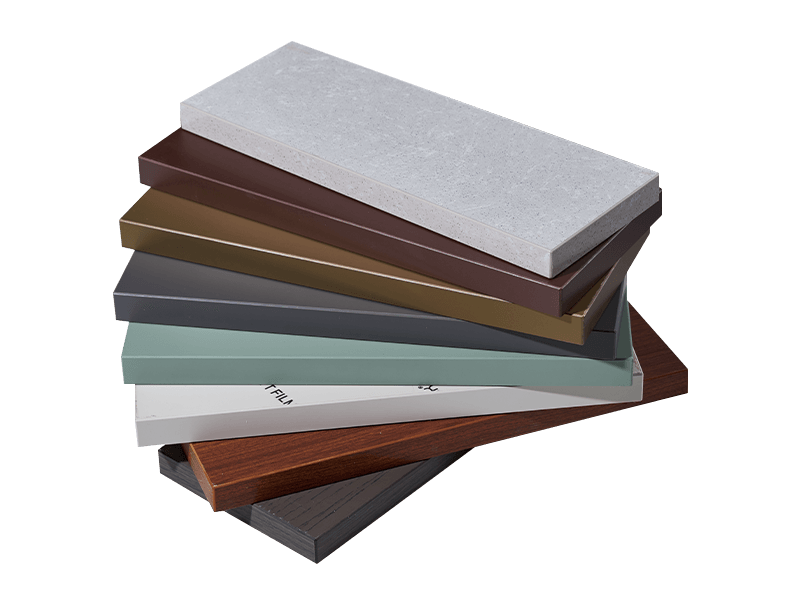
A textured woodgrain surface does not necessarily respond visually like a smooth gloss surface. Small marks may become less noticeable among deeper surface structures, while a smooth or high-gloss finish can make fine scratches easier to see under direct lighting.
Surface texture therefore becomes part of the design decision, not simply a decorative detail.
How Is Scratch Resistance Measured?
Scratch resistance can be evaluated through standardized testing rather than visual inspection alone. EN 14323 describes a scratch-resistance test for melamine-faced boards. A defined scratching point is applied under increasing loads, and the result identifies the load at which a continuous scratch becomes visible.
| Property | What It Tells Buyers |
| Scratch resistance | How the decorative surface responds to concentrated scratching force |
| Abrasion classification | How the surface performs under repeated abrasive contact |
| Surface texture | How scratches, fingerprints, and reflections appear visually |
| Thickness | Overall panel construction and suitability for the intended application |
| Edge treatment | Protection of the MDF core around exposed panel edges |
EN 14322:2021 classifies melamine-faced boards according to abrasion performance, with classes ranging from Class 1 through Class 4. The standard includes an initial wear-point classification, with Class 4 reaching an initial wear point of at least 350 revolutions under the specified test method.
Daily Use Is Different Across Applications
A decorative panel used as a bedroom cabinet door faces a different type of contact from a kitchen shelf or office desktop. The frequency and direction of abrasion matter just as much as the decorative finish.
| Application | Typical Surface Contact | Relevant Consideration |
| Wardrobe doors | Hands and clothing | Fingerprint and fine-mark visibility |
| Kitchen cabinets | Hands, containers and cleaning | Scratch and stain resistance |
| Office furniture | Documents, equipment and accessories | Repeated surface friction |
| Open shelving | Objects sliding across panels | Abrasion performance |
This makes application-specific specifications more useful than judging a board solely by its appearance in a showroom.
Gloss, Matt, or Woodgrain?
Visual style also affects how daily marks are perceived. A high-gloss surface can produce strong reflections, making fine lines more apparent under directional light. Matt finishes tend to produce softer reflections, while woodgrain textures introduce additional visual variation.
- High gloss: Suitable for designs that emphasize clean reflections and a contemporary appearance.
- Matt: Creates a softer visual effect and can reduce the prominence of reflections.
- Woodgrain: Combines decorative depth with a more natural visual pattern.
- Textured finishes: Add tactile character while changing how minor surface marks are perceived.
Cleaning Can Affect the Surface Too
Daily cleaning is another factor that deserves attention. A soft microfiber cloth and a suitable non-abrasive cleaner are generally more appropriate than aggressive scouring materials. Manufacturer care guidance for melamine panels warns that excessive pressure and abrasive cleaning methods can affect the decorative surface.
Water exposure deserves separate attention around cut edges. The melamine layer protects the face of the board, but exposed MDF at damaged or unsealed edges can react differently to moisture. Proper edge treatment is therefore important for furniture and interior panel applications.
Small Details Protect the Visual Finish
- Use soft materials under objects that are moved frequently.
- Avoid dragging metal items directly across the panel.
- Remove loose dust before wiping the surface.
- Use cleaning products recommended for melamine surfaces.
- Protect exposed MDF edges with suitable edge banding or sealing.
Surface Performance and Style Need to Work Together
A Melamine Laminated MDF Board is not judged only by its color or wood pattern. Scratch resistance, abrasion performance, surface texture, gloss level, and edge construction all contribute to how the finished furniture looks after months of daily use.
For buyers and designers, the practical approach is to match the decorative surface with the expected contact level. A cabinet door, office desk, shelving panel, and high-contact work surface may require different performance specifications even though they use similar-looking melamine finishes.
The real question is therefore not simply whether scratches can occur. It is whether the board's surface specification matches the way the finished product will actually be used.