 English
 Español

Zhongsheng
Zhongsheng
Zhongsheng
Zhongsheng
Zhongsheng
Zhongsheng
Zhongsheng
Zhongsheng
Zhongsheng
Zhongsheng
Zhongsheng
Zhongsheng
Zhongsheng
Zhongsheng
Zhongsheng
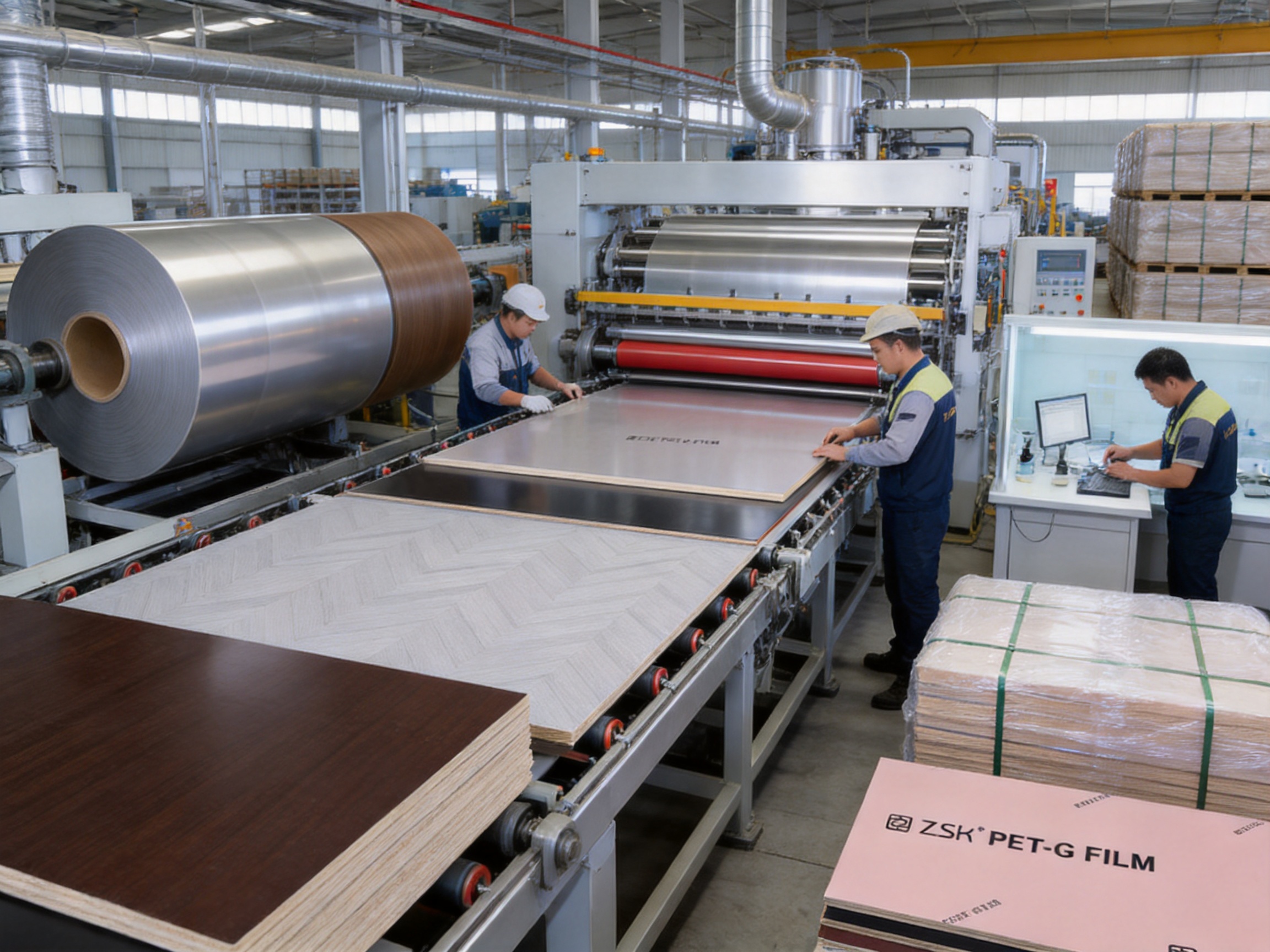
Modern interior projects increasingly require materials that combine structural reliability, attractive appearance, easy maintenance, and design flexibility. Traditional wood panels can provide warmth and strength, but they may require additional finishing, painting, laminating, or protective treatment before they are ready for use. Decorative films and surface-finished boards address this challenge by combining an engineered wood core with a practical decorative surface. PET/PVC surface plywood and block board offer a balanced solution for furniture, wall features, ceilings, cabinetry, partitions, and other interior applications.
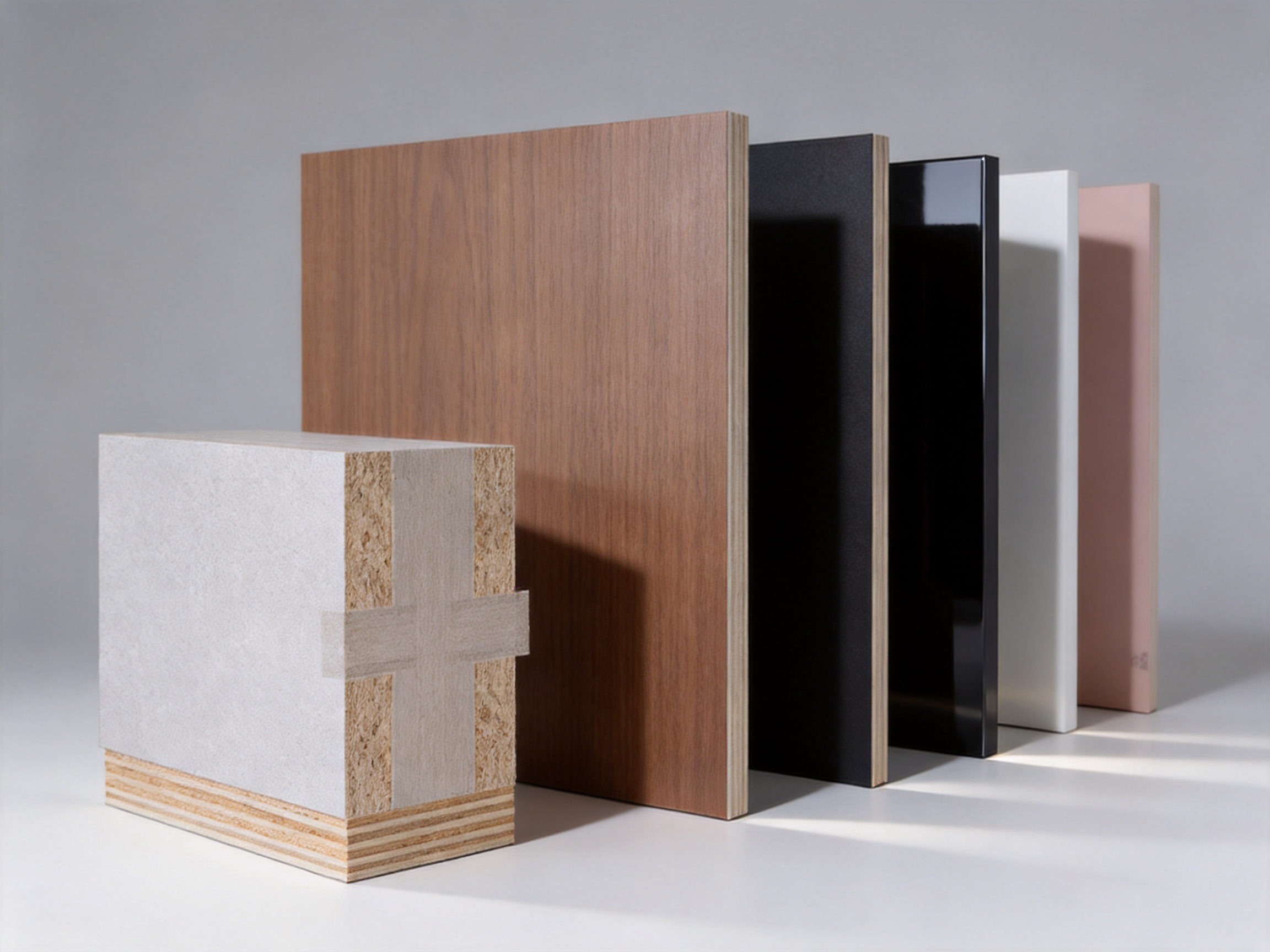
This product combines a plywood or block board substrate with a PET or PVC decorative surface. The wood-based core provides rigidity, screw-holding capacity, and workability, while the surface film contributes visual consistency, stain resistance, moisture protection, and easier cleaning. Depending on the selected design, the finished panel can present a natural wood grain, a solid color, a black face, a high-gloss effect, a matte texture, or another decorative pattern suitable for residential, commercial, hospitality, retail, and architectural environments.
PET/PVC surface plywood and block board are designed for customers who need more than a basic structural sheet. They are intended to function as finished or semi-finished decorative panels that reduce the number of production steps between raw material and completed interior element. The result is a practical material platform for manufacturers, designers, contractors, furniture producers, and building-material distributors.
Understanding PET/PVC Surface Plywood and Block Board
Plywood is an engineered wood panel made by bonding several thin wood veneers together. The grain direction of adjacent veneer layers is normally rotated, often at right angles, to improve dimensional stability and mechanical performance. This cross-laminated construction distributes stress across the panel and helps reduce the risks of splitting, twisting, cracking, and warping that can occur with some solid wood products.
Block board is another engineered wood panel. It generally consists of a core made from wood strips or blocks placed between veneer layers. The core structure provides a useful combination of lightness, rigidity, and machinability. Block board is commonly selected for furniture components, doors, partitions, shelving, and interior construction elements where a stable, relatively lightweight board is required.
When a PET or PVC decorative film is applied to the face of plywood or block board, the panel becomes a surface-finished product rather than an unfinished substrate. The film can be selected according to the intended visual effect and performance requirements. PET surfaces are often valued for their clean appearance, smooth finish, and suitability for contemporary furniture and interior designs. PVC surfaces provide broad decorative flexibility and can be produced in many colors, textures, patterns, and wood-grain effects.
The finished construction is therefore composed of several functional layers. The core supplies structural support. The bonding layer connects the decorative film to the board. The PET or PVC surface supplies the visible finish and helps protect the panel from ordinary interior use. Depending on the project, the reverse side may also be finished, sealed, balanced, or prepared for installation requirements.
Product Specifications and Customization Options
The standard panel size is 1220 × 2440 millimeters, while customized dimensions may be available according to project requirements. Thickness options range from approximately 3 millimeters to 40 millimeters, subject to the selected core, surface structure, order quantity, and manufacturing specification. This broad thickness range allows the product to serve both decorative overlays and more substantial furniture or construction components.
The stated density range is approximately 0.8–1.3 grams per cubic centimeter. Actual density may vary according to the wood species, veneer arrangement, block board structure, adhesive system, surface film, and finished thickness. Density selection can influence panel weight, rigidity, machining behavior, transportation cost, and installation method.
Customers may typically discuss several product variables with the manufacturer:
• Core type: plywood, block board, or another compatible engineered wood substrate.
• Surface material: PET film, PVC film, or a specified decorative surface construction.
• Surface appearance: natural grain, black face, solid color, wood effect, stone effect, textile effect, matte finish, or gloss finish.
• Panel thickness: selected according to furniture, wall, ceiling, door, partition, or construction requirements.
• Panel size: standard sheet dimensions or project-specific cutting formats.
• Edge treatment: square edge, sealed edge, wrapped edge, machined edge, or another finishing method.
• Backside treatment: unfinished, matching, neutral, protective, or balanced according to installation conditions.
• Bonding and processing requirements: determined by intended use, processing equipment, and environmental conditions.
Customization is particularly important for large interior projects. A designer may need the grain direction to match across adjacent panels. A furniture producer may require sheets that fit an existing cutting plan. A contractor may need a consistent thickness and surface appearance for repeated wall or ceiling modules. By confirming these requirements before production, buyers can improve material utilization and reduce waste during installation.
| Item | Available or Stated Specification | Project Consideration |
|---|---|---|
| Product construction | PET or PVC surface combined with plywood or block board | Select the core according to strength, weight, machining, and design requirements |
| Standard size | 1220 × 2440 mm | Custom dimensions may be discussed for specific projects |
| Thickness | Approximately 3–40 mm | Choose according to span, fixing method, furniture structure, and visual effect |
| Density | Approximately 0.8–1.3 g/cm³ | Influences weight, rigidity, handling, and processing |
| Surface choices | PET film, PVC film, wood grain, black face, color, matte, or gloss effects | Match the finish to the design concept and maintenance requirements |
| Primary advantages | Moisture-resistant performance, strength, durability, and decorative consistency | Use in suitable interior environments and follow project installation guidance |
| Typical applications | Furniture, decoration, construction, ceilings, cabinetry, partitions, and wall features | Confirm structural and fire requirements for each application |
Advantages of the Engineered Wood Core
Cross-Laminated Strength
The cross-laminated structure of plywood is one of its most important advantages. In solid wood, the direction of the natural grain can cause differences in strength and movement across the board. Plywood distributes the grain in multiple directions, helping the panel resist stresses from different angles. This makes it suitable for components that require dependable rigidity and stable dimensions.
Block board offers a different structural profile. Its wood-strip core can produce a panel that is relatively light while maintaining useful stiffness. This can be beneficial for cabinet sides, doors, partitions, furniture panels, and other elements where excessive weight would complicate transportation or installation. The correct choice between plywood and block board depends on the final design, span, fixing method, machining requirements, and expected loads.
Dimensional Stability
Interior spaces experience changes in temperature and humidity. Materials that respond excessively to these changes may shrink, swell, twist, or develop visible gaps. Engineered wood panels are designed to limit these movements compared with many solid timber boards. The layered structure helps distribute internal stresses and supports more consistent panel geometry.
Dimensional stability is valuable when multiple panels are installed together. Wall cladding, cabinet doors, ceiling panels, and furniture faces often depend on consistent joints and alignment. A stable substrate helps reduce installation difficulties and supports a more uniform final appearance. Proper acclimatization, storage, sealing, and installation remain important because no wood-based panel is completely unaffected by severe moisture or unsuitable environmental conditions.
Good Workability
Plywood and block board can normally be cut, drilled, routed, screwed, nailed, laminated, and finished using equipment commonly found in furniture and interior manufacturing facilities. Their machinability allows one material platform to serve different product categories. Panels can be converted into doors, shelves, decorative strips, cabinet parts, partitions, wall modules, or ceiling components.
The decorative film can also reduce the need for separate painting or surface-finishing operations. This may help simplify production planning, especially where a consistent appearance is required across a large quantity of panels. However, cutting tools, feed speeds, edge treatment, and handling procedures should be selected according to the specific surface film and core construction.
Benefits of PET and PVC Decorative Surfaces
Consistent Visual Quality
Natural timber is attractive, but its appearance can vary from board to board. Knots, color differences, grain direction, and irregular patterns may complicate the creation of a consistent design. Decorative PET and PVC films can provide a more repeatable appearance across panels. This is useful for furniture series, hotel interiors, retail displays, office fit-outs, and residential projects that require coordinated surfaces.
Wood-grain designs can create the visual warmth of timber while offering greater control over pattern, color, and repeatability. Black-faced plywood and dark decorative panels can support modern, minimalist, industrial, and high-contrast interior concepts. Light wood tones can visually enlarge a space, while deeper tones can create a more intimate and premium atmosphere.
Easy Maintenance
A suitable decorative film creates a smooth or textured face that can generally be cleaned more easily than an unfinished wood surface. Dust, ordinary fingerprints, and light surface marks can often be removed with appropriate cleaning methods. This makes finished panels practical for furniture, wardrobes, wall decoration, retail fixtures, and other locations where routine maintenance is expected.
Cleaning procedures should always be matched to the actual surface specification. Abrasive powders, aggressive solvents, excessive water, and sharp tools may damage a decorative film. The product should be evaluated against the cleaning agents and maintenance schedule expected in the target environment.
Moisture-Resistant Performance
The product is described as moisture-proof and strong and durable. The surface film helps reduce direct exposure of the board face to ordinary moisture, splashes, and humidity. This is valuable in interior applications where occasional contact with moisture may occur, such as kitchens, utility areas, commercial interiors, and selected bathroom furniture environments.
Moisture resistance should not be confused with unlimited waterproofing. The edges, joints, screw holes, cutouts, and reverse side may still require suitable protection. Continuous water exposure, high-humidity construction conditions, condensation, flooding, or outdoor weathering may require a different product specification. Designers and contractors should review the complete panel construction and installation details before using it in demanding environments.
Reduced Finishing Steps
Unfinished plywood or block board may need sanding, priming, painting, laminating, or other finishing work before installation. A factory-applied PET or PVC surface can arrive closer to its final decorative condition. This can shorten the production sequence, reduce dependence on site painting, and support a cleaner installation process.
Reduced finishing work can also improve consistency. Factory-controlled coating or lamination conditions are generally more repeatable than manual finishing performed at different locations. This may help reduce color variation, surface defects, uneven coverage, and schedule delays associated with multiple finishing stages.
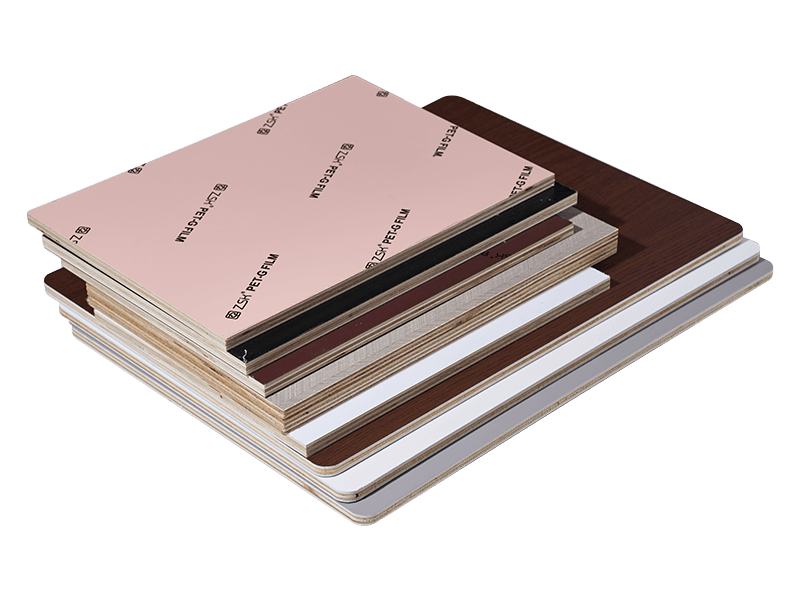
PET/PVC Surface Plywood/Block Board
Comparison with Conventional Panel Solutions
Different panel types serve different purposes, and no single material is ideal for every project. PET/PVC surface plywood and block board distinguish themselves by combining a wood-based engineered core with a decorative ready-to-use surface. This hybrid construction can provide advantages over unfinished plywood, ordinary solid timber, and some purely decorative sheet materials.
| Material Type | Typical Strength | Decorative Readiness | Potential Considerations |
|---|---|---|---|
| PET/PVC surface plywood | Strong, stable, and suitable for many furniture and interior components | High; decorative film is applied during manufacturing | Edges and core selection must be considered for moisture and load conditions |
| PET/PVC surface block board | Rigid and relatively lightweight for selected furniture and interior uses | High; suitable for coordinated decorative surfaces | Performance depends on core quality, strip construction, bonding, and thickness |
| Unfinished plywood | Strong and versatile | Requires painting, laminating, veneer, or another finish | Additional labor, finishing time, and appearance-control requirements |
| Solid timber board | Natural strength and authentic grain | Requires finishing and may show natural variation | Can be more sensitive to movement, knots, and material variation |
| Decorative plastic sheet without wood core | Useful for surface decoration and selected lightweight applications | Decorative by nature | May not provide the same screw holding, rigidity, or structural behavior as a wood-based panel |
Compared with unfinished plywood, the finished product can reduce the need for secondary decoration. Compared with solid timber, the engineered core can offer more consistent dimensions and more predictable panel production. Compared with a thin decorative sheet used alone, the combined panel provides a rigid substrate suitable for furniture and architectural components.
These advantages are most meaningful when the material is specified correctly. A surface finish cannot compensate for an unsuitable core, and a strong core cannot guarantee long-term performance if the panel is stored in wet conditions or installed without protecting the edges. Product selection should therefore consider the complete construction rather than focusing only on appearance.
Design Possibilities for Modern Interiors
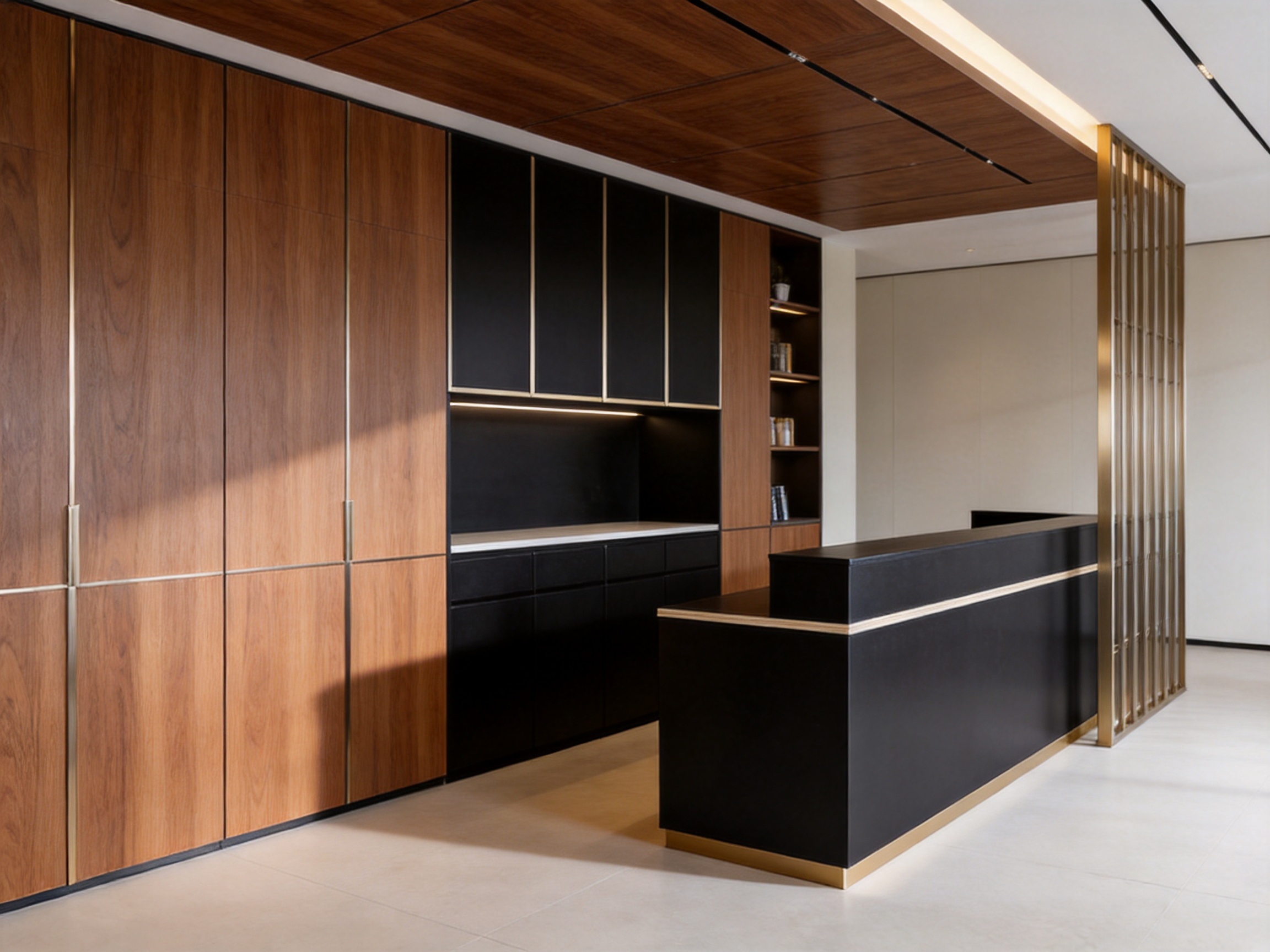
PET/PVC surface plywood and block board support a wide range of interior design styles. The material can be used as a visual feature or as a coordinated background surface. Designers can select matching or contrasting panels for walls, ceilings, cabinetry, furniture, and built-in storage.
Natural Grain Interiors
Natural-grain decorative films can introduce a warm, organic appearance into contemporary spaces. They are suitable for residential cabinetry, hotel rooms, office reception areas, restaurants, retail fixtures, and educational interiors. Grain direction can be arranged horizontally or vertically to influence how a room is perceived. Vertical grain can emphasize height, while horizontal grain can make a wall or cabinet run appear wider.
Using a consistent decorative film across different panel thicknesses can help create a unified design language. Designers may combine wood-grain surfaces with neutral walls, metal details, glass, stone-effect materials, or solid-color panels. The engineered core supports the required shape and function while the surface delivers the intended visual effect.
Black-Faced Plywood and Dark Panels
Black-faced panels are suited to high-contrast interiors, contemporary furniture, feature ceilings, exhibition displays, and commercial environments. A dark surface can make lighter furniture, artwork, lighting, and architectural details stand out. It can also provide a refined backdrop for minimalist spaces.
Dark surfaces should be evaluated for the visibility of fingerprints, dust, scratches, and edge imperfections under strong lighting. Proper handling and clean installation are particularly important for black or high-gloss finishes. When correctly specified and maintained, a black-faced panel can deliver a strong visual impact with relatively simple detailing.
Ceiling Applications
Decorative plywood ceiling panels can add texture and warmth while maintaining a structured, modern appearance. Panel sizes, thicknesses, joint patterns, and support systems can be coordinated with lighting, ventilation, acoustic elements, and access panels. PET/PVC surfaces can help provide a more finished appearance than exposed unfinished board.
Ceiling use requires careful consideration of weight, fixing systems, fire performance, maintenance access, and local building regulations. The product should not be treated as a universal ceiling solution without project-specific review. Where required, buyers should request appropriate technical information for fire rating, formaldehyde emissions, adhesive properties, and other regulatory criteria.
Applications Across Furniture and Construction
Furniture Manufacturing
The product is suitable for furniture manufacturers seeking a combination of structural panel performance and decorative consistency. Possible applications include wardrobes, cabinet doors, side panels, shelves, desks, storage systems, TV units, bed components, and display furniture. The finished face can reduce the need for painting or separate lamination after cutting.
Furniture producers can benefit from repeatable panel sizes and surface designs. A coordinated supply of decorative sheets can simplify product development and support multiple furniture series using a common visual theme. The choice of thickness should reflect the span, hinge loads, hardware, edge treatment, and expected frequency of use.
Interior Decoration
Wall panels, decorative partitions, feature walls, column wraps, reception counters, and display backgrounds can all use surface-finished plywood or block board. The product can provide a faster route from design concept to installed surface, especially when panels are prefabricated in a controlled workshop.
Interior contractors may cut panels to size, prepare openings, apply edge treatment, and assemble modules before delivery to the site. This approach can reduce dust and wet finishing work during installation. It may also improve project scheduling when multiple rooms or floors require a consistent appearance.
Cabinetry and Built-In Storage
Cabinetry requires panels that can be accurately cut and securely connected. Plywood and block board provide a machinable substrate for hinges, screws, dowels, connectors, and other hardware. A PET or PVC decorative face can provide a finished appearance for doors and exposed sides.
For cabinet interiors, designers may combine a decorative external face with a neutral or practical internal surface. The complete design should account for edge exposure, repeated opening and closing, cleaning, ventilation, and possible contact with moisture.
Commercial and Hospitality Spaces
Hotels, restaurants, offices, shopping environments, and showrooms often require attractive finishes that can be reproduced across many areas. Decorative panel products can help maintain a consistent brand-neutral architectural style while allowing different colors or textures for functional zones.
Commercial projects may place higher demands on abrasion resistance, cleaning frequency, impact resistance, and replacement availability. Buyers should clarify these requirements before choosing the film type and surface finish. Where public-use regulations apply, fire and emissions documentation should also be reviewed.
Advanced Manufacturing Capabilities
ZheJiang ZhongSheng New Materials Co., Ltd. was established in 2006 and has developed extensive experience in transparent plastic sheets and plastic film rolls. The company operates a manufacturing area of approximately 40,000 square meters and has reported an annual production capacity of about 70,000 tons. Its production portfolio includes PETA, PETG, and PET-GAG products used in thermoforming, vacuum forming, blister packaging, and furniture decorative film panels.
The company reports one research and development team, two laboratories, 33 production lines, and more than 100 sets of machinery and equipment. This combination of production scale, technical resources, and laboratory capability supports the development and manufacture of plastic films for different applications. It also provides a foundation for producing decorative surfaces intended to be integrated with engineered wood panels.
Film manufacturing requires control of raw materials, melting and extrusion conditions, thickness uniformity, surface treatment, cooling, winding, inspection, and packaging. For decorative applications, additional attention is needed for color consistency, gloss, texture, print alignment, adhesion, and resistance to handling. When the film is laminated to plywood or block board, the bonding process becomes equally important.
Material Preparation and Extrusion
PET and related polymers must be prepared carefully before processing. Moisture control is especially important for polyester materials because excess moisture can affect processing stability and final film properties. Controlled material preparation helps support consistent extrusion and reduces the risk of variation during production.
During extrusion, the polymer is heated, melted, and formed into a continuous sheet or film. Process parameters such as temperature, pressure, speed, and cooling conditions influence thickness, clarity, mechanical behavior, and surface quality. Production-line monitoring helps maintain repeatability across long film rolls.
Surface and Appearance Control
Decorative film performance depends not only on the polymer but also on the surface design. Color, gloss, texture, grain pattern, and print registration must be controlled to achieve a visually consistent product. The manufacturer’s experience with PET films and decorative film panels can support the development of surfaces for furniture and interior applications.
Surface inspection may identify scratches, contamination, pinholes, bubbles, wrinkles, color differences, and other defects. Film rolls can be evaluated before they are converted or laminated. This upstream control is important because surface defects become more difficult and costly to correct after the film has been bonded to a rigid board.
Lamination and Panel Integration
Applying a film to plywood or block board requires compatibility between the film, adhesive, substrate, pressure, temperature, and production speed. The board surface may need to be cleaned, sanded, leveled, or conditioned before lamination. Adhesive selection should support adequate bonding without damaging the film or causing visible defects.
During lamination, uniform pressure and controlled conditions help minimize bubbles, wrinkles, edge lifting, and incomplete adhesion. After bonding, panels can be inspected for surface flatness, film coverage, edge quality, and appearance. Where appropriate, samples may undergo adhesion, humidity, heat, abrasion, or cleaning evaluations based on the intended application.
The exact manufacturing process may vary according to product design and customer specifications. Buyers should request a technical data sheet and sample approval process when a project requires specific performance levels or appearance tolerances.
Quality Management and Technical Strengths
The company’s reported investment in laboratories and research resources is significant for a material category that depends on both polymer technology and decorative performance. Laboratories can support raw-material evaluation, process development, physical testing, surface analysis, and quality verification. These functions are especially useful when developing customized film designs or adapting a surface to a particular board structure.
The company also reports more than 60 invention and utility patents. Patents do not automatically define the performance of every product, but they indicate ongoing investment in technical development and process innovation. Experience accumulated through PETG film development and furniture decoration applications can contribute to improvements in film clarity, flexibility, surface behavior, processing stability, and decorative appearance.
An annual turnover exceeding 70 million dollars and international market recognition for self-developed PETG films indicate a substantial commercial base. For buyers, a stable manufacturing organization can provide advantages in production continuity, communication, customization, technical support, and repeat ordering. These factors are important for projects where panels must be supplied in coordinated batches over an extended period.
The company follows the stated principles of seeking development through quality and creating a brand through integrity. In practical terms, these principles should be reflected in documented specifications, controlled production, sample confirmation, traceable orders, accurate packaging, and responsive technical communication. Customers should still complete their own evaluation and confirm that the selected product meets the applicable project requirements.
Installation, Storage, and Handling Guidance
Proper handling begins before installation. Panels should be transported on stable, level supports and protected from impact, rain, condensation, and contamination. They should be stored indoors in a clean, dry, ventilated area. Direct sunlight, extreme temperature changes, and contact with wet floors should be avoided.
Panels should generally be stored horizontally with adequate support across the sheet. Improper stacking can create pressure points, edge damage, or distortion. Heavy items should not be placed on top of decorative surfaces. Protective packaging should remain in place until the panels are ready for processing or installation, provided that the packaging does not trap moisture.
Before cutting, panels should be checked for visible damage, surface variation, thickness, and dimensions. Samples should be compared with the approved reference when color or grain matching is important. Cutting plans should account for grain direction, joint locations, edge treatment, and possible trim allowance.
Cut edges and openings may expose the wood-based core. Depending on the environment, these areas may require edge sealing, edging, trim, or another protective treatment. Fasteners should be selected according to panel thickness and application. Over-tightening screws can damage the face or weaken the surrounding core. Pre-drilling may be appropriate for certain designs and edge distances.
When panels are installed on walls or ceilings, the supporting framework should be level, stable, and suitable for the panel weight. Expansion gaps, ventilation spaces, access requirements, and movement joints should be considered where appropriate. Installation teams should follow the project drawings and the manufacturer’s technical guidance rather than relying solely on general woodworking practice.
Sustainability and Efficient Use of Resources
Engineered wood panels can make efficient use of wood resources by combining veneers, strips, or smaller wood components into a stable sheet. Their standardized format can also improve cutting efficiency. When decorative films are applied during production, fewer separate finishing materials may be required at the construction site.
Long service life is another important sustainability consideration. A durable panel that retains its appearance and function for many years may reduce the frequency of replacement and the associated material use. Good design, correct installation, suitable cleaning, and protection from unsuitable moisture conditions all contribute to service life.
PET and PVC are polymer materials, so end-of-life planning should be considered. Recycling options depend on local collection systems, adhesive composition, contamination, and the difficulty of separating film from the wood substrate. Project owners should consult local waste-management requirements and consider responsible disposal or recycling routes where available.
Environmental performance should be evaluated using verified information rather than assumptions. Buyers may request details concerning wood sourcing, formaldehyde emissions, adhesive composition, recycled content, production waste, packaging, and relevant environmental certifications. Requirements vary by market and project type.
How to Select the Right Product
The first step is to define the application. A cabinet door, decorative wall, ceiling panel, shelf, partition, and structural component may all require different thicknesses, cores, surface finishes, and fixing methods. A panel that is suitable for a vertical decorative wall may not be appropriate for a heavily loaded shelf or an exterior application.
The second step is to identify the required appearance. Buyers should specify the preferred color, grain direction, gloss level, texture, pattern repeat, and tolerance for variation. If several panels will be installed side by side, sample approval is recommended. For large orders, a retained approved sample can support quality comparison during production and delivery.
The third step is to establish the environmental conditions. Consider humidity, temperature variation, cleaning chemicals, sunlight, impact, abrasion, and contact with water. Edge exposure and backside exposure should be included in this assessment. If the product will be used in a regulated public building, request documentation for fire, emissions, and other relevant performance categories.
The fourth step is to confirm processing requirements. Ask whether the panel will be cut, routed, drilled, wrapped, bent, edge-banded, or assembled with hardware. The manufacturer can then advise on suitable thickness, surface, adhesive, and finishing details. Test machining on a sample before full-scale production can reduce the risk of waste.
The final step is to confirm commercial and logistical requirements. These may include minimum order quantity, lead time, packaging, container loading, inspection standards, replacement policy, documentation, and repeat-order consistency. Clear technical and commercial specifications help prevent misunderstandings between the panel supplier, furniture producer, designer, and installation contractor.
Frequently Asked Questions
What is PET/PVC surface plywood?
PET/PVC surface plywood is a plywood panel finished with a PET or PVC decorative film. The plywood core supplies strength, rigidity, and machinability, while the film provides the visible decorative surface and helps protect the face during normal interior use.
What is the difference between PET surface and PVC surface?
PET and PVC are different polymer materials with different processing characteristics and surface properties. PET surfaces are often selected for a clean, contemporary appearance and may be available in smooth, matte, or gloss finishes. PVC offers broad decorative flexibility, including many colors, textures, and patterns. The best option depends on the design, processing method, environmental conditions, and required performance.
Can the product be used for furniture?
Yes. The stated applications include furniture, decoration, and construction. Typical furniture uses may include cabinet doors, wardrobe panels, shelves, desks, storage units, display fixtures, and other interior components. Thickness, core type, edge treatment, and hardware compatibility should be confirmed for each design.
Is the product waterproof?
The product is described as moisture-proof, but moisture-proof performance is not the same as unlimited waterproofing. The surface may resist ordinary interior moisture, but exposed edges, joints, cutouts, and the wood core still require protection. Continuous water exposure or outdoor use should not be assumed suitable without a specific technical evaluation.
What standard size is available?
The stated standard size is 1220 × 2440 millimeters. Customized sizes may be discussed depending on the project, production method, and order requirements.
What thicknesses are available?
The stated thickness range is approximately 3–40 millimeters or customized. The correct thickness depends on the core structure, application, span, fixing method, weight requirements, and desired appearance.
Can the panels be used for ceilings?
Decorative plywood ceiling panels can be used in suitable interior projects, provided that the supporting system, panel weight, fixing method, fire requirements, maintenance access, and local building regulations are properly evaluated. A project-specific technical review is recommended before installation.
Are natural wood-grain designs available?
Yes. The product concept includes natural-grain decorative surfaces and design plywood with grain. Wood-grain films can provide a coordinated appearance with more repeatability than many untreated natural timber boards.
What is black-faced plywood used for?
Black-faced plywood can be used for modern furniture, feature walls, display fixtures, decorative ceilings, retail interiors, office spaces, and other applications where a dark, high-contrast appearance is desired. Handling and installation should be carefully controlled because dust, fingerprints, and scratches may be more visible on dark finishes.
How should the panels be stored?
Store the panels indoors, horizontally, on a level and adequately supported surface. Protect them from rain, condensation, direct sunlight, excessive humidity, impact, and contamination. Keep protective packaging in place until the panels are ready for processing or installation, while avoiding conditions that could trap moisture.
Can the product be customized?
Customization may include dimensions, thickness, surface design, color, grain appearance, gloss level, core type, backside treatment, edge treatment, and packaging. Customers should provide drawings, samples, technical requirements, and expected application conditions when requesting a quotation.
What information should be requested before purchase?
Buyers should request a product specification, surface sample, core details, thickness tolerance, density information, bonding details, test data where applicable, packaging information, and recommended processing and installation guidance. For regulated applications, request the relevant fire, emissions, and environmental documentation.
Conclusion
PET/PVC surface plywood and block board provide a practical combination of engineered wood performance and decorative film technology. The plywood or block board core contributes strength, dimensional stability, uniformity, and workability. The PET or PVC surface contributes consistent appearance, easier cleaning, moisture-resistant face performance, and design flexibility.
Compared with unfinished boards, the finished product can reduce secondary decoration and improve visual consistency. Compared with solid timber, the engineered structure can provide more predictable panel dimensions and efficient production. Compared with a decorative film used without a rigid substrate, the combined panel offers better suitability for furniture and interior construction components.
The product is available in standard 1220 × 2440 millimeter sheets, with stated thickness options from approximately 3–40 millimeters and a density range of about 0.8–1.3 grams per cubic centimeter. Customization allows the material to be adapted to furniture, wall decoration, ceilings, partitions, cabinetry, commercial interiors, and other design applications.
ZheJiang ZhongSheng New Materials Co., Ltd. brings experience in PET, PETG, and PET-GAG film production, supported by a large manufacturing area, multiple laboratories, research and development resources, 33 production lines, and more than 100 sets of equipment. Its reported production capacity, patent portfolio, and experience with furniture decorative film panels provide a foundation for supplying decorative surfaces for engineered wood products.
Successful use depends on selecting the correct core, film, thickness, edge treatment, and installation method. With appropriate technical confirmation, storage, processing, and maintenance, PET/PVC surface plywood and block board can support durable, attractive, and efficient interior solutions for both standardized products and customized architectural projects.
References
1. Engineered Wood Association. General principles of plywood construction, veneer orientation, and panel performance.
2. American National Standards Institute and Hardwood Plywood and Veneer Association. Technical guidance for hardwood plywood and decorative panel applications.
3. International Organization for Standardization. Standards and testing principles for wood-based panels, dimensional stability, and surface performance.
4. Plastics industry technical literature. General processing principles for polyethylene terephthalate, PETG, PVC, film extrusion, and decorative surface applications.
5. Furniture manufacturing technical manuals. Guidelines for panel cutting, drilling, edge treatment, lamination, storage, and installation.
6. Architectural materials handbooks. Selection of decorative wall panels, ceiling panels, cabinetry materials, and interior finishing systems.
7. Manufacturer-provided product information for PET/PVC surface plywood and block board, including stated dimensions, thickness range, density range, applications, and manufacturing capabilities.
For product selection, project quotations, samples, and technical specifications, buyers should communicate the intended application, panel dimensions, thickness, decorative finish, environmental conditions, processing method, and required documentation before placing an order.