 English
 Español

Zhongsheng
Zhongsheng
Zhongsheng
Zhongsheng
Zhongsheng
Zhongsheng
Zhongsheng
Zhongsheng
Zhongsheng
Zhongsheng
Zhongsheng
Zhongsheng
Zhongsheng
Zhongsheng
Zhongsheng
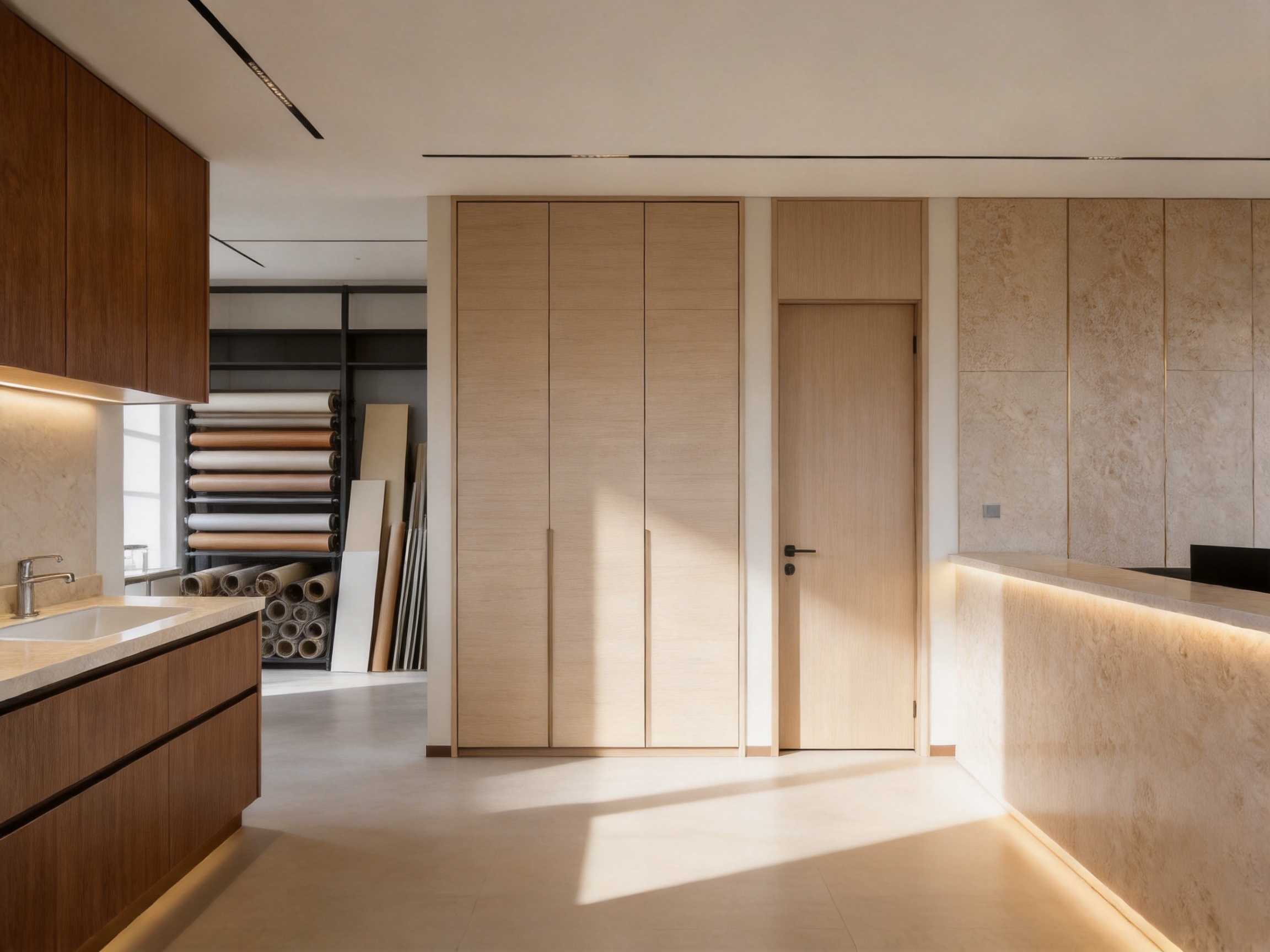
Modern interior design increasingly depends on materials that combine visual sophistication, practical performance, and responsible manufacturing. Furniture manufacturers, wall-panel producers, cabinet makers, door manufacturers, and commercial decorators are searching for surface materials that can reproduce the warmth of natural wood while delivering the consistency, durability, and processing efficiency of an engineered film. PETG Optical Wood Veneer Film answers this demand by combining high-quality PETG material, advanced embossing, and an optical glossy surface that creates a realistic, dimensional wood-grain appearance.
Unlike ordinary decorative films that rely only on printed color, this PETG veneer film is designed to provide a more complete sensory experience. Its embossed grain introduces tactile depth, while the optical surface changes subtly as lighting and viewing angles change. The result is a refined wood-inspired finish suitable for contemporary furniture, architectural wall systems, display installations, and other premium applications.
The product is manufactured in thicknesses from 0.16 to 0.5 millimeters and is available in a regular width of 1,250 millimeters or in customized dimensions. It can be laminated onto wall panels, wardrobe panels, kitchen cabinet doors, bathroom cabinets, door boards, commercial decoration panels, and related substrates. Its combination of skin-touch feel, anti-fingerprint performance, stain resistance, color stability, waterproof properties, impact strength after lamination, weather resistance, and environmentally conscious material selection gives designers and manufacturers a flexible alternative to conventional decorative surfaces.
What Is PETG Optical Wood Veneer Film?
PETG Optical Wood Veneer Film is a decorative surface film made from PETG, a modified form of polyethylene terephthalate glycol. PETG is widely valued for its clarity, toughness, formability, chemical resistance, and compatibility with demanding fabrication processes. In this product, the material is converted into a thin, decorative sheet with a wood-inspired visual pattern and an embossed surface structure.
The word “optical” refers to the way the glossy surface interacts with light. Instead of appearing completely flat or visually static, the film can show subtle changes in reflection as the observer moves or as the surrounding light changes. This effect gives the wood pattern greater depth and helps the finished panel appear more dynamic than a conventional flat-printed laminate.
The wood veneer appearance is created through the coordinated use of visual design and embossing. A printed or engineered pattern establishes the tone, grain direction, and color variation. Embossing then introduces a physical surface structure that corresponds to the desired design language. When these elements work together, the surface can resemble natural timber more convincingly than a simple color coating or smooth decorative film.
At the same time, the material retains the manufacturing advantages of a roll-based film. It can be produced in consistent dimensions, supplied in different thicknesses, and laminated to suitable panels using established industrial methods. This makes it appropriate for both standardized product lines and customized interior projects.
Why Wood-Inspired Decorative Films Remain Important
Wood continues to be one of the most influential visual references in furniture and interior architecture. Its grain, warmth, and natural variation create a sense of comfort and quality. However, solid wood and natural veneer can involve limitations related to supply, weight, cost, dimensional stability, maintenance, and production consistency.
Natural materials also vary from one piece to another. While this variation can be attractive, it can make it difficult for large projects to achieve a uniform appearance across hundreds or thousands of panels. Matching grain direction, color tone, and surface condition requires careful selection and additional labor. Natural wood may also need protective coatings to resist moisture, staining, abrasion, and changes in environmental conditions.
Decorative PETG film provides a controlled alternative. Manufacturers can specify a consistent pattern, repeatable color, stable dimensions, and a defined surface texture. Designers can achieve a wood-inspired appearance across wardrobes, cabinets, wall panels, and doors without depending entirely on the availability of a particular timber species or veneer grade.
The film also supports modern design trends that combine natural visual references with clean, minimal surfaces. Optical gloss and embossed grain can be used to create a finish that feels contemporary rather than merely imitative. Depending on the selected pattern and color, the film can support Scandinavian, minimalist, luxury, hospitality, retail, office, residential, or commercial design concepts.

PETG Opticial Wood Veneer Film
Core Product Advantages
Three-Dimensional Wood-Grain Appearance
One of the most important advantages of the product is its three-dimensional wood-grain effect. The grain is not presented only as a printed image. Embossed surface lines and valleys create physical variation that can be seen and felt. This helps the finished panel appear more authentic and gives users a tactile experience similar to that associated with natural wood.
Surface depth is especially important in applications where people interact closely with the material. Cabinet doors, wardrobe panels, reception desks, wall panels, and display fixtures are often viewed from a short distance and touched frequently. A surface that combines visual patterning with texture can communicate greater material quality than a smooth, low-depth decorative coating.
Optical Gloss for Greater Visual Depth
The optical glossy surface creates controlled reflection and variation under different lighting conditions. In a showroom, hospitality environment, retail store, or residential interior, artificial and natural light may strike a panel from different directions throughout the day. The optical effect helps the surface respond to these changes, adding visual richness without requiring complicated decorative construction.
This quality can give designers more freedom when developing coordinated interiors. A single wood-inspired film may appear warm and soft under diffuse lighting while showing sharper grain highlights under directional lighting. The result is a surface that can support premium visual presentation and increase the perceived sophistication of the finished product.
Skin-Touch Surface Feel
The product is designed with a skin-touch quality that makes the surface pleasant to handle. This is valuable for furniture and interior products that are used every day. Wardrobe doors, kitchen cabinet fronts, bathroom cabinets, interior doors, and decorative wall sections are not only seen; they are opened, closed, cleaned, and touched repeatedly.
A comfortable tactile finish can strengthen the user’s impression of product quality. It can also help manufacturers differentiate their furniture lines from products covered with ordinary paper-based decorative material or basic plastic film. In competitive markets, the combination of appearance and touch is often an important part of the customer experience.
Anti-Fingerprint and Stain-Resistant Performance
Visible fingerprints and surface stains can quickly reduce the perceived quality of a decorative panel, particularly when the surface has a glossy appearance. The anti-fingerprint characteristic of this PETG veneer film helps limit the visibility of marks caused by regular contact. Its stain-resistant performance further supports use in furniture and interior environments where spills, dust, oils, and everyday handling are unavoidable.
These properties can reduce the frequency of intensive cleaning and help finished products maintain a cleaner appearance during normal use. In commercial environments, where furniture and wall surfaces may experience heavy traffic, stain resistance can contribute to easier maintenance and lower long-term service demands.
Waterproof Surface Protection
Water resistance is another important advantage for interior panels. Kitchens, bathrooms, utility areas, hospitality spaces, and commercial interiors can expose decorative surfaces to water vapor, splashes, and occasional spills. A waterproof film layer helps protect the appearance of the laminated panel when the substrate and overall construction are also properly selected for the intended environment.
The film is therefore suitable for applications such as kitchen cabinet doors, bathroom cabinets, wall panels, and other decorative components that require a more resilient surface than untreated paper or conventional wood veneer. Waterproof performance does not eliminate the need for correct edge sealing, substrate selection, and installation, but it can provide an effective first layer of surface protection.
High Impact Strength After Lamination
Furniture panels and wall systems may be exposed to knocks, contact with equipment, transportation stress, and repeated handling. The product is designed to provide high impact strength when laminated, helping the completed panel withstand the practical demands of everyday use.
Impact performance depends on several factors, including the film thickness, adhesive system, substrate quality, lamination temperature, pressure, cooling conditions, and edge treatment. When these parameters are properly controlled, PETG film can form a strong decorative layer that supports durable furniture and architectural components.
Color Stability and Weather Resistance
Color stability is essential when decorative surfaces are installed in spaces with long service expectations. A wood-grain design that changes noticeably over time can affect the visual consistency of an entire furniture collection or interior project. The product is developed to support stable color appearance and good weather resistance.
This makes it useful not only for indoor furniture but also for selected applications where the material may experience changing light or environmental conditions. The exact suitability of an installation should always be confirmed through project-specific testing, particularly for exterior or semi-exterior use. Nevertheless, improved weather resistance expands the range of situations in which the film may be considered.
Advantages Compared with Conventional Decorative Materials
Compared with Simple Printed Films
Basic printed films can provide attractive colors and patterns, but they may have a relatively flat visual and tactile character. PETG Optical Wood Veneer Film adds embossed structure and optical reflection, creating a more layered appearance. This difference is especially noticeable when the panel is viewed at an angle or touched directly.
The product can therefore offer a more premium design language without requiring solid wood construction. Manufacturers seeking to move beyond low-cost, flat decorative surfaces can use the film to create a stronger visual identity and a more refined customer experience.
Compared with Paper-Based Decorative Surfaces
Paper-based decorative materials can be economical and versatile, but they may require additional protective treatment to achieve suitable resistance to moisture, staining, and impact. PETG film offers a plastic-based surface with inherent toughness and water-resistant characteristics. It is also less dependent on the appearance of a paper layer remaining intact under daily handling.
This does not mean that PETG is the correct choice for every application. Paper laminates may remain appropriate where cost, specific texture, or established processing systems are the primary considerations. However, for projects emphasizing tactile quality, cleanability, moisture resistance, and a high-end appearance, PETG can provide significant advantages.
Compared with Natural Veneer
Natural veneer offers genuine timber character, but it can involve variation in color, grain, thickness, and surface condition. It may also require protective coatings and careful maintenance. PETG Optical Wood Veneer Film provides a more controlled and repeatable appearance while reproducing key visual and tactile cues associated with wood.
For large-scale furniture programs, repeatability can simplify production planning. A specified design can be supplied with consistent width, thickness, color direction, and surface effect. This supports coordinated projects in which many panels must match visually.
Compared with Rigid Decorative Boards
Some decorative boards are supplied as complete rigid panels, which can limit transportation efficiency, storage flexibility, and compatibility with different substrates. Film products are lightweight and can be laminated to a variety of panel constructions. This allows manufacturers to select the core material according to structural, acoustic, moisture, weight, or cost requirements while using the same decorative surface concept.
The film format can also make it easier to produce doors, curved components, wrapped edges, and customized panel dimensions, provided the selected substrate and lamination process are compatible with the product.
Manufacturing Capabilities Behind the Product
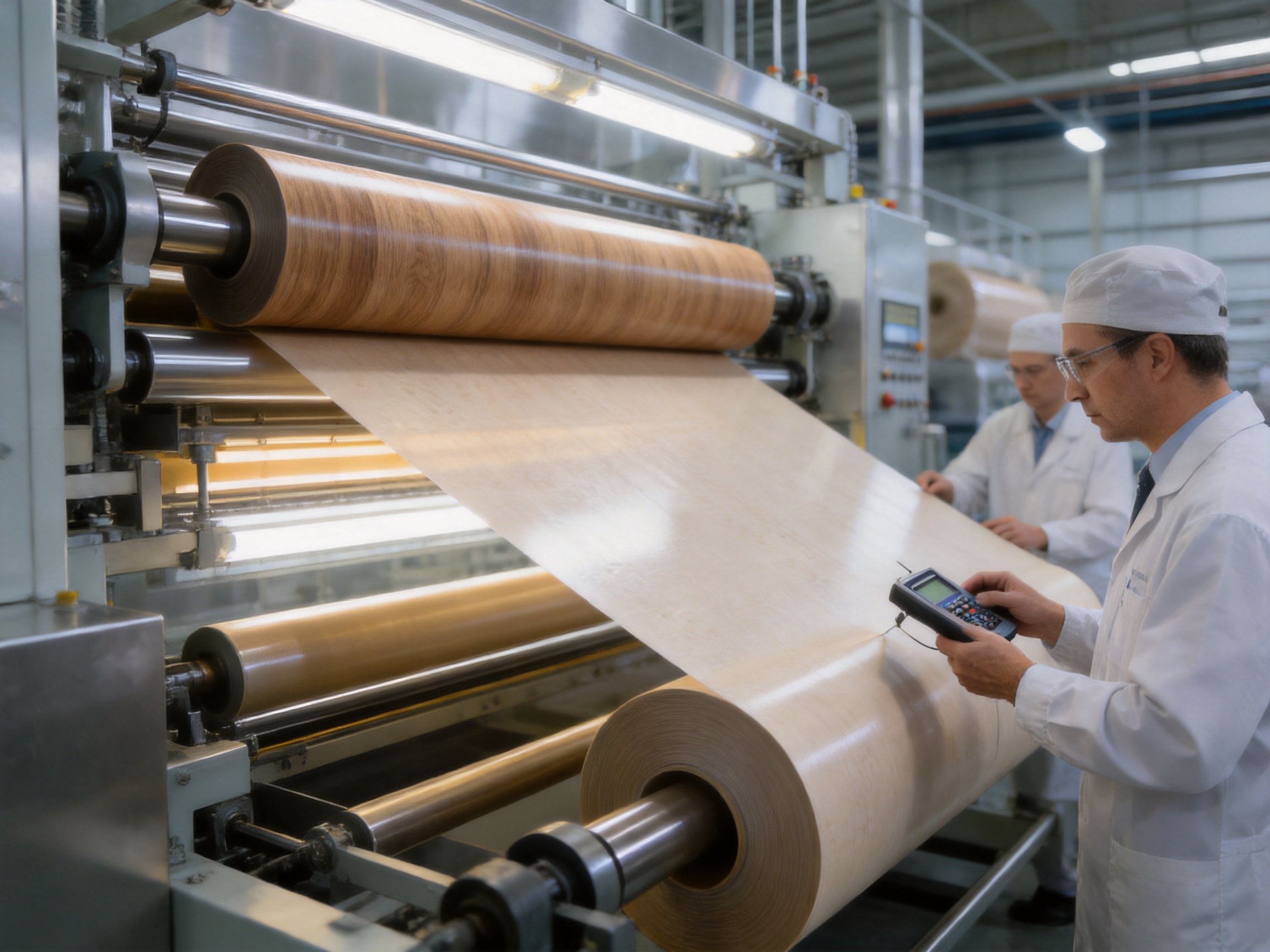
The quality of a decorative film depends not only on its design but also on the manufacturer’s ability to control resin handling, extrusion, surface formation, embossing, finishing, inspection, and packaging. ZheJiang ZhongSheng New Materials Co., Ltd. has focused on the PET industry for more than 16 years and manufactures transparent plastic sheets and plastic film rolls for a range of industrial and decorative applications.
The company was established in 2006 and operates a manufacturing area of approximately 40,000 square meters. Its reported infrastructure includes one research and development team, two laboratories, 33 production lines, and more than 100 sets of machinery and equipment. These resources provide a substantial foundation for producing PET-based sheet and film products at industrial scale.
Reported annual production capacity reaches approximately 70,000 tons, covering PETA, PETG, and PET-GAG products. Such a portfolio is relevant to applications including thermoforming, vacuum forming, blister packaging, and furniture decorative film panels. The ability to work across different PET-related product categories can support material knowledge, process development, and application-specific technical service.
The company also reports more than 60 invention and utility patents. Patents alone do not determine product quality, but they indicate an emphasis on internal development and technical differentiation. For a decorative film manufacturer, research capability can be important when customers require customized thicknesses, widths, surface effects, colors, embossing patterns, or application performance.
Key Stages in an Advanced PETG Film Process
Raw Material Preparation
Consistent raw material preparation is the first step toward stable film quality. PETG resin must be handled in a way that limits contamination and manages moisture before processing. Proper preparation helps support optical appearance, mechanical strength, surface uniformity, and dimensional consistency.
For decorative products, raw material control is especially important because visual defects can be easy to detect. Haze, foreign particles, uneven thickness, or surface imperfections may become more visible when the film is used on large furniture panels or glossy architectural surfaces.
Extrusion and Sheet Formation
During extrusion, PETG material is heated and converted into a continuous sheet or film. Temperature control, melt stability, die performance, cooling, and tension management all influence the final product. A well-controlled extrusion process helps achieve the specified thickness range of 0.16 to 0.5 millimeters and supports the regular width of 1,250 millimeters or customized widths.
Uniform thickness is important for both appearance and processing. If thickness varies substantially across the roll, lamination pressure and forming behavior may become inconsistent. Stable sheet formation helps manufacturers achieve smoother production and more predictable results when the film is laminated to panels.
Embossing and Surface Engineering
Embossing is central to the product’s realistic wood-grain appearance. A designed embossing structure is transferred to the film surface under controlled conditions. The depth, spacing, direction, and pattern of the embossing influence how the finished panel looks and feels.
Surface engineering must be coordinated with the optical finish. Excessive or poorly matched embossing could reduce visual clarity, while insufficient structure might make the grain appear flat. The goal is to balance tactile definition, reflection, cleanability, and visual realism.
Color and Pattern Development
Wood-inspired designs require careful control of color, grain scale, contrast, and repeat length. The product supports customized colors, allowing customers to develop surfaces that correspond to specific furniture collections, architectural concepts, or market preferences.
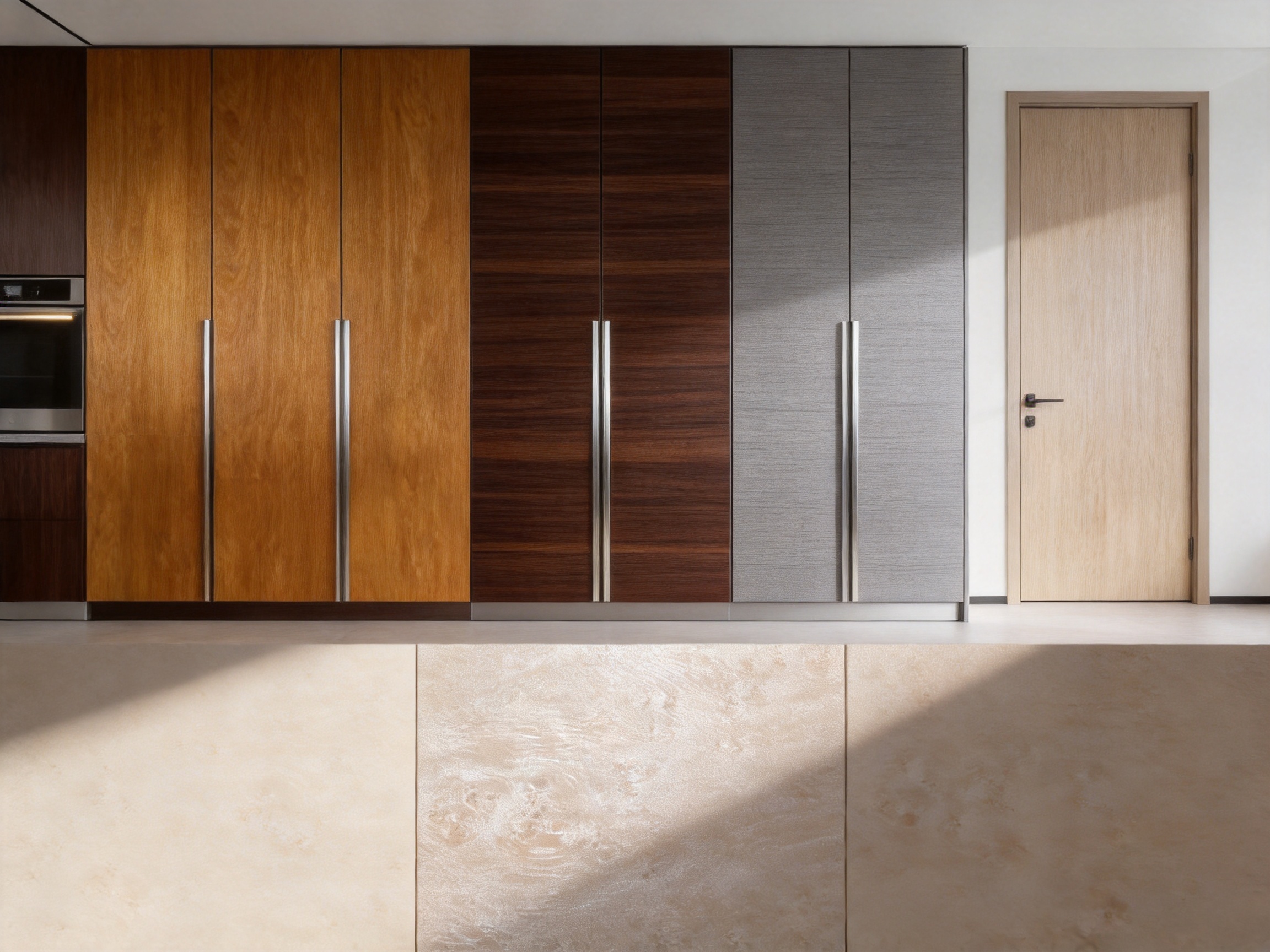
Customization may involve warm oak tones, darker walnut-inspired shades, pale ash references, contemporary gray wood effects, or other design directions. The most appropriate choice depends on the target market, lighting conditions, substrate color, and overall interior concept.
Inspection and Quality Control
Quality control should cover both measurable properties and visual performance. Relevant checks may include thickness, width, surface condition, color consistency, gloss, embossing definition, roll appearance, and packaging integrity. For customer-specific projects, additional testing can be conducted to evaluate lamination adhesion, stain resistance, impact behavior, moisture exposure, and weathering.
A manufacturer with laboratories and dedicated production resources is better positioned to establish repeatable testing procedures and respond to customer requirements. In large projects, quality documentation can also help buyers evaluate batch consistency and manage incoming inspection.
Roll Packaging and Delivery Preparation
Decorative film must be protected during storage and transportation. Roll packaging should reduce the risk of dust, scratches, edge damage, pressure marks, and moisture exposure. Clear labeling of product specifications, color references, batch information, and recommended processing conditions can help customers manage production more efficiently.
Application Areas
Wardrobe and Closet Panels
Wardrobe doors and closet panels are prominent surfaces in bedrooms, dressing areas, hotels, and residential developments. PETG Optical Wood Veneer Film can give these large panels a warm wood appearance while adding a cleanable, anti-fingerprint surface. Optical gloss can also help a wardrobe system appear more refined without requiring a heavy solid-wood construction.
Kitchen Cabinet Doors
Kitchen cabinet doors face frequent contact, food residue, moisture, and cleaning. A decorative surface with stain resistance, water resistance, and impact strength can contribute to easier daily maintenance. Wood-inspired PETG film can be combined with modern cabinet forms to create kitchens that feel natural, contemporary, and practical.
For kitchen applications, manufacturers should pay particular attention to edge sealing, adhesive compatibility, substrate stability, and exposure near heat sources. The film’s performance is part of a complete panel system, and the complete construction should be evaluated before mass production.
Bathroom Cabinets
Bathrooms require materials that can tolerate humid conditions and occasional splashing. A waterproof decorative surface can help protect the visual appearance of bathroom cabinet fronts and storage units. Wood effects can also soften the hard surfaces commonly found in bathroom interiors, creating a more comfortable and residential atmosphere.
Interior Doors and Door Boards
Interior doors are highly visible and frequently handled. The skin-touch finish and wood-grain embossing of the film can provide a premium appearance, while impact resistance supports long-term use. The material may be suitable for bedroom doors, office doors, hospitality interiors, and decorative door boards when the core construction and lamination process are correctly selected.
Wall Panels
Wall panels are often used to create feature walls, background surfaces, hospitality interiors, retail displays, offices, and residential accent areas. PETG film can allow these panels to coordinate visually with furniture and cabinetry. Because the film is supplied in rolls, manufacturers can adapt the decorative layer to different panel production systems and project dimensions.
Commercial Decoration
Retail stores, showrooms, restaurants, hotels, offices, and reception areas often need surfaces that look distinctive but remain practical to maintain. The optical wood effect can support a premium brand environment, while stain resistance and cleanability are useful for high-contact spaces.
Display and Exhibition Applications
Display fixtures and exhibition structures benefit from materials that create visual impact without excessive weight. A glossy, embossed wood effect can make product stands, counters, shelving, and background panels appear more substantial and carefully designed. Customized colors and widths can help exhibitors coordinate surfaces with corporate or campaign themes.
Processing and Lamination Considerations
Although PETG Optical Wood Veneer Film is designed for lamination, the final performance depends on the entire processing system. The substrate should be clean, dry, flat, and structurally stable. Dust, oil, moisture, or surface irregularities can reduce adhesion and may become visible through the film.
Adhesive selection is also important. The adhesive must be compatible with PETG, the selected substrate, the expected service environment, and the production equipment. Manufacturers should evaluate peel strength, aging performance, temperature resistance, moisture behavior, and appearance after lamination.
Temperature, pressure, line speed, and cooling should be adjusted according to the film thickness and adhesive system. Excessive heat may affect appearance or dimensional behavior, while insufficient heat or pressure may lead to incomplete bonding. Production trials are recommended before full-scale manufacturing, particularly when a new substrate, adhesive, embossing pattern, or panel geometry is introduced.
For curved or wrapped components, bending radius and forming conditions should be confirmed in advance. The film’s flexibility can be beneficial, but the final limits depend on thickness, temperature, laminate structure, and the shape of the component. Edge treatment should also be planned carefully because exposed edges may experience greater contact with moisture and impact.
Storage conditions matter as well. Rolls should generally be protected from excessive heat, direct sunlight, sharp pressure, and moisture. They should be handled in a way that prevents telescoping, crushing, scratching, or contamination. Before lamination, the film may need to reach the production area’s temperature and humidity conditions to support stable processing.
Sustainability and Material Efficiency
Environmental performance is becoming an important consideration in decorative material selection. PETG film can support material-efficient surface design because a relatively thin decorative layer can transform a standard panel into a visually distinctive finished product. The structural core and decorative surface can be selected separately, allowing manufacturers to balance weight, strength, cost, and appearance.
The product is described as ECO-friendly, but responsible evaluation should consider the complete life cycle, including resin sourcing, energy consumption, production waste, adhesive selection, panel construction, service life, and end-of-life handling. A durable surface that remains attractive for a long time may reduce the frequency of replacement, which can be a practical sustainability benefit.
Manufacturers can also improve material efficiency by optimizing cutting layouts, controlling roll width, reducing setup waste, and using production planning software. Customized widths may help minimize trimming in certain panel formats. Quality control further contributes to efficiency by reducing the number of rejected rolls and laminated panels.
For projects with specific environmental certifications or recycling requirements, buyers should request current technical documentation and confirm whether the complete laminated panel meets the applicable standards. Film performance should be considered together with the substrate, adhesive, ink or coating system, and installation method.
Customization Options for Designers and Manufacturers
Customization is one of the strongest advantages of an industrial film format. The product is available in customized colors, enabling manufacturers to coordinate the surface with existing furniture collections, architectural materials, flooring, hardware, and lighting schemes.
Width customization can help reduce waste and improve production efficiency. While 1,250 millimeters is the regular width, project-specific widths may be considered according to manufacturing requirements. Thickness selection from 0.16 to 0.5 millimeters allows buyers to balance flexibility, handling, surface feel, impact performance, and processing conditions.
Pattern development may include changes to grain direction, texture intensity, gloss level, color contrast, and visual repeat. A furniture brand may prefer a subtle, low-contrast grain for minimalist cabinetry, while a hospitality project may choose a stronger pattern to create a dramatic feature wall.
Before approving a customized design, customers should review physical samples under different lighting conditions. Optical surfaces can appear different under daylight, warm interior light, cool LED light, and directional spotlights. Evaluating samples at multiple viewing angles helps confirm whether the desired visual effect has been achieved.
Quality, Reliability, and Supplier Selection
Selecting a decorative film supplier involves more than comparing the price per square meter. Buyers should evaluate raw material expertise, production scale, research capability, laboratory resources, customization support, quality consistency, packaging, delivery reliability, and technical service.
ZheJiang ZhongSheng New Materials Co., Ltd. presents itself as a long-term PET industry manufacturer with extensive equipment, multiple production lines, dedicated laboratories, and a broad product portfolio. Its reported annual turnover exceeds 70 million U.S. dollars, and its annual production capacity reaches approximately 70,000 tons. These figures indicate the ability to support substantial orders, although customers should still confirm current capacity, lead time, and product availability for each project.
The company’s experience with PETG films used in furniture decoration panels is particularly relevant to buyers seeking more than a general-purpose plastic sheet. Decorative film performance depends on the relationship between material formulation, surface treatment, embossing, color design, and lamination behavior. A supplier with application knowledge can help customers reduce trial-and-error during product development.
Technical communication is also important. A professional supplier should be able to discuss thickness tolerance, width tolerance, surface characteristics, recommended storage, processing conditions, sample approval, packaging, inspection, and shipment documentation. Clear communication helps prevent misunderstandings when a project includes customized colors or complex panel formats.
Recommended Evaluation Procedure
Step One: Define the Application
Begin by identifying whether the film will be used on a wardrobe, cabinet, wall panel, door, display fixture, or another product. Consider indoor or semi-outdoor exposure, frequency of contact, moisture level, cleaning chemicals, impact risk, and expected service life.
Step Two: Select the Substrate
Common panel substrates may include engineered wood, composite board, plastic board, or other compatible materials. The substrate must provide suitable flatness, dimensional stability, surface energy, and structural support. A high-quality decorative film cannot compensate for a weak, damp, or unstable substrate.
Step Three: Compare Samples
Request samples in the required thickness, color, gloss, and embossed pattern. Compare them under the actual lighting conditions expected at the installation site. Check the surface by sight and touch, and examine how fingerprints, stains, and cleaning marks appear after repeated handling.
Step Four: Conduct Lamination Trials
Use the intended adhesive, equipment, temperature, pressure, and line speed. Inspect the laminated panel for bubbles, wrinkles, whitening, edge lifting, color change, and surface distortion. If the final application includes corners or curves, test those features as part of the trial.
Step Five: Perform Application Testing
Testing may include stain exposure, cleaning cycles, water contact, humidity exposure, impact testing, abrasion evaluation, and accelerated weathering where relevant. The testing plan should reflect the expected service conditions rather than relying only on general material data.
Step Six: Approve a Reference Standard
Once the appearance and performance are accepted, retain an approved reference sample. This sample can be used to compare future production batches and help maintain consistency across multiple shipments or manufacturing sites.
Maintenance of Finished Panels
Finished panels should be cleaned with a soft cloth and a mild cleaning solution appropriate for the laminated surface. Abrasive powders, aggressive solvents, sharp tools, and rough scouring pads should generally be avoided because they may reduce gloss or damage the surface.
Spills should be removed promptly, especially in kitchens, commercial spaces, and hospitality environments. Although the film offers stain-resistant performance, no decorative surface is completely immune to every chemical or prolonged contamination. Testing a cleaning product on an inconspicuous area is advisable before widespread use.
Edges and joints should be inspected periodically in areas exposed to moisture. Proper installation and sealing can help preserve the complete panel system. Maintenance instructions should be supplied to end users so that the surface retains its appearance throughout its service life.
Market Value for Furniture and Interior Manufacturers
PETG Optical Wood Veneer Film can create value at several stages of the product chain. For designers, it provides a broad visual vocabulary with realistic grain, optical gloss, and tactile depth. For panel manufacturers, it offers a roll-based material that can be integrated into established lamination operations. For furniture brands, it supports the creation of coordinated collections with repeatable colors and patterns.
For distributors, the product can serve customers in several application segments rather than a single niche. Wardrobe manufacturers, kitchen companies, bathroom furniture producers, wall-panel factories, door manufacturers, contractors, and display builders may all require wood-inspired decorative surfaces.
For end users, the primary value lies in the combination of appearance and daily practicality. A panel can look warm and natural while remaining easier to clean, more consistent in appearance, and potentially more resistant to moisture and impact than some traditional decorative alternatives.
Q&A
What makes PETG Optical Wood Veneer Film different from a normal wood-pattern film?
It combines a wood-inspired visual design with embossed texture and an optical glossy surface. This creates both visible and tactile depth instead of relying only on a flat printed pattern.
What thicknesses are available?
The specified thickness range is 0.16 to 0.5 millimeters. The appropriate thickness depends on the required surface feel, flexibility, impact performance, handling conditions, and lamination process.
What is the standard width?
The regular width is 1,250 millimeters. Customized widths may be available according to project and production requirements.
Can the color be customized?
Yes. Customized colors are available. Customers should confirm the desired color using physical samples because lighting, gloss, embossing, and substrate color can affect the final appearance.
Where can the film be used?
Typical applications include wall panels, wardrobe panels, kitchen cabinets, door boards, bathroom cabinets, commercial decoration, furniture panels, and display applications.
Is the film suitable for wet areas?
The film has waterproof characteristics and can be considered for kitchens, bathrooms, and other areas exposed to moisture. However, the complete laminated panel must be designed correctly, including substrate selection, adhesive compatibility, edge sealing, and installation.
Does the film resist fingerprints?
It is designed with anti-fingerprint performance. This helps reduce the visibility of marks from regular handling, although cleaning may still be required in high-contact areas.
Can it be laminated onto curved panels?
Its flexibility may support selected curved or wrapped applications. The allowable radius and processing method should be confirmed through trials based on the film thickness, substrate, adhesive, temperature, and shape.
How should the film be stored?
Store the rolls in a clean, dry, protected environment away from direct sunlight, excessive heat, sharp pressure, and contamination. Proper handling is important to avoid scratches, edge damage, and deformation.
How can buyers verify product consistency?
Buyers should request technical specifications, production samples, inspection information, and an approved reference sample. They can also evaluate thickness, width, appearance, color, embossing, adhesion, stain resistance, moisture performance, and impact behavior according to the intended application.
What gives the manufacturer an advantage in supplying this product?
The manufacturer reports more than 16 years of PET industry experience, a 40,000-square-meter manufacturing area, 33 production lines, two laboratories, an R&D team, more than 100 sets of equipment, annual capacity of approximately 70,000 tons, and more than 60 invention and utility patents. These resources support large-scale manufacturing, product development, and customization.
Is the product environmentally friendly?
The product is described as ECO-friendly and can support material-efficient decorative construction. For a complete environmental assessment, buyers should review the full panel system, including PETG material, adhesive, substrate, production waste, service life, and end-of-life handling.
Conclusion
PETG Optical Wood Veneer Film offers a compelling combination of realistic wood-grain design, three-dimensional embossing, optical gloss, comfortable tactile performance, and practical surface protection. Its anti-fingerprint, stain-resistant, waterproof, color-stable, impact-resistant, and weather-resistant characteristics make it suitable for demanding furniture and interior applications.
Compared with flat printed films, it provides greater visual and tactile depth. Compared with some paper-based surfaces, it offers a more resilient plastic film structure. Compared with natural veneer, it delivers stronger control over color, pattern, thickness, and repeatability. These advantages make it a useful material for manufacturers seeking premium appearance with efficient industrial processing.
The product’s value is supported by the manufacturer’s PET industry experience, large production infrastructure, research resources, laboratories, broad equipment base, patent portfolio, and reported high annual capacity. Together, these strengths create a foundation for stable supply, customized development, and application-oriented technical support.
For the best results, buyers should evaluate the complete laminated system rather than the film alone. Substrate quality, adhesive selection, lamination conditions, edge treatment, storage, installation, and maintenance all influence final performance. When these factors are properly controlled, PETG Optical Wood Veneer Film can help transform ordinary panels into durable, refined, and visually distinctive surfaces for modern residential, commercial, and architectural design.
References
1. Product specification information for PETG Optical Wood Veneer Film, including surface, color, thickness, width, applications, and performance characteristics.
2. Technical background on polyethylene terephthalate glycol, including its formability, toughness, clarity, and suitability for sheet and film applications.
3. General principles of plastic film extrusion, sheet formation, embossing, lamination, and quality control.
4. General furniture and interior-panel manufacturing practices concerning substrate preparation, adhesive compatibility, edge sealing, storage, and maintenance.
5. Manufacturer information concerning PETG, PETA, and PET-GAG production, research and development resources, production capacity, laboratories, equipment, and patent activity.