 English
 Español
Zhongsheng
Zhongsheng
Zhongsheng
Zhongsheng
Zhongsheng
Zhongsheng
Zhongsheng
Zhongsheng
Zhongsheng
Zhongsheng
Zhongsheng
Zhongsheng
Zhongsheng
Zhongsheng
Zhongsheng
Decorative films for furniture have become increasingly popular as cost-effective alternatives to traditional wood veneers, solid wood, and painted finishes. These thin, flexible materials allow manufacturers and consumers to achieve a wide range of aesthetic effects while protecting underlying surfaces. The market offers numerous options, each with distinct material compositions, performance characteristics, and application methods.
Polymer-Based Films: The Dominant Category
The majority of decorative furniture films on the market today are based on synthetic polymers. These materials offer consistency, durability, and cost advantages over natural alternatives.
Polyvinyl Chloride (PVC) Films:
PVC is one of the most common materials for decorative furniture films, often referred to as vinyl wrap or adhesive vinyl.
The base material is produced by polymerizing vinyl chloride monomers, resulting in a flexible thermoplastic. Plasticizers are added to achieve the desired flexibility for wrapping around edges and contours.
PVC films accept printing and coloring well, allowing for realistic reproduction of wood grains, stone textures, and solid colors.
A protective top coating, typically acrylic or polyurethane, is applied to enhance scratch resistance and protect against UV degradation.
The adhesive layer on the back is usually an acrylic-based pressure-sensitive adhesive that bonds to furniture surfaces when pressure is applied.
Polypropylene (PP) Films:
Polypropylene films have gained market share as an alternative to PVC, particularly in regions with regulations restricting PVC use.
PP is a thermoplastic polymer produced from propylene monomers. It has a naturally smooth surface and good chemical resistance.
These films are often thinner than PVC but provide adequate durability for many furniture applications.
PP films are generally considered more environmentally friendly than PVC because they do not release chlorine compounds during production or disposal.
The material has a lower plasticizer content than PVC, which can make it slightly less conformable around tight curves but reduces potential for plasticizer migration over time.
Polyethylene Terephthalate (PET) Films:
PET films represent another chlorine-free option in the decorative film market.
They are produced from polyester resins and offer excellent clarity, which makes them suitable for high-gloss finishes and printed designs.
PET films have good dimensional stability, meaning they resist shrinking or expanding with temperature changes.
The material is recyclable in many waste streams, though the adhesive layer complicates actual recycling in practice.
Paper-Based Films: Traditional and Eco-Conscious Options
Before the widespread adoption of polymer films, paper-based materials were common for furniture surfacing. They remain relevant today, particularly in applications where natural appearance and environmental considerations are priorities.
Impregnated Paper Films:
These films start as specialty paper, typically made from cellulose fibers sourced from wood pulp.
The paper is saturated with melamine resins or urea-formaldehyde resins during manufacturing. This impregnation process transforms the paper into a durable, moisture-resistant surfacing material.
After impregnation, the paper is dried partially and may be printed with decorative patterns. It is then pressed onto substrate materials under heat and pressure, which cures the resin and bonds the film permanently.
Impregnated paper films are commonly used in ready-to-assemble furniture and flat-pack products where cost is a primary consideration.
They offer good resistance to staining and minor scratches but are less flexible than polymer films and cannot wrap complex curves without pre-forming.
Decorative Kraft Papers:
For applications requiring a natural paper appearance, treated kraft papers are used.
These are less common in modern furniture but appear in specific design contexts where a matte, textured paper finish is desired.
They may be coated with acrylic or other clear finishes to provide some protection against moisture and handling.
Specialty Films: Unique Material Compositions
Beyond the standard polymer and paper categories, several specialty films offer distinct properties for specific furniture applications.
Polyurethane (PU) Films:
Polyurethane films represent a premium segment of the decorative film market.
They are produced from thermoplastic polyurethane elastomers, which combine flexibility with exceptional durability.
PU films have abrasion resistance compared to PVC or PP, making them suitable for high-traffic furniture pieces.
They remain flexible at low temperatures and do not become brittle with age as some PVC formulations can.
The material has a natural elasticity that allows it to stretch around complex shapes without tearing or losing thickness at corners.
PU films are more expensive than PVC alternatives, limiting their use to premium furniture or specific high-wear applications.
Real Wood Veneer Films:
These products combine a thin layer of actual wood with a backing and adhesive system.
The wood layer is sliced from logs to thicknesses ranging from 0.2mm to 0.6mm. Species include oak, walnut, maple, cherry, and exotic woods.
The wood veneer is bonded to a flexible backing, often paper or non-woven fabric, which provides stability and prevents the thin wood from cracking.
A clear protective coating, typically acrylic, polyurethane, or lacquer, is applied to the wood surface to protect against wear and moisture.
These films offer the authentic appearance and texture of real wood but require more careful handling during application than synthetic films.
Metallic and Metal Composite Films:
For furniture requiring a metallic appearance, several material approaches are used.
Some films use a thin layer of aluminum foil laminated to a paper or polymer backing. The aluminum can be brushed, polished, or anodized for different effects.
Other metallic films achieve their appearance through vacuum metallization, where a microscopic layer of aluminum is deposited onto a polymer film under vacuum conditions.
These films provide the look of metal at a fraction of the weight and cost of solid metal panels.
Adhesive Systems and Backings
The performance of decorative film depends significantly on the adhesive system that bonds it to the furniture substrate.
Pressure-Sensitive Adhesives (PSA):
Most peel-and-stick decorative films use pressure-sensitive adhesives.
These adhesives are typically acrylic-based or rubber-based formulations. Acrylic adhesives offer better aging characteristics and UV resistance, while rubber-based adhesives provide higher initial tack.
The adhesive is coated onto the film backing and covered with a release liner, usually siliconized paper or plastic film, which protects the adhesive until application.
PSAs bond when pressure is applied, without requiring heat or solvent activation.
Heat-Activated Adhesives:
Some decorative films, particularly those used in commercial applications, require heat for activation.
These adhesives are dry at room temperature but become tacky when heated, typically with a heat gun or industrial laminating equipment.
Heat-activated systems allow for repositioning before final bonding and can create stronger bonds than PSAs for demanding applications.
Release Liners:
The release liner protects the adhesive and must separate cleanly during application.
Paper liners are coated with silicone on the adhesive side to provide release. The silicone formulation is carefully matched to the adhesive chemistry to ensure consistent peel force.
Film liners, made from polyester or polypropylene, are used for thinner films or when dimensional stability during application is critical.
Surface Coatings and Finishes
The visible surface of decorative films receives treatments that determine appearance, texture, and durability.
Protective Topcoats:
Most films receive a clear topcoat to protect the printed design from abrasion, chemicals, and UV light.
Acrylic coatings are common for general-purpose films, providing good clarity and protection at moderate cost.
Polyurethane coatings offer abrasion resistance for high-wear applications.
Electron beam (EB) cured coatings provide exceptional hardness and chemical resistance by cross-linking the coating molecules with high-energy electrons.
Texture Embossing:
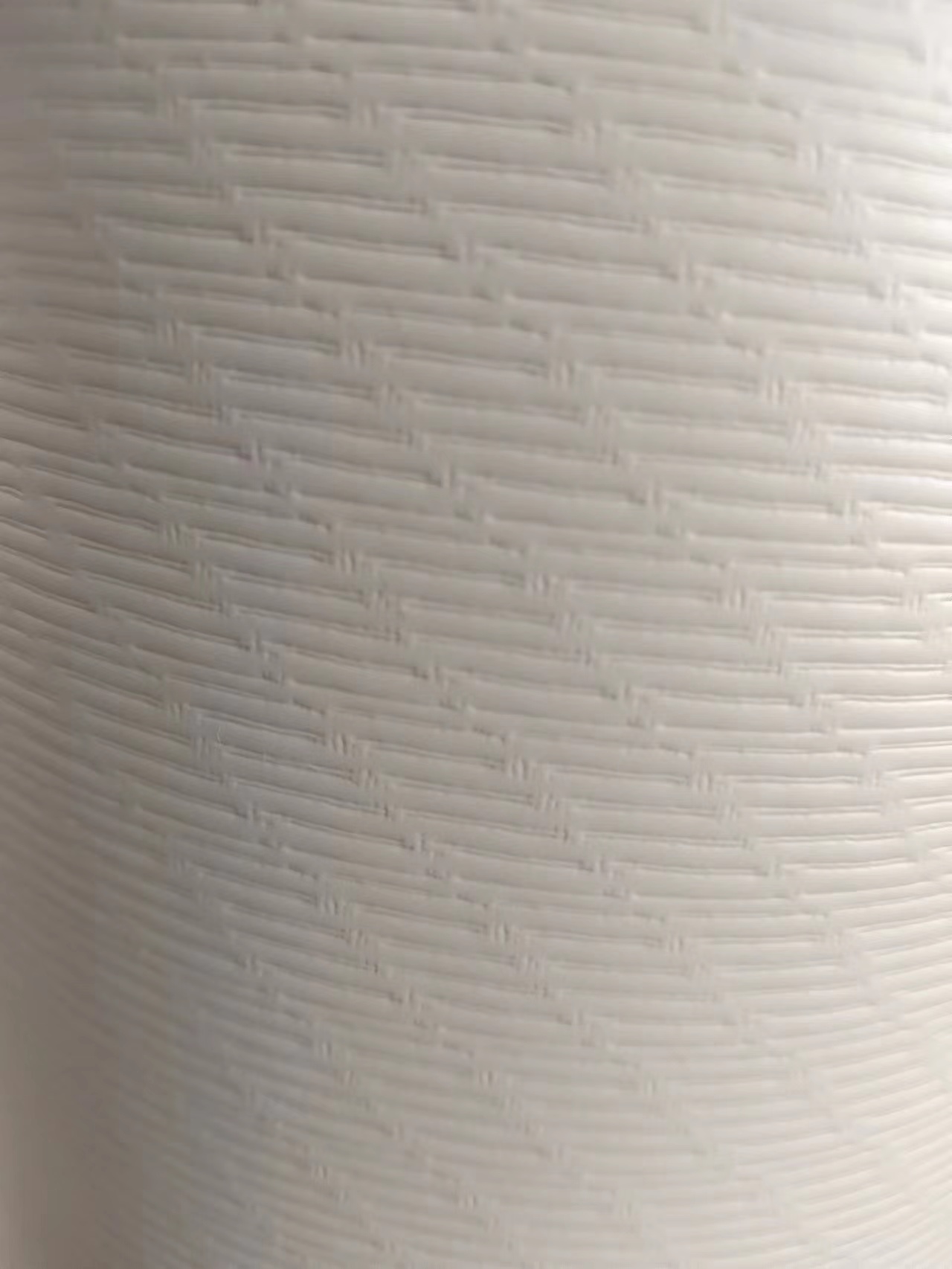
To simulate natural materials, films are often embossed with surface textures.
Embossing is accomplished by pressing the film between heated rollers with engraved patterns. The pattern creates physical texture that mimics wood grain, leather, fabric, or stone.
Registration embossing aligns the surface texture with the printed pattern, such that wood grain texture matches the printed grain lines.
Matte and Gloss Finishes:
The final surface gloss level is controlled through coating formulations and embossing techniques.
Gloss finishes require smooth surfaces and highly flowable coatings that level completely before curing.
Matte finishes incorporate matting agents, typically silica particles, that create microscopic surface roughness and scatter reflected light.